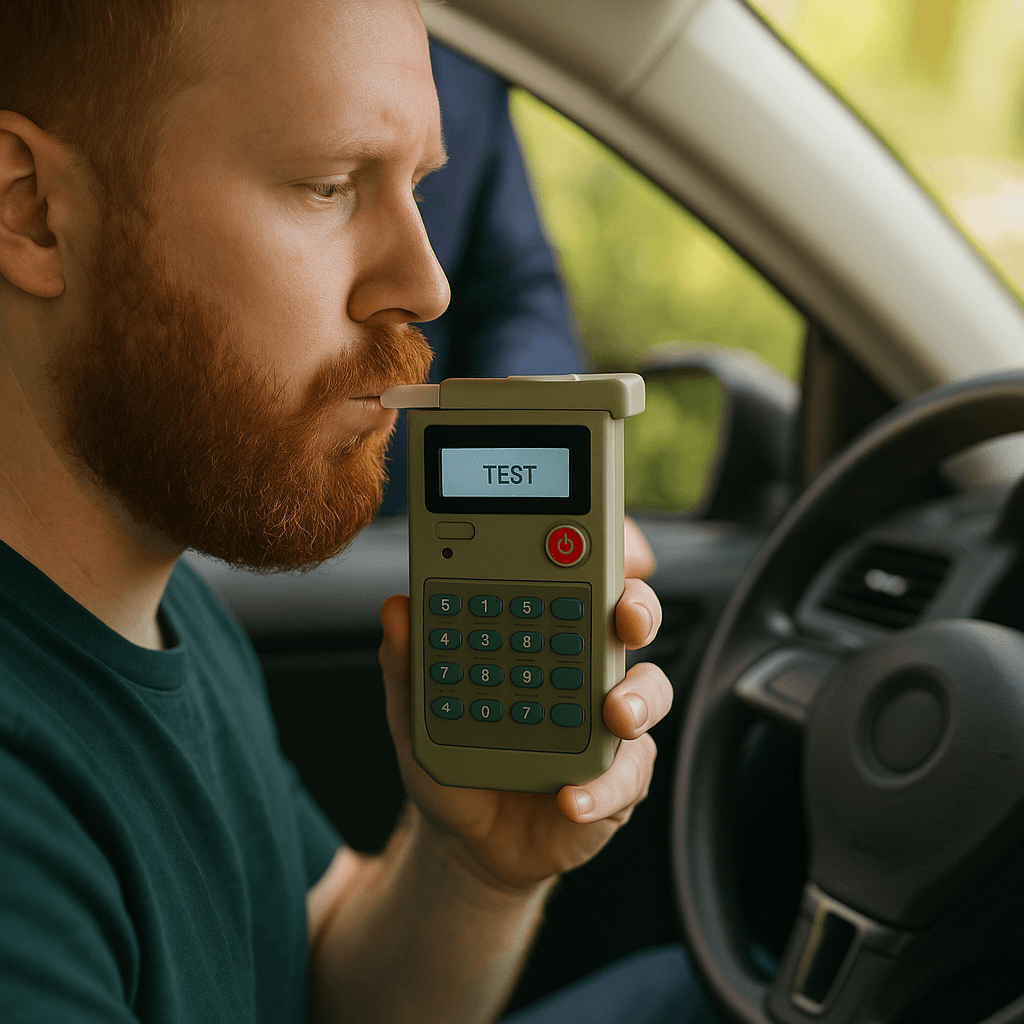
Massachusetts requires IID installation before license reinstatement, but SR-22 filing timing depends on whether you're reinstating or keeping continuous coverage. Here's the sequence that protects your compliance timeline.
SR-22 Filing Can Start During Suspension, IID Cannot Be Bypassed
Massachusetts law requires ignition interlock device installation as a condition of license reinstatement after most DUI convictions, but SR-22 filing operates on a separate timeline. You can file SR-22 immediately after conviction if you purchase non-owner SR-22 insurance, banking filing time while your license is suspended. The IID requirement activates only when you apply for reinstatement — you cannot drive legally until the device is installed and the RMV verifies installation through the Service Center.
Most Massachusetts drivers assume they must wait until reinstatement to file SR-22. This costs them 6-12 months of filing credit. Massachusetts typically requires 3 years of continuous SR-22 filing after a first-offense DUI, measured from the day your SR-22 policy activates. If you file SR-22 with a non-owner policy during your suspension, those suspended months count toward your 3-year requirement.
The IID requirement cannot be advanced. Massachusetts General Laws Chapter 90, Section 24 mandates IID installation for 2 years minimum after reinstatement for first offenders, longer for repeat offenses. The RMV will not reinstate your license until you provide proof of IID installation from an approved vendor. The SR-22 filing and IID installation are parallel compliance tracks — SR-22 proves insurance, IID proves sobriety monitoring.
How Non-Owner SR-22 Banking Works During Suspension
Non-owner SR-22 insurance provides liability coverage when you don't own a vehicle but need to maintain SR-22 filing. In Massachusetts, non-owner policies typically cost $35-$65/mo after a DUI, significantly less than standard auto policies because they exclude collision and comprehensive coverage. You purchase the policy, the carrier files SR-22 with the Massachusetts RMV electronically, and your 3-year filing clock starts immediately.
This strategy works only if you maintain continuous coverage without lapses. Massachusetts RMV resets your filing period to day zero if your SR-22 lapses for any reason — missed payment, policy cancellation, or switching carriers without overlap. A single day without active SR-22 coverage restarts the entire 3-year requirement. Carriers that write non-owner SR-22 policies in Massachusetts include The General, Dairyland, Bristol West, and GAINSCO. Availability varies by county.
You cannot drive during suspension even with an active non-owner SR-22 policy. The policy satisfies the SR-22 filing requirement and banks time toward your 3-year obligation, but it does not restore driving privileges. You must complete your suspension term, install IID, pay reinstatement fees, and receive RMV approval before operating any vehicle.
Find out exactly how long SR-22 is required in your state
IID Installation Timeline and RMV Reinstatement Process
Massachusetts requires you to complete your suspension period before applying for reinstatement. For a first-offense DUI, the standard suspension is 1 year, though hardship licenses may shorten this depending on your case. You apply for reinstatement through the Massachusetts RMV, pay the $1,200 reinstatement fee, and provide proof of IID installation from an approved vendor.
Approved IID vendors in Massachusetts include Smart Start, Intoxalock, LifeSafer, and Draeger. Installation costs approximately $75-$150, with monthly monitoring fees of $65-$90. You must install the device before the RMV will issue your reinstated license — the vendor submits installation verification directly to the RMV. The device remains in your vehicle for the court-ordered period, typically 2 years for first offenses, 4-8 years for repeat offenses.
Once the RMV verifies IID installation, you can convert your non-owner SR-22 policy to a standard auto SR-22 policy if you purchase or lease a vehicle. The filing continuity is preserved as long as there is no coverage gap between the non-owner policy end date and the standard policy start date. Most carriers require 24-48 hours to process SR-22 amendments, so coordinate the switch before your non-owner policy expires.
When IID-First Sequencing Makes Sense for Immediate Reinstatement
Some Massachusetts drivers cannot afford to wait and need reinstatement immediately after their suspension ends. If you own a vehicle or need to drive for work the day your suspension lifts, installing IID first and filing SR-22 simultaneously at reinstatement is the correct sequence. This compresses the timeline but sacrifices the filing-time banking advantage.
You schedule IID installation 1-2 weeks before your reinstatement eligibility date, allowing time for vendor processing and RMV verification. On your reinstatement date, you purchase a standard auto SR-22 policy covering your IID-equipped vehicle, pay the reinstatement fee, and submit all documentation to the RMV. Your license is reinstated that day, and your 3-year SR-22 filing period begins.
This approach works if you cannot function without a license during suspension — parents with childcare responsibilities, workers in rural areas without public transit, or drivers facing job loss. The tradeoff is clear: you start your SR-22 clock later, extending the total time you'll pay elevated insurance rates. A first-offense Massachusetts DUI driver who files non-owner SR-22 during suspension completes their filing requirement 6-12 months sooner than a driver who waits until reinstatement.
Cost Comparison: Non-Owner SR-22 During Suspension vs. Waiting
Filing non-owner SR-22 during a 1-year Massachusetts suspension costs approximately $420-$780 total (12 months × $35-$65/mo). You then switch to standard auto SR-22 at reinstatement, which costs $140-$280/mo after a DUI depending on your vehicle, age, and county. Your 3-year filing obligation is reduced to 2 years because you banked 1 year during suspension. Total SR-22 insurance cost over 3 years: approximately $3,780-$7,500.
Waiting until reinstatement to file SR-22 eliminates the non-owner policy cost but extends your standard auto SR-22 requirement to the full 3 years. Total cost: approximately $5,040-$10,080 over 3 years (36 months × $140-$280/mo). The difference is $1,260-$2,580 depending on your rate tier. Non-owner filing during suspension saves money and shortens your total SR-22 obligation by 12 months.
These estimates assume continuous coverage without lapses. A single SR-22 lapse resets your filing period to zero and eliminates any banked time. Massachusetts RMV requires carriers to notify them within 24 hours of policy cancellation or lapse. Set up automatic payment on your non-owner policy and maintain 3-6 months of payment buffer in your account to avoid accidental lapses.
What Happens If You Install IID But Let SR-22 Lapse
IID installation and SR-22 filing are independent compliance requirements in Massachusetts. Installing IID satisfies the sobriety monitoring condition for reinstatement, but it does not fulfill the SR-22 insurance filing requirement. If your SR-22 policy lapses after reinstatement, the RMV suspends your license again even if your IID remains installed and functional.
Massachusetts carriers must file an SR-26 form with the RMV within 24 hours of policy cancellation. The RMV issues a suspension notice immediately, and your license is suspended until you file a new SR-22 and pay reinstatement fees again — typically $100-$500 depending on lapse duration. Your 3-year SR-22 filing clock resets to day zero. A lapse caused by missed payment, insufficient funds, or switching carriers without overlap produces the same result.
The IID device records every attempted start, failed test, and circumvention attempt. Monthly data downloads go to the RMV and the court. If your license is suspended due to SR-22 lapse, any driving recorded by the IID during suspension counts as operating after suspension (OAS), a criminal offense in Massachusetts carrying additional jail time, fines, and license revocation. Maintain both the IID and the SR-22 without exception until both obligations expire.