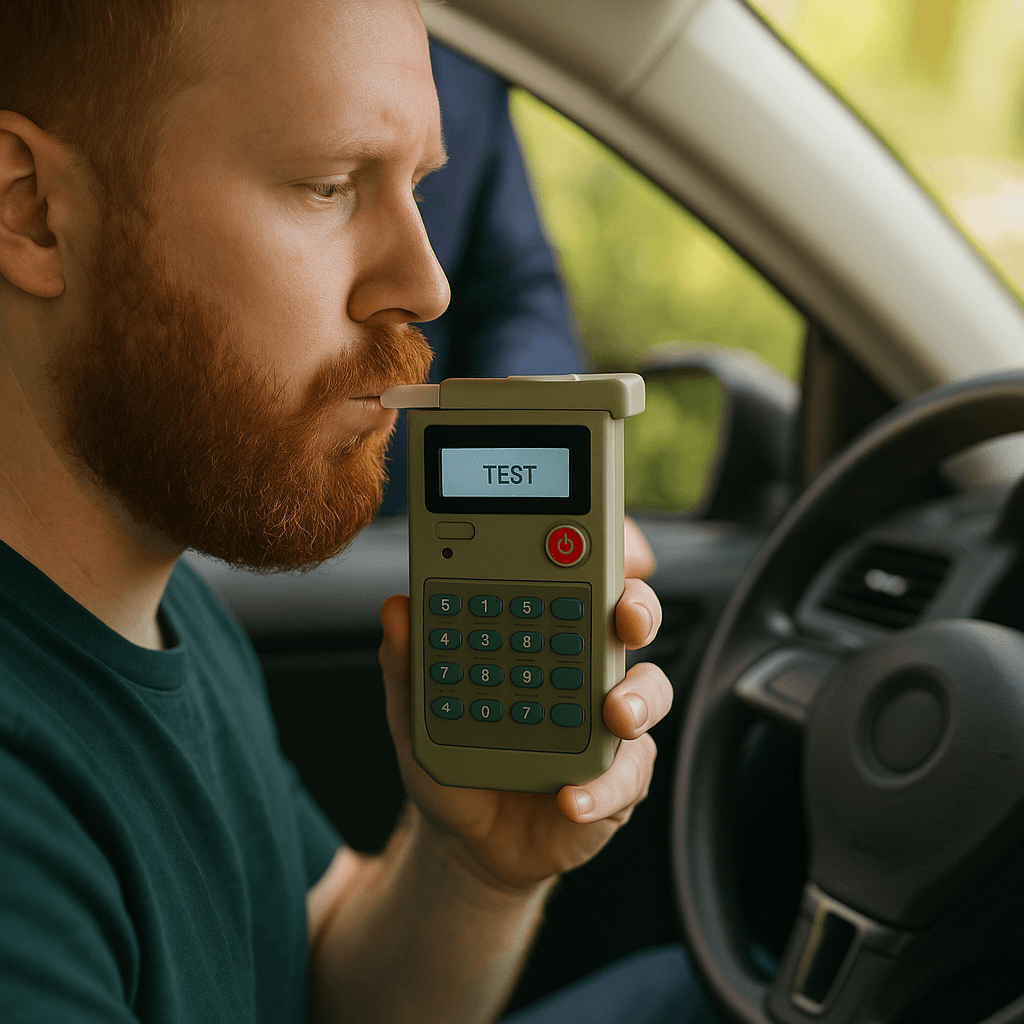
Vermont courts often order ignition interlock before reinstatement, but your SR-22 filing timeline runs separately. Understanding which deadline controls your license status determines whether you can legally drive again.
Vermont Sets IID and SR-22 Requirements Through Different Agencies With Different Deadlines
Vermont criminal courts order ignition interlock device (IID) installation as part of DUI sentencing, typically requiring installation within 7-30 days of your license reinstatement eligibility. The Vermont DMV separately requires SR-22 filing to prove financial responsibility before reinstating your license, usually due within 30 days of your suspension notice. These are parallel requirements issued by different authorities, not sequential steps.
Your SR-22 filing creates the insurance certificate DMV needs to process reinstatement. IID installation creates the physical device your court order requires. Neither automatically satisfies the other. Most drivers need both active simultaneously to legally drive: SR-22 proves you carry liability coverage, IID proves you're complying with court-ordered alcohol monitoring.
The financial reality shapes the sequence for most drivers. SR-22 policies from non-standard carriers like The General, Bristol West, or Dairyland run $140-$220/mo in Vermont for DUI drivers. Adding IID coverage after you have base SR-22 insurance costs $15-$30/mo extra. But attempting to quote SR-22 and IID coverage together before device installation often triggers underwriting delays because carriers want proof the device is installed and calibrated before binding IID coverage.
Filing SR-22 First Secures Your Base Policy and Starts Your 5-Year Filing Clock
Vermont requires SR-22 filing for 5 years after DUI conviction, measured from your reinstatement date, not your conviction date. Filing SR-22 as soon as you're eligible starts this 5-year clock. Delaying SR-22 filing to wait for IID installation extends the total time you'll carry SR-22, because the clock doesn't start until DMV receives the filing.
Non-standard carriers write SR-22 policies for DUI drivers in Vermont within 24-48 hours once you provide license number, conviction date, and payment. You don't need an installed IID to get quoted or bound for base SR-22 coverage. The carrier files electronically with Vermont DMV, satisfying your SR-22 requirement immediately.
Once your SR-22 is active, you hold proof of financial responsibility. This positions you to complete license reinstatement requirements (court fines, DUI education, suspension period) while maintaining continuous coverage. An SR-22 lapse of even one day typically resets your 5-year filing requirement to zero in Vermont, which is why securing the base policy early protects your timeline.
Find out exactly how long SR-22 is required in your state
IID Installation Happens After Court Order and Before You Drive
Vermont courts issue specific IID installation deadlines in your sentencing order, typically 7-30 days after your restricted license or full reinstatement becomes available. You schedule installation with a state-approved IID provider like LifeSafer, Intoxalock, or Smart Start. Installation takes 1-2 hours and costs $70-$150 upfront, plus $60-$90/mo monitoring fees.
Your IID provider gives you an installation certificate showing device serial number, installation date, and calibration schedule. This certificate is what your insurance carrier needs to add IID coverage to your existing SR-22 policy. Most Vermont non-standard carriers add the endorsement within 24 hours once you provide the installation certificate, increasing your premium $15-$30/mo.
Attempting to add IID coverage before installation creates underwriting holds. Carriers can't verify device type, installation date, or provider compliance without the certificate. These holds delay policy binding, which delays SR-22 filing, which delays reinstatement eligibility. The installation-first sequence eliminates this friction.
The Practical Filing Sequence That Minimizes Delays and Costs
File SR-22 with a non-standard carrier as soon as your suspension notice arrives or within 30 days of conviction. This secures base liability coverage (Vermont requires 25/50/10 minimums) and starts your 5-year SR-22 clock. You're paying for coverage you can't use yet because you're still suspended, but you're protecting your reinstatement timeline.
Complete your court-required DUI education, suspension period, and any other sentencing requirements while your SR-22 stays active. Schedule IID installation once your restricted license or full reinstatement date approaches. Provide your installation certificate to your carrier the same day you get the device installed. Your carrier adds IID coverage and updates your SR-22 filing with DMV electronically.
This sequence keeps both requirements moving in parallel without either blocking the other. Your SR-22 filing satisfies DMV's financial responsibility requirement. Your IID installation satisfies the court's alcohol monitoring requirement. Both must stay active for the durations ordered, but filing SR-22 first prevents installation delays from resetting your SR-22 clock.
What Happens If You Try to Install IID Before Filing SR-22
You can physically install an IID before filing SR-22, but it creates no compliance advantage and often costs more. IID providers don't verify insurance status before installation. They install the device, give you the certificate, and start monthly monitoring fees immediately. You're now paying $60-$90/mo for a device you can't legally use because DMV hasn't reinstated your license yet.
DMV won't process reinstatement until they receive your SR-22 filing. If you installed IID first but haven't filed SR-22, you're paying monitoring fees during a period when you still can't drive. Filing SR-22 after installation means your 5-year SR-22 clock starts later, extending the total years you'll carry the requirement.
Some drivers assume installing IID first proves compliance and speeds reinstatement. Vermont DMV processes reinstatement based on SR-22 receipt, court clearance, and fee payment. IID installation is verified separately through your provider's reporting system. Having the device installed doesn't accelerate SR-22 processing or waive the filing requirement.
Vermont's 5-Year SR-22 Period and IID Monitoring Don't Always Align
First-offense DUI in Vermont typically requires 12-24 months of court-ordered IID monitoring. Your SR-22 requirement runs 5 years from reinstatement date. This means you'll remove the IID device 3-4 years before your SR-22 filing ends. Once IID is removed, contact your carrier to remove the IID endorsement from your policy, which should reduce your premium $15-$30/mo.
Your SR-22 filing continues after IID removal. You still need continuous liability coverage with SR-22 certificate on file with DMV for the full 5 years. Letting your policy lapse or cancel after IID removal triggers the same filing-period reset as any other lapse. Vermont DMV receives electronic notice of SR-22 cancellations within 24 hours, and most result in immediate license re-suspension.
Repeat-offense DUI or aggravated DUI (BAC .16+, minor in vehicle, injury) may carry longer IID requirements approaching or matching the 5-year SR-22 period. Your sentencing order and DMV suspension notice specify your exact timelines. Both requirements must be satisfied independently, regardless of which ends first.
Switching Carriers Mid-Requirement Requires Continuous SR-22 Coverage
If you find lower rates with a different non-standard carrier after 6-12 months, you can switch policies. The new carrier must file SR-22 with Vermont DMV before your old policy cancels. Vermont requires zero-day SR-22 gaps. A single day without active SR-22 on file resets your 5-year requirement and triggers license suspension, even if you maintain liability coverage through a non-SR-22 policy.
When switching carriers mid-IID requirement, provide your IID installation certificate to the new carrier during the quote process. They'll include IID coverage in your new policy and file updated SR-22 with DMV. Your old carrier cancels their SR-22 filing once the new filing is received by DMV. Coordinate effective dates so filings overlap by at least one day.
Most Vermont drivers switching carriers after DUI save $30-$60/mo by shopping annually once their initial high-risk penalty period ends. Carriers reassess DUI surcharges at each renewal, with rates typically dropping 10-15% per year as conviction age increases. Your SR-22 requirement doesn't prevent shopping or switching, it just requires continuous filing through whichever carrier you choose.