You just left the courtroom with a DUI conviction and a list of requirements, but no one told you what order to complete them in. The sequence matters—file SR-22 before your license is eligible for reinstatement or you'll reset your waiting period.
Why the compliance sequence isn't obvious from your court paperwork
Massachusetts RMV and district courts issue DUI compliance requirements separately, and neither document maps the dependency chain between steps. Your court order lists fees, alcohol education, possible IID installation, and probation terms. Your RMV notice lists license suspension duration and SR-22 filing requirements. What neither document states clearly: you cannot reinstate your license until all court-ordered compliance is verified by the court, and your SR-22 filing period does not begin until your reinstatement eligibility date.
Most first-offense DUI convictions in Massachusetts carry a 45-day to 1-year license suspension depending on whether you accept the 24D alternative disposition or go to trial. During the suspension period, you may qualify for a hardship license after 14 days if you complete the DUI education program and install an IID. Your SR-22 filing becomes relevant at the point you apply for the hardship license or full reinstatement—not at conviction.
The compliance sequence that actually works: pay all court-imposed fines and fees first, enroll in and complete the required alcohol education program, schedule IID installation if required, then obtain SR-22 coverage and file with the RMV when you apply for reinstatement or hardship license. Filing SR-22 before you are eligible to reinstate wastes premium dollars on coverage you cannot use.
Court fines and fees: the gate that blocks everything else
Massachusetts district courts assess fines, fees, victim witness assessments, and Head Injury Treatment Services Trust Fund fees at sentencing. First-offense DUI under the 24D program typically carries $600–$1,200 in combined fines and fees. Aggravated first-offense or second-offense convictions run $1,500–$3,500. Courts do not release completion certificates to the RMV until all financial obligations are satisfied.
The RMV will not process your hardship license application or reinstatement without a court completion certificate. That certificate confirms you paid fines, completed education, satisfied probation terms, and met all sentencing conditions. If you owe $50 on a $1,200 fine, the court holds the certificate and your reinstatement application stalls.
Payment plans are available through most district courts, but they extend the timeline to receive your completion certificate. A 6-month payment plan means you cannot apply for reinstatement until month 6 even if your suspension period ended in month 3. Pay in full at sentencing if possible to avoid this delay.
Find out exactly how long SR-22 is required in your state
Alcohol education enrollment and completion timelines
Massachusetts requires completion of a 16-week Driver Alcohol Education Program for first-offense 24D dispositions or a 14-day inpatient program for repeat offenses and refusals. The 16-week program meets once per week and cannot be accelerated. You can enroll immediately after sentencing, but completion takes the full 16 weeks regardless of when you start.
The program issues a completion certificate only after you attend all sessions and satisfy any additional assessment requirements. Courts require this certificate before issuing the master completion certificate that unlocks RMV reinstatement. Starting the program late extends your total compliance timeline by the same number of weeks.
For drivers eligible for a hardship license after 14 days of suspension, alcohol education completion is required before the RMV will approve the hardship application. If you wait 4 weeks to enroll, you add 4 weeks to your hardship eligibility. Enroll within the first week after sentencing to keep the timeline as short as possible.
IID installation: when it's required and how it affects SR-22 timing
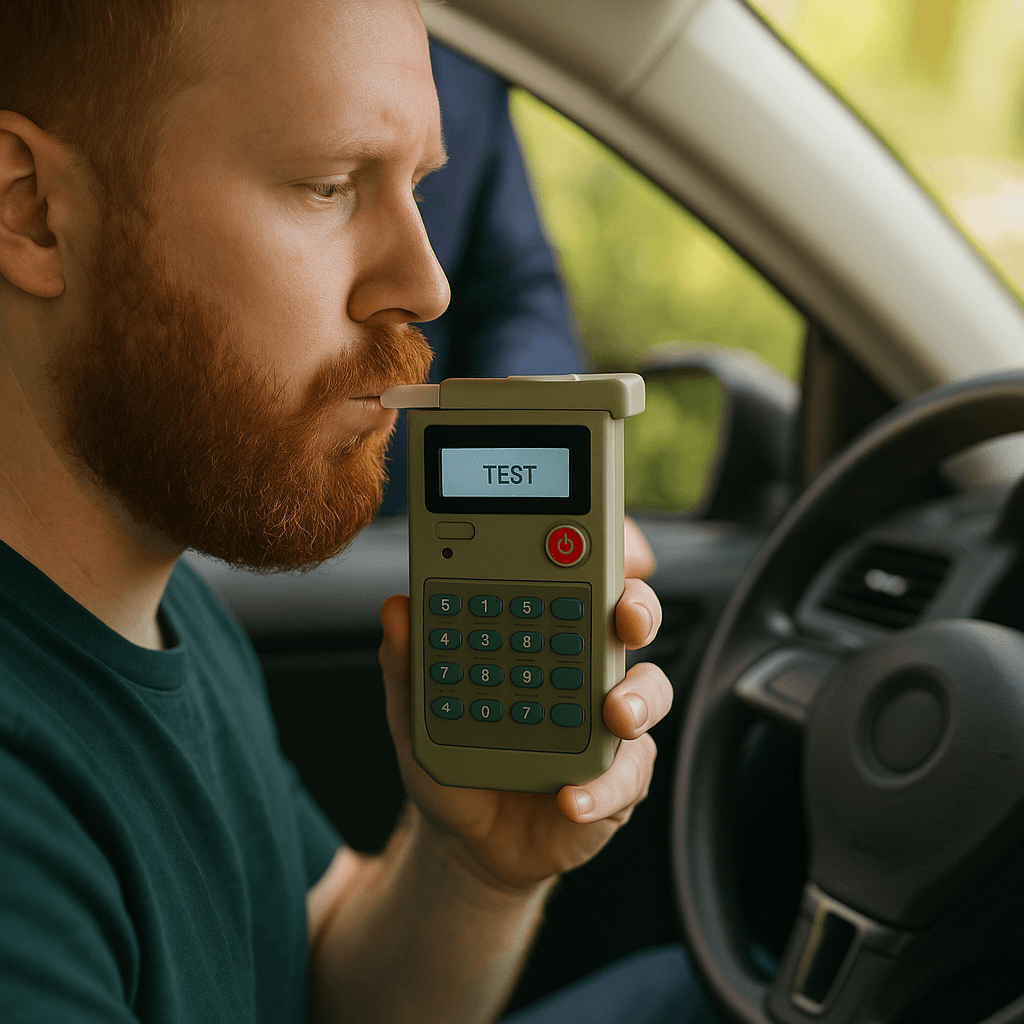
Massachusetts requires ignition interlock devices for all hardship licenses after DUI conviction and for reinstatement after refusal, second offense, or aggravated first offense (BAC .15 or higher, child under 14 in vehicle, injury, or property damage). First-offense standard DUI under 24D requires IID only during the hardship period if you choose to apply for one—not for full reinstatement after the suspension ends.
The IID must be installed by an RMV-approved provider before you submit your hardship license application. Installation costs $100–$150, plus $75–$100 monthly monitoring fees. The device stays installed for the entire hardship period, typically 3–12 months depending on your conviction class and suspension length.
Your SR-22 insurance policy must list the vehicle with the IID installed. Most non-standard carriers require proof of installation before binding coverage. This creates the correct sequence: install IID, obtain SR-22 policy listing that vehicle, then file the hardship application with RMV. Reversing this order means your SR-22 filing does not match the vehicle you're legally allowed to drive, and RMV rejects the application.
SR-22 filing: the last step before reinstatement or hardship approval
Massachusetts requires SR-22 filing for the entire license reinstatement period after DUI conviction. For first-offense 24D, that period runs from reinstatement date through the end of your probation term, typically 1 year. For second offense or refusal, SR-22 filing continues for 3 years from reinstatement. The filing proves continuous insurance coverage—if the policy lapses or cancels, the carrier notifies RMV and your license suspends again immediately.
You obtain SR-22 coverage by purchasing a non-standard auto policy from a carrier licensed to file in Massachusetts and requesting SR-22 endorsement. The carrier files electronically with RMV within 24 hours of binding the policy. Expect premiums of $180–$320/mo for minimum liability coverage after DUI, compared to $85–$140/mo for clean-record drivers. Estimates based on available industry data; individual rates vary by driving history, vehicle, coverage selections, and location.
File SR-22 only when you are ready to submit your hardship application or full reinstatement application to RMV. The filing itself does not restore your driving privileges—it is supporting documentation for the reinstatement process. Filing 6 weeks before you complete alcohol education or pay court fines means you pay 6 weeks of premiums while still legally prohibited from driving.
What happens if you complete steps out of sequence
The most common sequencing mistake: purchasing SR-22 coverage immediately after conviction, before completing alcohol education or paying fines. The carrier files with RMV, you pay the first month premium, but RMV cannot process reinstatement because the court has not issued your completion certificate. You are paying for mandated coverage while legally unable to drive.
RMV does not accept partial compliance. Submitting a hardship application with SR-22 on file but missing the alcohol education certificate results in application denial and no refund of the $100 hardship license fee. You must complete every required step, obtain the court completion certificate, install IID if required, then file SR-22 as the final action before applying.
The second most common mistake: delaying SR-22 filing until after RMV approves reinstatement. Massachusetts law requires proof of insurance at the time of reinstatement application. If you apply without SR-22 already on file, RMV denies the application and you restart the process. The SR-22 filing must be active in the RMV system when you submit your reinstatement paperwork, not after approval.
The timeline in practice: first-offense 24D with hardship application
A typical first-offense DUI under 24D alternative disposition with hardship license application follows this timeline. Day 1: sentencing, suspension begins, court issues fine and education requirements. Week 1: pay all fines in full, enroll in 16-week alcohol education program, contact IID installer for appointment. Week 2: IID installation complete, begin comparing non-standard SR-22 carriers.
Week 3: apply for hardship license eligibility (available after 14 days of suspension if you completed education enrollment and IID installation). Week 4–16: attend weekly alcohol education sessions. Week 16: receive education completion certificate, notify court to request master completion certificate. Week 17: obtain SR-22 policy listing IID-equipped vehicle, carrier files electronically with RMV. Week 17: submit hardship license application to RMV with proof of education completion, IID installation, and SR-22 filing. Week 18: RMV issues hardship license.
Total time from conviction to hardship license: approximately 18 weeks if you start every step immediately and pay fines in full at sentencing. Delays at any step extend the entire timeline because each step depends on the one before it.