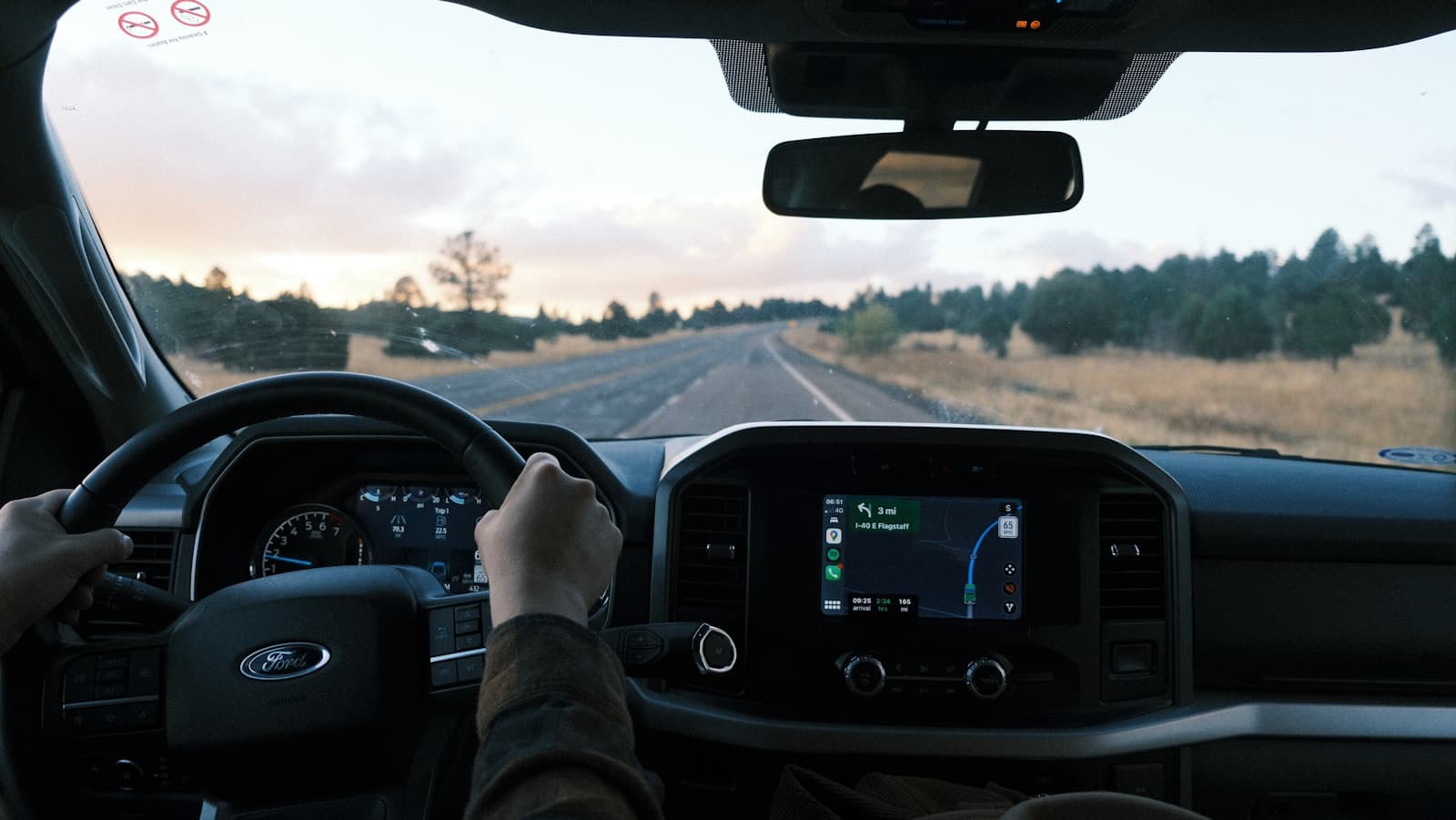
Utah allows restricted driving to and from work during suspension, but night shift workers face stricter proof-of-employment requirements and zero tolerance for route deviations.
Utah Restricted Licenses Allow Work Driving During DUI Suspension
Utah grants restricted driving privileges during post-DUI suspension periods, covering employment, medical appointments, substance abuse treatment, and court-ordered obligations. The restricted license does not replace your suspended license — it authorizes specific trips during specific hours while your regular license remains suspended.
Your restricted period begins after serving a mandatory suspension period. First-offense DUI requires 120 days full suspension before restricted eligibility. Aggravated DUI (BAC 0.16+, minor in vehicle, injury) extends the blackout to 180 days. Refusal of chemical testing blocks restricted privileges for the first 18 months of a 24-month suspension.
Night shift workers qualify for restricted work driving under the same statute as day shift employees, but enforcement scrutiny increases substantially during overnight hours. Officers assume restricted drivers on the road between midnight and 6 AM are violating terms unless documentation proves otherwise.
What Documentation Night Shift Workers Must Carry in the Vehicle
Utah Driver License Division requires employer verification on company letterhead showing your exact shift schedule, work location address, and supervisor contact information. The letter must state specific start and end times — "varies" or "rotating schedule" triggers manual review and potential denial.
You must carry three items in the vehicle during every restricted work trip: the physical restricted license card, the employer verification letter, and a map or written directions showing your approved direct route. Digital copies on your phone do not satisfy the requirement during roadside stops.
Update your employer letter within 10 days if your shift time changes, even by 30 minutes. Driving outside documented hours voids your restricted privilege and triggers a new 120-day full suspension starting from the violation date, not your original reinstatement timeline.
Find out exactly how long SR-22 is required in your state
How Utah Calculates Direct Route for Night Shift Commutes
Restricted license terms authorize "direct travel" to and from work. Utah statute does not define mileage tolerance, leaving interpretation to the arresting officer and administrative hearing officers. In practice, any stop beyond your documented route — gas stations, convenience stores, drive-throughs — constitutes a violation.
DMV approves the shortest time route between your residence and workplace, not shortest distance. If you live in Ogden and work night shift in Salt Lake City, I-15 South is your approved corridor. Taking surface streets to avoid tolls or backroads to dodge traffic requires documented DMV approval before the trip occurs.
Multiple job locations require separate employer letters and separate route approvals. Night shift workers holding two part-time jobs must document arrival/departure times at each location with at least 15 minutes separating the end of Job A and start of travel to Job B. Overlapping windows trigger violation findings.
SR-22 Filing Remains Required During Restricted License Period
Utah requires SR-22 filing for 3 years following DUI conviction, measured from conviction date, not license reinstatement date. Your SR-22 obligation runs concurrently with your restricted license period — you cannot drive on restricted privileges without active SR-22 on file with DMV.
Most major carriers (State Farm, Geico, Allstate, Progressive) non-renew existing customers at policy term after DUI conviction. New post-DUI SR-22 policies typically require non-standard carriers: Dairyland, Direct Auto, Bristol West, GAINSCO, The General. Monthly premiums for restricted license SR-22 coverage in Utah range $180–$320/mo depending on conviction class and prior insurance history.
An SR-22 lapse during your restricted period — even one day — triggers automatic suspension of restricted privileges and resets your 3-year SR-22 clock to zero. Night shift workers changing jobs or insurance carriers must ensure continuous SR-22 coverage bridges the transition with zero gap days.
Ignition Interlock Requirement Adds Complexity for Night Workers
Utah mandates ignition interlock devices (IID) for all DUI convictions with BAC 0.16+ and for any second or subsequent offense within 10 years. First-offense standard DUI (BAC 0.05–0.15) allows restricted driving without IID if you complete a substance abuse assessment and attend mandatory DUI education before applying.
Night shift workers subject to IID must pass breath tests before every engine start and at random intervals while driving. Failed rolling retests require you to pull over within 5 minutes and shut off the engine, which creates employment jeopardy if the failure occurs mid-commute. IID providers report all failures to DMV within 48 hours.
IID monthly costs run $75–$125 in Utah: installation, monthly monitoring, and calibration appointments every 60 days. Calibration appointments occur during business hours, forcing night shift workers to schedule around sleep cycles. Missing a calibration deadline by even one day triggers a lockout requiring tow service and DMV violation report.
How Restricted License Violations Reset Your Timeline
Driving outside approved hours, deviating from your documented route, or allowing SR-22 to lapse terminates restricted privileges immediately. Utah DMV imposes a new 120-day full suspension starting from the violation date, separate from and in addition to your original suspension.
The new suspension period does not run concurrently with your remaining original suspension — it stacks. If you violate restricted terms with 90 days left on your original suspension, you serve the remaining 90 days plus 120 additional days before restricted eligibility returns. Your SR-22 3-year clock does not reset unless the violation involved lapsed coverage.
Night shift workers face higher violation risk due to patrol enforcement assumptions during overnight hours. A 2 AM traffic stop for burned-out taillight turns into restricted license investigation. If your employer letter shows shift end at 1 AM and the stop occurs at 2:15 AM, the 75-minute window between work and stop requires explanation satisfactory to the officer on scene.
Reinstatement Process After Restricted Period Ends
Full license reinstatement after restricted period completion requires: proof of SR-22 filing for the full 3-year period, IID removal certificate if applicable, completion certificate from DUI education provider, $100 reinstatement fee, and new driver license photo. Processing takes 7–10 business days after DMV receives all documents.
Your SR-22 requirement continues 3 years from conviction date regardless of when your restricted period ends. If convicted January 1, 2024, your SR-22 runs through January 1, 2027, even if you regain full driving privileges in June 2025. Canceling SR-22 early triggers immediate suspension.
Night shift workers should request DMV reinstatement status check 30 days before anticipated reinstatement date. Missing documents or unfiled IID reports delay processing, and restricted privileges expire on the statutory end date whether or not DMV has processed full reinstatement paperwork.