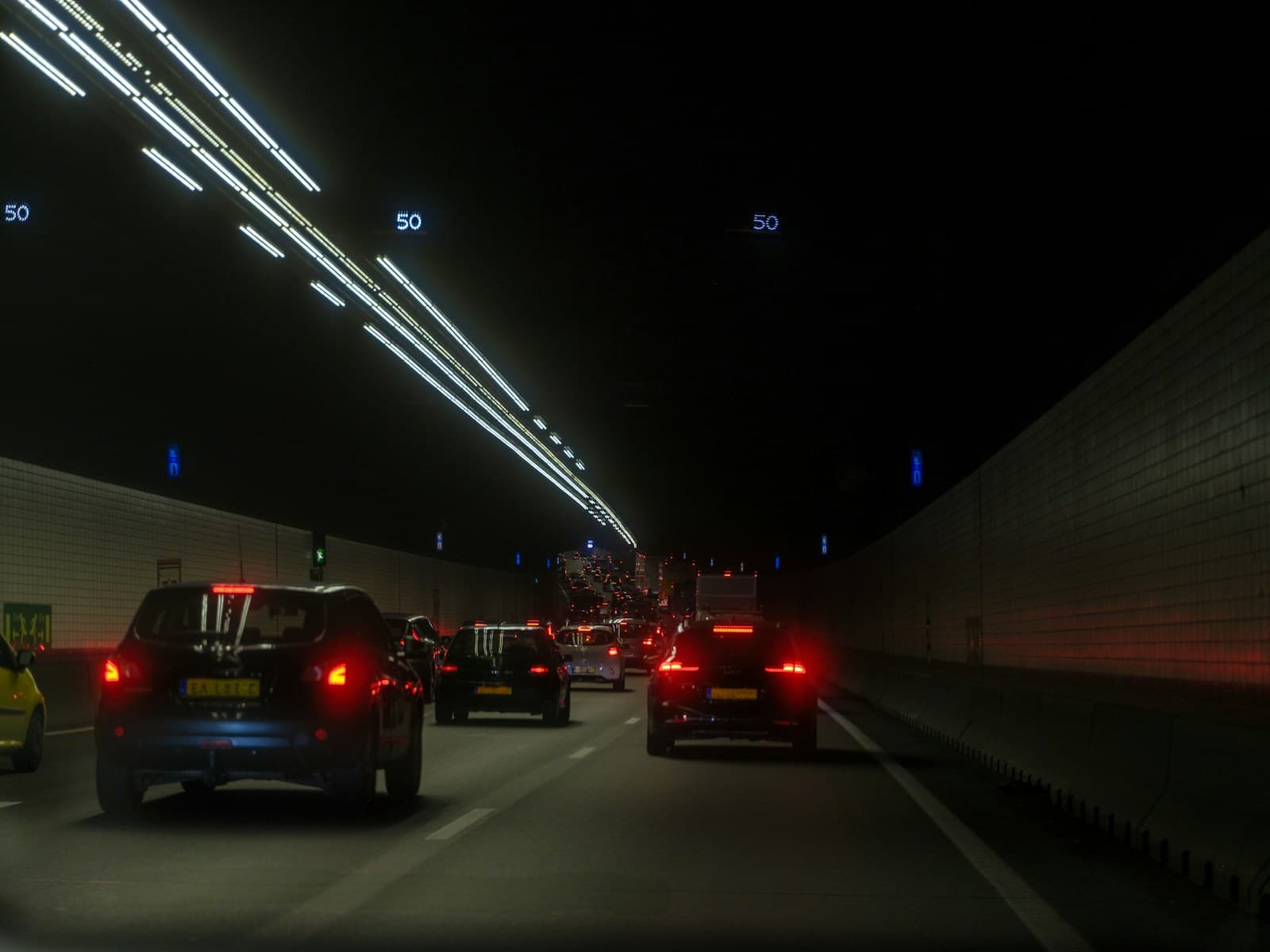
Tennessee restricted licenses allow employment-related driving, including night shifts, but curfew exceptions require written employer verification and work within specific time windows.
Tennessee Restricted Licenses Cover Employment Hours, Including Overnight Shifts
Tennessee restricted licenses issued after DUI conviction permit driving to and from work regardless of shift timing, including overnight and graveyard shifts. Tennessee Code Annotated §55-50-502 defines employment-related driving as permissible activity under restricted license terms, with no statutory exclusion for nighttime hours. The restriction applies to purpose, not clock time.
The confusion stems from Tennessee's separate ignition interlock curfew provision for repeat offenders, which restricts driving between 8 PM and 6 AM unless the driver has documented employer verification. First-offense DUI defendants receiving restricted licenses face no automatic curfew — their restriction limits where they can drive, not when. You can drive to work at 11 PM, drive home at 7 AM, and stop for nothing else.
Most night shift workers discover this gap during their first restricted license traffic stop. Officers unfamiliar with employment exemption language may question whether a 2 AM drive to a warehouse job qualifies as permissible use. Carrying written employer verification — a signed letter on company letterhead stating your shift schedule, work location, and direct route — eliminates discretionary interpretation during roadside encounters.
What Documentation You Need for Night Shift Driving Under Restriction
Tennessee DMV does not issue employer affidavits automatically with restricted licenses. You must request employer documentation and carry it in your vehicle during every work-related trip. The letter should include your full name, employer name and address, your work location if different from company headquarters, your scheduled shift days and hours, and your supervisor's signature with contact phone number.
This documentation serves two functions. It proves your stated destination matches your restricted license terms during a traffic stop. It also establishes that your 3 AM highway drive is not a violation of restricted license conditions, which would trigger a 6-month license revocation under Tennessee Code Annotated §55-50-502(d). Officers have statutory authority to verify employment claims by contacting your supervisor on the spot.
Carry the original signed letter, not a photocopy. Traffic enforcement in Tennessee operates under officer discretion for restricted license interpretation. A faded photocopy of an unsigned note will not protect you from a restricted license violation citation, even if your employer confirms your shift by phone three hours later. The time to resolve documentation questions is before you leave for your first night shift, not during a roadside stop on your way home.
Find out exactly how long SR-22 is required in your state
How SR-22 Filing Interacts With Restricted License Night Driving
Tennessee requires SR-22 filing for the entire restricted license period following DUI conviction, typically 1 year for first-offense standard DUI. Your SR-22 certificate proves continuous liability coverage to the Tennessee Department of Safety, but it does not modify your restricted license terms or expand permissible driving hours. The SR-22 and the restricted license operate as separate compliance requirements with different consequences for violation.
If your SR-22 lapses during your restricted license period — because you missed a payment, changed carriers without continuous coverage, or your insurer cancelled your policy — Tennessee suspends your license immediately. This suspension revokes your restricted driving privileges entirely, including employment-related driving. You cannot legally drive to work at any hour until you file a new SR-22 and pay reinstatement fees, which typically add $50–$75 in administrative costs beyond the new SR-22 filing fee.
Non-standard carriers in Tennessee that write DUI-SR-22 policies — Bristol West, Dairyland, The General, GAINSCO, Direct Auto — understand restricted license employment documentation because their customer base consists primarily of DUI offenders navigating stacked compliance. Most will accept employer shift letters as supporting documentation during policy application to confirm your stated annual mileage and primary vehicle use, which affects your premium calculation. Tennessee DUI-SR-22 rates for restricted license holders average $180–$280/mo depending on conviction class, prior violations, and whether you carry state minimum liability or higher limits.
What Happens If You Drive Outside Permitted Hours or Purposes
Tennessee restricted licenses limit driving to specific purposes: employment, medical appointments, court-ordered obligations like DUI school or probation meetings, educational attendance, and necessary household errands. Driving to work at midnight qualifies. Stopping at a bar on the way home does not, even if the bar is directly on your route and you consume no alcohol.
Officers who stop you during restricted license hours will ask for your destination and purpose. If your stated purpose does not match your employer letter — you're driving away from work instead of toward it, or you're 15 miles off your direct route — you face a restricted license violation charge. Tennessee treats this as a separate offense from your underlying DUI, punishable by 6-month license revocation and potential jail time under contempt provisions if your restricted license was court-ordered rather than DMV-issued.
The violation threshold is strict interpretation. Tennessee does not recognize "reasonable deviation" for personal errands during work commutes under restricted license terms. Stopping for gas is permissible if directly on your route. Stopping at a girlfriend's house between work and home is not, regardless of how briefly you stay or whether you've consumed alcohol. During your restricted license period, your vehicle becomes a point-to-point transportation tool, not a general mobility device.
How Long Tennessee Restricted Licenses Last After DUI
Tennessee issues restricted licenses for 1 year following first-offense DUI conviction with BAC under 0.20%, measured from your reinstatement date, not your conviction date. This means your restricted period starts the day you pay reinstatement fees, file SR-22, complete DUI school, and receive your restricted license from the DMV — typically 30–90 days after conviction depending on how quickly you satisfy pre-reinstatement requirements.
Aggravated DUI convictions in Tennessee — BAC 0.20% or higher, child under 18 in vehicle, or DUI causing injury — extend the restricted license period to 2 years. Second-offense DUI within 10 years triggers 2-year restricted license plus mandatory ignition interlock installation for the entire period. The interlock device adds equipment cost ($75–$150 installation, $60–$90/mo monitoring) but does not change your employment driving privileges or night shift access.
Your restricted license converts to full unrestricted license automatically at the end of your restriction period, provided you maintained continuous SR-22 filing and committed no violations during restriction. Tennessee DMV does not send notification when your restricted period ends. You must track the calendar date yourself. Many DUI offenders continue driving under self-imposed restrictions for months after their actual restriction period expires because they never confirmed their reinstatement status.
When Ignition Interlock Curfews Override Employment Exemptions
Tennessee repeat offenders and first-offense aggravated DUI defendants face mandatory ignition interlock installation under Tennessee Code Annotated §55-10-417. Interlock devices include curfew settings that prevent vehicle startup between 8 PM and 6 AM unless you obtain a specific curfew exemption from your interlock provider and the Tennessee Department of Safety.
The curfew exemption requires the same employer documentation described above, submitted to your interlock monitoring company, which then requests approval from the state. Approval typically takes 7–14 business days. Without approved exemption, your interlock device will not allow engine startup during restricted hours, even if your employment letter is valid and your shift starts at midnight. This creates a compliance gap for night shift workers: your restricted license permits the drive, but your interlock device physically prevents it.
You cannot bypass interlock curfew by driving a different vehicle. Tennessee's interlock requirement applies to every vehicle you operate, not just your registered vehicle. Driving any car without an interlock during your mandated interlock period — even a company vehicle for work purposes — constitutes a restricted license violation and triggers immediate license revocation. Night shift workers under interlock orders must either obtain curfew exemption before their first shift or arrange alternative transportation that does not involve them driving.