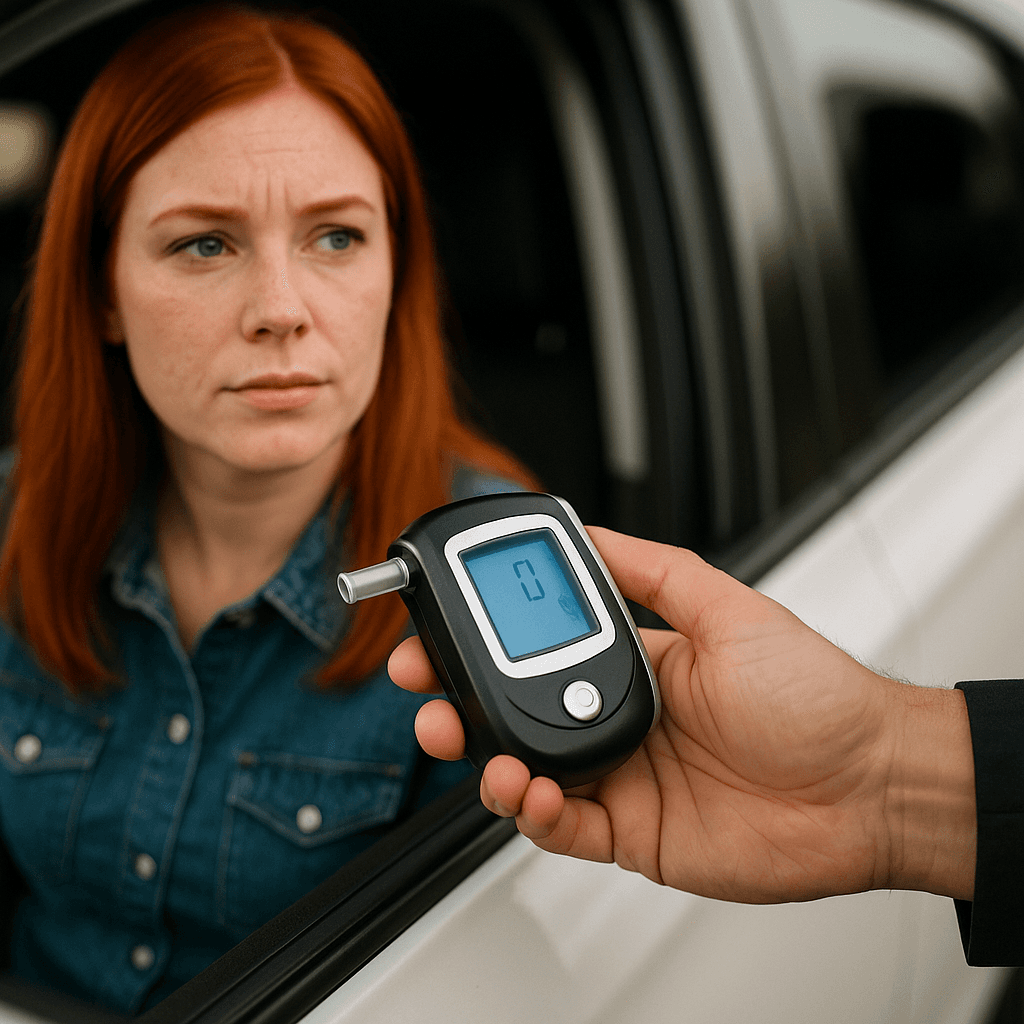
Wyoming restricted licenses permit work-related driving at any hour, but your SR-22 filing must stay active through the full 90-day suspension period even if you regain full privileges earlier.
Wyoming Restricted Licenses Don't Differentiate by Time of Day
Wyoming's restricted license program allows work-related driving at any hour, including night shifts, graveyard shifts, and rotating schedules. The statute governing restricted privileges during DUI suspension (Wyoming Stat. § 31-7-127) defines permissible driving by purpose — employment, medical appointments, education, court-ordered treatment — not by time window. If driving to and from work at 2:00 PM is legal under your restriction order, driving to the same job at 2:00 AM is equally legal.
Employers frequently misunderstand this. HR departments see "restricted license" and assume daylight-only permissions or a curfew-style limitation. Wyoming DMV does not impose time-of-day restrictions on work permits. Your court order or DMV notice will specify allowed purposes. If employment driving is listed, the hour is irrelevant. Bring your restriction documentation to your employer — the order itself will not reference time limits.
One exception exists: if your court order or probation terms include a separate curfew unrelated to the license restriction, that curfew still applies. Review both your DMV restricted license notice and any probation conditions. Most first-offense DUI convictions in Wyoming result in restricted driving privileges without additional curfew requirements, but aggravated or repeat-offense cases may stack conditions.
SR-22 Filing Must Remain Active for 90 Days Regardless of Restriction Lift
Wyoming requires SR-22 filing for 90 days following a DUI conviction, measured from the date of conviction. The filing requirement runs independently of your license restriction period. If your restricted license is lifted after 60 days and you regain full driving privileges, your SR-22 obligation continues for the remaining 30 days. Allowing your SR-22 to lapse during this window — even one day — resets the 90-day clock to zero and re-suspends your license.
This creates a common trap for night-shift workers who regain full licenses mid-filing period. You receive notice that your restriction is lifted, assume you're done with DUI requirements, and cancel your SR-22 policy to save money. Wyoming DMV receives the SR-22 cancellation notice from your carrier and immediately suspends your license again. You must refile SR-22, pay reinstatement fees a second time, and restart the 90-day countdown.
Verify your exact filing end date with Wyoming DMV before making any changes to your SR-22 policy. The conviction date — not the restriction lift date, not the reinstatement date — determines when your 90-day obligation ends. Most drivers maintain SR-22 for the full term, then cancel only after receiving written confirmation from DMV that the requirement is satisfied.
Find out exactly how long SR-22 is required in your state
Which Carriers Write SR-22 Policies for Night-Shift Workers in Wyoming
Most major carriers will not write new DUI-SR-22 policies in Wyoming. State Farm, Geico, Allstate, and Progressive typically non-renew existing customers at policy term after a DUI conviction, and rarely accept new customers with active SR-22 requirements. Wyoming's non-standard auto insurance market handles the majority of DUI-SR-22 filings, with carrier availability varying by region.
Bristol West, Dairyland, and GAINSCO maintain active appointed agents in Wyoming and write SR-22 policies for first-offense and repeat-offense DUI convictions. The General and Direct Auto operate in select Wyoming counties, primarily concentrated near Casper, Cheyenne, and Laramie. Acceptance Insurance and Kemper write DUI-SR-22 business statewide but require physical vehicle inspection before binding coverage. Non-standard carriers price DUI-SR-22 policies based on conviction class, BAC level, and filing duration — expect monthly premiums between $120–$240/mo for minimum liability limits with SR-22 endorsement.
Night-shift workers do not face additional underwriting scrutiny or higher premiums due to work schedule. Carriers price based on the DUI conviction, your prior insurance history, and the vehicle being insured. Some carriers request employer verification to confirm work-related driving need, but shift timing does not affect rate calculation. If you own the vehicle you drive to work, you need an owner SR-22 policy. If you drive an employer-owned vehicle or do not own a car, non-owner SR-22 coverage satisfies Wyoming's filing requirement at lower cost, typically $40–$80/mo.
Restricted License Scope: What Counts as Work-Related Driving
Wyoming defines work-related driving broadly. Direct commute between home and your primary workplace is always permitted. Side trips during the commute — stopping for gas, picking up a coworker who shares your shift, dropping off your child at daycare on the way to work — are generally allowed if they are reasonable deviations directly connected to your employment activity. Detours unrelated to work, such as stopping at a bar, visiting a friend, or running personal errands, violate the restriction and can result in a separate driving under suspension charge.
Multiple job sites are permitted if you list all employment locations on your restricted license application. Night-shift workers with two part-time jobs, or workers who rotate between job sites (construction crews, home health aides, delivery drivers), should list every work address. Wyoming DMV does not limit the number of authorized work locations. Your restriction order will specify "employment" as an allowed purpose without listing individual addresses, but law enforcement may request verification during a traffic stop.
On-call or variable-schedule work presents enforcement risk. If you are called in for an emergency shift outside your normal schedule, that trip is legally covered under the employment purpose restriction. However, if stopped by law enforcement at 3:00 AM on a road that does not align with your documented commute route, you may face additional scrutiny. Carry documentation: your work schedule, employer contact information, and any on-call rotation paperwork. Wyoming law enforcement has discretion to verify the work-related nature of your trip before determining whether the restriction was violated.
What Happens If You're Stopped While Driving on a Restricted License
Law enforcement will verify that your trip falls within the authorized purposes listed on your restricted license order. If you are driving to or from work during your scheduled shift, the stop typically results in no additional penalty beyond any traffic violation that triggered the stop. If your trip does not align with an authorized purpose — you are out driving recreationally, running personal errands unrelated to work, or traveling at a time inconsistent with your documented employment schedule — you will be charged with driving under suspension, a separate criminal offense in Wyoming.
Driving under suspension after a DUI conviction carries a mandatory 6-month license suspension, $200–$500 fine, and possible jail time up to 6 months for a first violation. A second driving-under-suspension offense triggers a 1-year license suspension and higher fines. These penalties stack on top of your existing DUI consequences and extend your SR-22 filing requirement. Each new suspension resets the 90-day SR-22 clock, and additional violations may disqualify you from restricted license eligibility entirely.
Night-shift workers face higher stop probability during late hours, particularly in rural Wyoming counties where late-night traffic is uncommon. Ensure your vehicle registration, insurance card, and SR-22 proof of filing are current and accessible. Carry a copy of your restricted license order and your work schedule. If your employer provides a shift verification letter, keep it in your vehicle. Courteous, clear explanation of your work schedule and restriction terms typically resolves the stop without incident, but the burden of proof is on you to demonstrate the trip's legitimacy.
Costs: SR-22 Filing Fees, Reinstatement Fees, and Premium Increases
Wyoming charges a $75 license reinstatement fee after DUI suspension, payable to the DMV when you apply for your restricted license. The SR-22 filing itself — the certificate your carrier submits to Wyoming DMV — costs $15–$50 depending on the carrier, paid once at policy inception. Your carrier will include this fee on your first premium invoice. If your SR-22 lapses and you must refile, you pay the filing fee again plus a second $75 reinstatement fee to DMV.
SR-22 endorsement does not increase your premium directly. The DUI conviction increases your premium. Carriers classify DUI convictions as major violations, typically triggering a 70–130% rate increase over your pre-conviction premium. A Wyoming driver paying $90/mo before a DUI can expect post-conviction SR-22 rates between $150–$210/mo with a non-standard carrier. High BAC readings (0.15% or above), refusal to submit to chemical testing, or repeat-offense DUI convictions push premiums toward the upper end of that range.
Maintaining SR-22 for the full 90-day period without lapse is critical to avoid doubled costs. A single-day lapse requires you to pay the $50 SR-22 filing fee again, the $75 DMV reinstatement fee again, and restart the 90-day filing countdown. If the lapse occurs because you switched carriers and the new carrier delayed filing, or because you cancelled your policy assuming your restriction period was over, you are treated identically to a driver who let coverage lapse intentionally. Wyoming DMV does not distinguish between lapse reasons.
How to Transition Off SR-22 After Your 90-Day Filing Period Ends
Contact Wyoming DMV 10–14 days before your 90-day SR-22 period ends and request written confirmation that your filing requirement is satisfied. DMV will verify that your carrier has maintained continuous SR-22 filing for the full 90 days from your conviction date and that no additional violations or lapses have extended the requirement. Once DMV confirms your obligation is complete, contact your insurance carrier and request removal of the SR-22 endorsement from your policy.
Do not cancel your policy to remove SR-22. Cancelling your entire policy triggers an SR-22 lapse notice to DMV, which will suspend your license even if your 90-day period is technically complete. Instead, ask your carrier to remove the SR-22 endorsement while keeping your underlying liability coverage active. Your premium will not decrease immediately — the DUI conviction remains on your Wyoming driving record for 10 years and continues to affect your rates for 3–5 years depending on carrier underwriting rules.
After SR-22 removal, you can shop for lower rates. Non-standard carriers that wrote your DUI-SR-22 policy often charge higher base premiums than standard-market carriers. Once your SR-22 requirement ends, request quotes from mid-tier carriers such as Nationwide, American Family, and Farmers. These carriers may offer lower rates than non-standard carriers for drivers 12–18 months post-conviction, though you will still pay significantly more than a driver with a clean record. Expect gradual rate decreases annually as your DUI conviction ages, with the steepest reduction occurring 3–5 years after the conviction date.