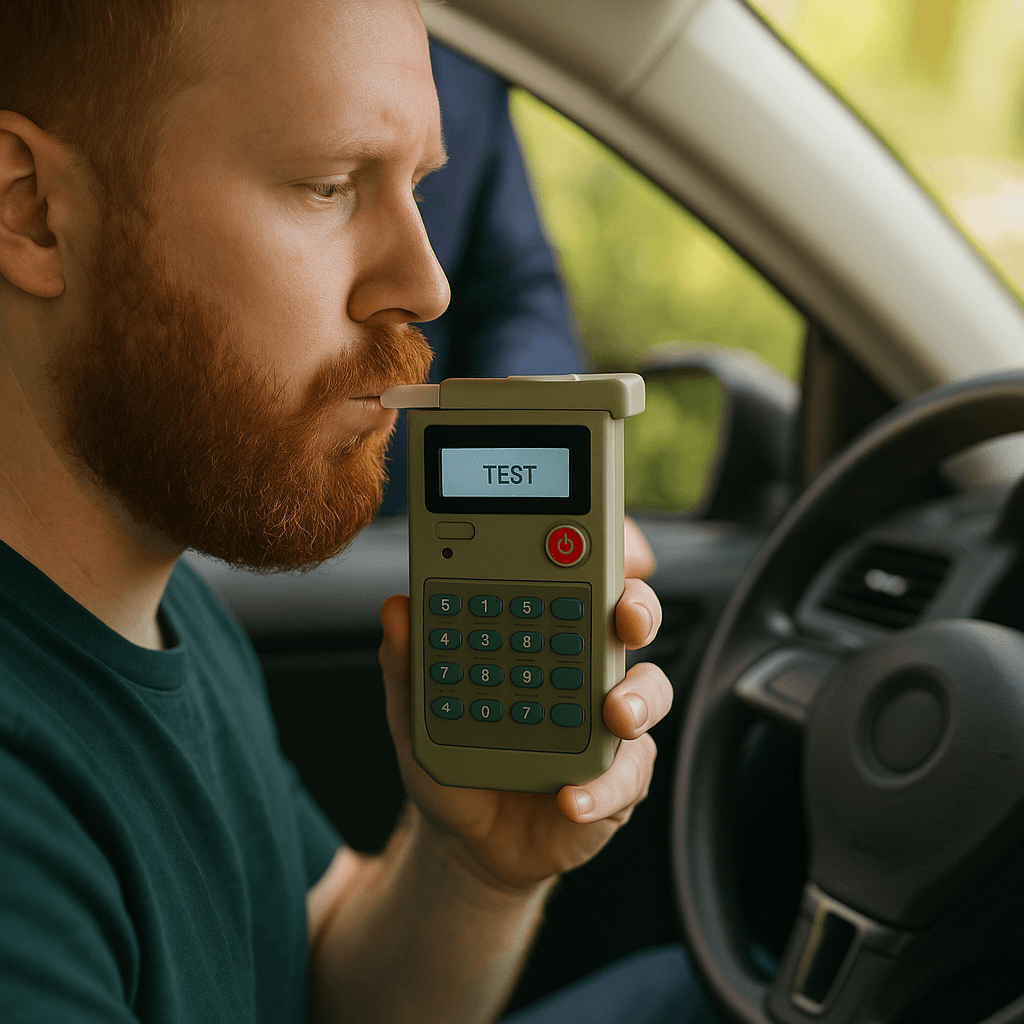
Maine's DUI reinstatement process requires SR-22 filing before your restricted license activates — installing your IID first leaves you paying rental fees on a device you can't legally drive with until the BMV processes your filing.
Maine Requires Active SR-22 Before Restricted License Approval
The Maine Bureau of Motor Vehicles will not approve a work-restricted license until your SR-22 certificate is on file in their system, regardless of when your court order mandates IID installation. This creates a coordination problem most drivers discover only after they've already signed an IID lease.
Your court sentencing order lists IID installation as a reinstatement condition, which makes it seem like the first step. But the BMV's restricted license application (Form BMV-34) requires proof of continuous SR-22 coverage before they'll even review your work license petition. No SR-22 on file means no restricted license approval, which means no legal authority to drive the IID-equipped vehicle, which means you're paying $70–$100/month in IID rental and monitoring fees for a device you cannot use.
The correct sequence: secure SR-22 coverage from a non-standard carrier willing to write post-DUI policies, submit Form BMV-34 with your SR-22 certificate attached, wait for BMV restricted license approval (typically 7–14 business days), then schedule IID installation. Installing the IID before your restricted license is approved adds two weeks of unnecessary rental charges and creates confusion about when your compliance clock actually starts.
What the Court Order Actually Requires
Maine District Court DUI sentencing orders list IID installation as a condition of license reinstatement, but they do not specify the installation must occur before you file SR-22. The court order sets the total duration — typically 150 days for first-offense OUI with BAC above .15, one year for second offense — but does not control the BMV's administrative sequence for restricted license approval.
The confusion stems from how the order reads. It states: "Defendant's license suspended for 150 days, with work-restricted license available after 30 days contingent upon completion of: (1) Level I alcohol program, (2) SR-22 filing, (3) IID installation." Most drivers interpret this as a checklist to complete in order. But the BMV interprets it as eligibility requirements for restricted license application, and their internal processing rules require active SR-22 before restricted license issuance.
Your IID provider — usually Smart Start, Intoxalock, or LifeSafer in Maine — will install the device whenever you schedule it. They do not verify your restricted license status before installation because they are paid whether you can legally drive or not. This is why calling the IID company first leads to the expensive sequencing mistake.
Find out exactly how long SR-22 is required in your state
Why Non-Standard Carriers File SR-22 Faster Than Your Current Insurer
If you held a policy with State Farm, Geico, Allstate, or Progressive before your DUI, they will file SR-22 for you as an existing customer — but most will non-renew your policy at the next term, which creates a second SR-22 lapse problem six months later. Worse, their SR-22 processing timelines are built for standard-risk drivers and average 5–7 business days from payment to BMV receipt.
Non-standard carriers who specialize in post-DUI coverage — Bristol West, Dairyland, GAINSCO, The General, and Progressive's non-standard division — process SR-22 filings in 24–48 hours because their entire book is high-risk and the filing is their core product. They submit electronically to the Maine BMV, and most drivers see their SR-22 reflected in the BMV system within two business days.
Switching to a non-standard carrier before filing SR-22 costs more per month — expect $180–$320/mo for liability-only coverage with SR-22 endorsement in Maine compared to $90–$150/mo pre-DUI — but eliminates the non-renewal cliff and ensures your filing stays active for the full three-year requirement without lapses.
How the Restricted License Timeline Actually Works
Maine allows work-restricted license application 30 days into your suspension for first-offense OUI, immediately for second offense if you completed the administrative suspension. You submit Form BMV-34, proof of employment or education enrollment, proof of Level I program completion, and your SR-22 certificate. The BMV reviews the application and issues a decision in 7–14 business days.
Once approved, your restricted license permits driving to and from work, school, the IID service center, medical appointments, and court-ordered programs. You must have the IID installed and calibrated before your first restricted drive. This is when you schedule installation — after BMV approval, not before.
Your IID compliance period starts the day of installation, not the day of restricted license approval. If the court ordered 150 days of IID, that clock runs from your first calibration. Installing two weeks early because you misunderstood the sequence does not shorten your total compliance period — it just costs you an extra $150–$200 in rental fees during weeks you could not legally drive.
What Happens If You Install IID Before SR-22 Filing
You pay for a device you cannot use, and you create documentation confusion that can delay your restricted license approval. The BMV restricted license reviewer sees an IID installation date that precedes your SR-22 filing date and flags it for supervisor review because the sequence suggests you may have been driving without valid insurance during the gap.
Some IID providers in Maine offer "lease start date adjustment" if you notify them within 72 hours of installation that your restricted license was not yet approved. They will backdate your lease to the restricted license approval date and refund the gap period. But this is a courtesy policy, not a legal requirement, and it requires you to catch the mistake immediately.
If your restricted license application is denied for any reason after you've installed the IID — most common reasons are incomplete Level I documentation or employer letter defects — you are stuck paying monthly rental and monitoring ($70–$100/mo) until you resolve the deficiency and reapply. The IID provider will not remove the device or pause billing because the court order mandates installation regardless of restricted license status.
The Correct Step Sequence for Maine DUI Reinstatement
First, complete your court-ordered Level I alcohol education program and obtain the completion certificate. This typically takes 9–12 hours over three weeks. Second, contact a non-standard carrier and purchase an SR-22 liability policy with continuous coverage for at least three years. Confirm they submit the SR-22 electronically to the Maine BMV and request confirmation once the filing is accepted.
Third, wait 48–72 hours, then call the BMV licensing division at 207-624-9000 extension 52114 and verify your SR-22 is on file in their system. Do not rely on the carrier's word alone — the BMV's database is the only record that matters for restricted license approval. Fourth, submit Form BMV-34 with your SR-22 certificate, Level I completion certificate, employer letter, and $35 processing fee.
Once you receive your restricted license approval letter from the BMV — typically 7–14 business days after submission — schedule IID installation with your chosen provider. Installation takes 60–90 minutes, and your compliance period begins that day. You will return every 60 days for calibration and data download, which the BMV monitors for violations.