Maine requires DUI compliance in a specific order: court fees and suspension period first, IID installation second, SR-22 filing last. Filing SR-22 before your license is reinstatable wastes money on a policy the BMV can't process.
Maine's DUI Compliance Sequence: Court Fees and Suspension Come Before SR-22
Maine structures DUI compliance as a three-phase process with mandatory sequencing. Court-ordered fees and license suspension happen immediately after conviction. IID installation is required before reinstatement eligibility begins. SR-22 filing is the final step, proving you have continuous insurance coverage after all other conditions are met.
Most drivers attempt to file SR-22 immediately after conviction, assuming it starts their clock toward reinstatement. Maine's Bureau of Motor Vehicles cannot process SR-22 filings until your suspension period ends and all court-ordered conditions are satisfied. Filing early means paying for SR-22 coverage during months when your license isn't reinstatable, effectively doubling the cost of your compliance period.
The statutory sequence exists because Maine law requires proof of continuous insurance only after reinstatement. During suspension, you're legally barred from driving, so SR-22 serves no regulatory purpose. IID comes second because you must demonstrate device compliance before the BMV will consider your reinstatement application.
Step One: Court Fees and License Suspension Start on Conviction Date
Maine imposes court fees and license suspension on the date of DUI conviction, not the sentencing date or the date you complete other penalties. First-offense OUI conviction carries a $500 minimum fine plus $145 in mandatory court fees. License suspension begins immediately: 150 days for first offense, 3 years for second offense, 6 years for third or subsequent.
The suspension runs concurrently with any jail time or probation, but it does not pause if you delay paying fees. Unpaid court fees add a separate license suspension under 29-A M.R.S. §2605, which extends your total ineligibility period. The BMV will not consider reinstatement until all financial obligations appear as satisfied in the Judicial Branch's violation bureau system.
Refusing a breath or blood test triggers an administrative suspension separate from the criminal OUI conviction: 275 days for first refusal, 18 months for second, 4 years for third. If convicted of OUI after refusal, both suspensions apply, but Maine runs them concurrently, not consecutively. Your total suspension is the longer of the two periods, not the sum.
Find out exactly how long SR-22 is required in your state
Step Two: IID Installation Is Required Before Reinstatement Eligibility
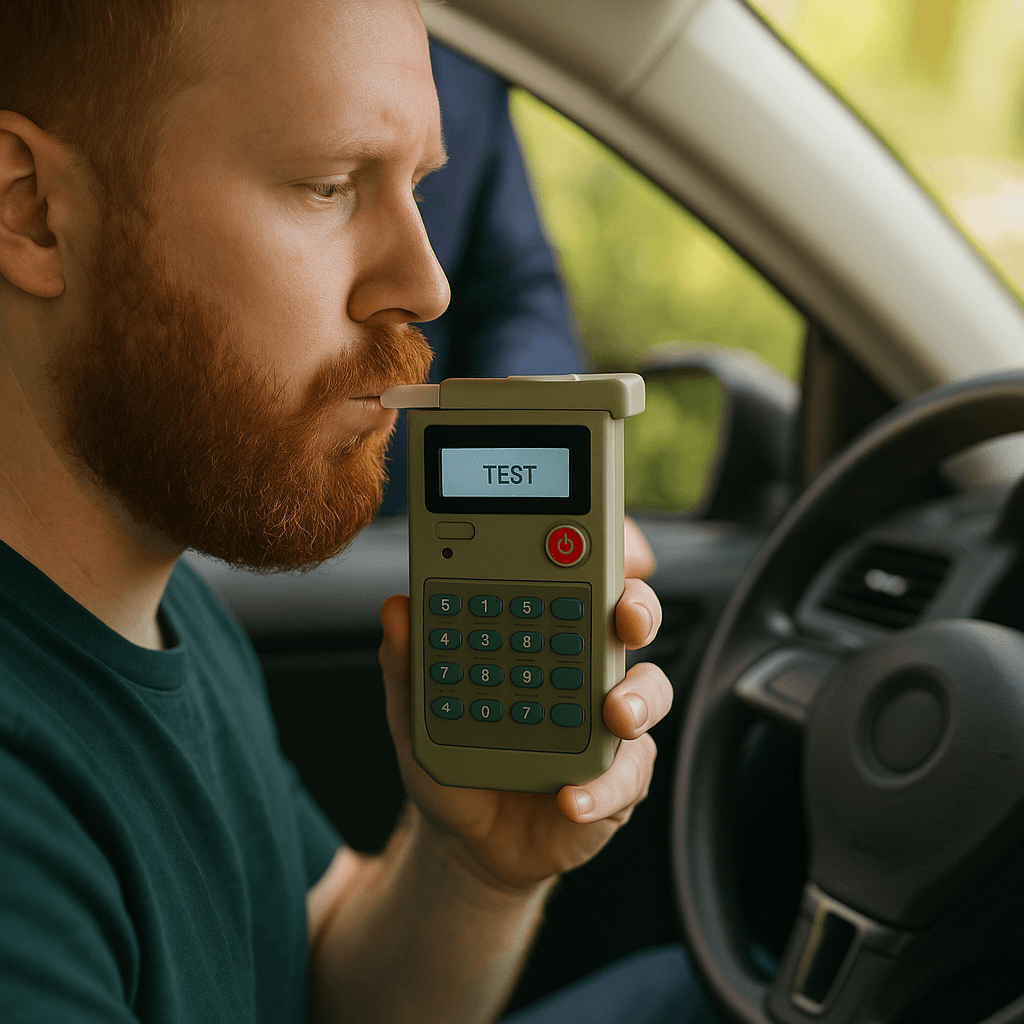
Maine requires ignition interlock device installation for all OUI convictions, including first offense. You must install IID from a state-approved vendor and maintain it for the full compliance period: 150 days for first offense, 3 years for second, 6 years for third. The compliance period does not begin until the device is installed and calibrated, even if your suspension has already ended.
IID vendors in Maine include LifeSafer, Intoxalock, and Smart Start. Installation costs $75–$150, monthly lease fees run $70–$100, and calibration appointments every 30–60 days cost $15–$30 per visit. Total cost for a first-offense 150-day IID period typically reaches $700–$900. The BMV does not waive IID requirements based on financial hardship for OUI convictions.
You can install IID during your suspension period to start the compliance clock early, but your license remains suspended until the statutory suspension period ends. Most drivers install IID 30–60 days before their suspension ends to ensure the device is active and compliant when they apply for reinstatement. The BMV requires proof of continuous IID compliance—no tampering violations, no failed startup tests, no missed calibration appointments—before processing reinstatement.
Step Three: SR-22 Filing Proves Continuous Insurance After Reinstatement
Maine requires SR-22 filing for 3 years after OUI conviction, measured from the reinstatement date, not the conviction date. The BMV will not reinstate your license until you submit proof of SR-22 insurance coverage meeting state minimum liability limits: $50,000 bodily injury per person, $100,000 per accident, $25,000 property damage.
SR-22 is a certificate filed by your insurance carrier with the BMV confirming you have active coverage. It is not a separate insurance policy. Most drivers pay $15–$25 for the one-time SR-22 filing fee, but the real cost is the insurance premium increase: OUI convictions trigger 80–140% rate increases in Maine. Expect to pay $180–$280/mo for SR-22 insurance after OUI, compared to $75–$110/mo for clean-record drivers.
Filing SR-22 before your reinstatement date is eligible wastes money. If you file SR-22 while still suspended, you pay for coverage the BMV cannot process. The 3-year SR-22 clock does not start until reinstatement is granted. Most drivers should initiate SR-22 coverage 7–10 days before their scheduled reinstatement appointment to ensure the filing reaches the BMV before the appointment date.
Carrier Availability and the Non-Standard Market After Maine OUI
Most major carriers—State Farm, Geico, Allstate, Progressive—will file SR-22 for existing customers after OUI conviction but typically non-renew at policy term. New policies after OUI require the non-standard market in Maine: GAINSCO, The General, Dairyland, Bristol West, Acceptance. Not all non-standard carriers operate statewide; availability varies by county and driver history.
Non-standard carriers price OUI differently. GAINSCO and Dairyland typically offer the lowest rates for first-offense OUI with clean prior history. The General and Bristol West accept repeat offenders but charge 15–30% more. If your OUI included aggravating factors—BAC above 0.15%, minor in vehicle, refusal, property damage—expect surcharges of 20–50% on top of base OUI pricing.
Non-owner SR-22 policies cost $30–$60/mo in Maine and satisfy the SR-22 requirement if you do not own a vehicle. This option works for drivers using public transit, employer vehicles, or borrowed cars during the 3-year filing period. Non-owner SR-22 does not cover a vehicle you own or regularly operate, and the BMV will reject the filing if you register a vehicle in your name while holding non-owner coverage.
Common Sequencing Mistakes That Delay Reinstatement
Filing SR-22 before completing your suspension and IID periods is the most common error. The BMV holds the SR-22 filing but does not process reinstatement until all other conditions are satisfied. If your SR-22 lapses during this waiting period—even one day of non-coverage—Maine resets your 3-year SR-22 clock to zero from the lapse date.
Installing IID without paying court fees delays reinstatement even if your IID compliance period is complete. The BMV's reinstatement system flags unpaid violations automatically. Most drivers discover this during their reinstatement appointment, requiring a second trip after payment clears.
Assuming your 3-year SR-22 period starts on conviction date instead of reinstatement date extends your total compliance timeline by 6–12 months. Maine statute 29-A M.R.S. §2411 specifies that SR-22 duration runs from reinstatement, not sentencing. The BMV does not backdate SR-22 filing periods under any circumstance.
Reinstatement Timeline and What Happens After SR-22 Ends
Maine's full compliance timeline for first-offense OUI: 150-day suspension begins on conviction, IID compliance runs 150 days from installation, SR-22 filing lasts 3 years from reinstatement. Total timeline from conviction to full compliance: approximately 3.5 years if you sequence steps correctly. Sequencing errors or lapses extend this by 6–18 months on average.
After 3 years of continuous SR-22 coverage with no lapses, your insurance carrier files an SR-26 form with the BMV confirming the SR-22 requirement is satisfied. You do not need to request SR-26 filing—the carrier submits it automatically on your compliance end date. The BMV updates your driver record within 10–15 business days, and you can shop for standard insurance rates again.
Most drivers see rate reductions of 40–60% when moving from SR-22 non-standard coverage back to standard market coverage after the 3-year period. The OUI conviction remains on your Maine driver record for 10 years and on your insurance record for 3–5 years depending on carrier. Full rate normalization typically takes 5–7 years after conviction as the OUI ages out of carrier pricing algorithms.