New York allows conditional licenses during DUI suspension for childcare, medical visits, and work — but the 15-day DMV hearing window starts at arrest, not conviction, and most parents miss it.
New York's Conditional License Allows Driving for Your Kids During Suspension
New York DMV grants conditional licenses during DUI suspension periods specifically for childcare, medical appointments, school transport, work commutes, and court-ordered programs. A single parent caring for dependents qualifies for this restricted driving privilege even with a pending DUI conviction. The conditional license functions during your suspension period — typically 90 days for a first offense, 12 months for refusal cases — and requires SR-22 filing before the DMV grants approval.
The window to request this privilege is 15 calendar days from your arrest date, not your conviction date. Most parents assume the process starts after court sentencing, which means they miss the hearing deadline entirely. Once the 15-day answer period expires, your only option is a hardship license application after conviction, which carries a higher denial rate and requires proof of extraordinary hardship beyond childcare.
Your conditional license restricts you to specific purposes: transporting children to school or daycare, medical appointments for you or your dependents, attending alcohol education programs, work commutes, and court appearances. You list these destinations on your DMV application form DS-345. Driving outside approved purposes triggers immediate revocation and adds criminal driving while suspended charges to your DUI case.
SR-22 Filing Must Happen Before Your DMV Hearing, Not After Conviction
New York DMV requires proof of SR-22 financial responsibility coverage before they schedule your conditional license hearing. This creates a timing trap for parents who wait until after their court conviction to shop for insurance. Your DMV hearing happens during the pre-conviction suspension period — you need the SR-22 filed within days of your arrest to preserve your hearing date.
Most mainstream carriers will file SR-22 for existing customers but non-renew your policy at the next term. State Farm, Geico, Allstate, and Progressive typically process SR-22 endorsements for current policyholders but send non-renewal notices 30-60 days before your policy expires. If you're a new customer seeking coverage after a DUI arrest, you need the non-standard market: Direct Auto, Dairyland, Bristol West, and GAINSCO write new DUI policies in New York with same-day SR-22 filing.
The SR-22 certificate costs $25-50 to file in New York. Your insurance premium increase is the real cost — expect 80-150% rate increases after a DUI conviction. A parent previously paying $140/mo for liability coverage typically sees premiums jump to $250-350/mo once the SR-22 and DUI conviction appear on their MVR. Your filing period runs for three years from your conviction date in New York, not from the date you first filed.
Find out exactly how long SR-22 is required in your state
Your 15-Day Answer Period Starts at Arrest, and Missing It Costs You the Conditional License
The arrest date triggers your 15-day window to request a DMV hearing, not the arraignment date or conviction date. New York trooper and local police departments issue form PS-323 at the time of arrest — that date starts the clock. You mail or deliver form AA-509 to the DMV address printed on your suspension notice within 15 calendar days. Weekends and holidays count.
If you miss the 15-day deadline, your suspension starts automatically and you lose the right to a conditional license during the suspension period. Your next opportunity comes after conviction, when you can apply for a post-conviction hardship license. DMV approval rates for post-conviction hardship licenses run significantly lower than pre-conviction conditional licenses because the standard shifts from routine eligibility to extraordinary hardship proof. Single parenthood alone does not meet the extraordinary hardship threshold — you need medical documentation of a dependent's condition requiring your transport, or proof that no other family member or public transit option exists.
Parents who preserve their hearing date and attend the DMV proceeding with SR-22 proof filed receive conditional license approval in 70-80% of cases for first-offense DUI, based on DMV administrative hearing data. Refusal cases and repeat offenses face stricter review, but childcare responsibilities still qualify as approved conditional use.
Childcare Counts as Approved Conditional Use, But You Must List Every Destination
Your conditional license application requires you to list specific addresses for approved driving purposes. Daycare facilities, schools, pediatrician offices, your workplace, your DUI education program location, and the courthouse all appear on form DS-345. You cannot add destinations after DMV approval — if your child changes schools mid-suspension, you file an amendment request with DMV, which takes 10-15 business days to process.
Driving to a grocery store, visiting family, or running errands outside your approved list violates your conditional license terms. New York treats conditional license violations as aggravated unlicensed operation in the second degree, a misdemeanor carrying up to 180 days jail time and immediate license revocation. Police stops during your conditional period trigger automatic license checks — the officer sees your restricted status and verifies your destination against your approved list.
Parents managing multiple children at different schools list each location separately. Your work schedule, childcare schedule, and program attendance schedule all appear on the application with specific days and times. DMV reviews the list for reasonableness — a conditional license approving 18 different weekly destinations raises fraud flags and triggers denial. Keep your list to genuinely necessary recurring trips, typically 5-8 locations total.
Your DUI Conviction Starts a Separate Three-Year SR-22 Filing Period
New York requires SR-22 filing for three years following your DUI conviction date. This period runs independently from your suspension period. A first-offense DUI carries a 90-day suspension, but your SR-22 filing continues for three years after conviction. Parents often assume the SR-22 ends when their license is fully reinstated — it does not.
Letting your SR-22 lapse even one day during the three-year period resets your filing clock to zero and triggers an immediate suspension. Your insurance carrier notifies DMV electronically within 24 hours if your policy cancels or lapses. DMV suspends your license the same day they receive the lapse notice. Reinstatement after an SR-22 lapse requires paying a $50 suspension termination fee, re-filing SR-22, and waiting 15-30 days for DMV processing.
Your SR-22 filing period starts on your conviction date, not your arrest date or suspension start date. A parent convicted on March 15, 2024 must maintain continuous SR-22 coverage through March 14, 2027. Mark this date clearly — your carrier will not remind you when the three-year period ends, and many parents continue paying SR-22 premiums for months after their legal requirement expires.
Non-Standard Carriers Write Most New DUI Policies, and Rates Vary by Conviction Class
First-offense standard DUI convictions (BAC 0.08-0.17%, no injury, no minor in vehicle) qualify for non-standard carriers at $220-350/mo for state minimum liability coverage with SR-22 in New York. Aggravated DUI convictions (BAC 0.18% or higher, also called Leandra's Law violations if a child under 16 was in the vehicle) push premiums to $350-500/mo because fewer carriers accept aggravated cases.
Dairyland, Direct Auto, and Bristol West write both standard and aggravated first-offense DUI cases in New York. The General and GAINSCO write standard first-offense cases but decline most aggravated convictions. Repeat-offense DUI (second conviction within 10 years) moves you into assigned risk pool territory, where New York Automobile Insurance Plan (NYAIP) assigns you to a carrier at state-mandated rates typically running $450-650/mo for minimum coverage.
Your conviction class appears on your court sentencing document and on your DMV abstract. Verify which class your conviction falls under before you shop — quoting as a standard DUI when your record shows aggravated DUI wastes time and delays your SR-22 filing. Carriers pull your MVR during the quote process and re-rate or decline your application if the conviction class does not match what you reported.
Ignition Interlock Adds Another Layer If Your BAC Was 0.18% or Higher
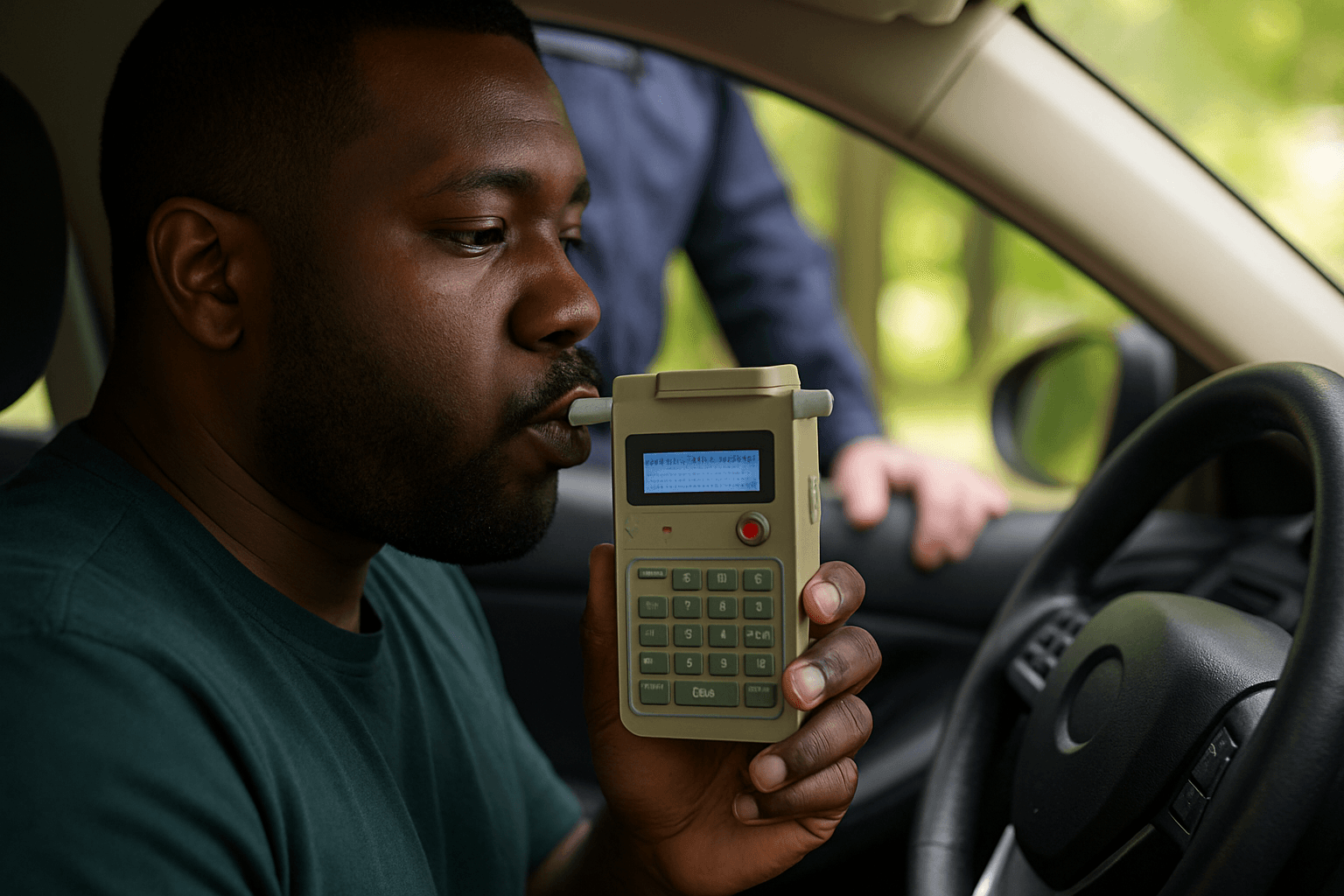
New York requires ignition interlock device (IID) installation for all aggravated DUI convictions (BAC 0.18% or higher) and for repeat offenses. Your conditional license allows IID-restricted driving during your suspension period if you install the device before your DMV hearing. The IID requirement runs for 12 months from your conviction date for first-offense aggravated DUI, and 12 months minimum for repeat offenses.
IID installation costs $100-150, and monthly monitoring fees run $75-100. You pay these costs directly to the IID provider — insurance does not cover them. LifeSafer, Intoxalock, and Smart Start operate as approved IID providers in New York. Your conditional license lists IID-required on the face of the card, and driving any vehicle without an installed IID during your restricted period triggers immediate revocation and criminal charges.
Parents managing IID and SR-22 simultaneously face stacked monthly costs: $250-350/mo for SR-22 insurance, plus $75-100/mo for IID monitoring, plus childcare and household expenses. Your conditional license does not waive the IID requirement — it allows you to drive with the device installed. Budget for 12-18 months of combined IID and SR-22 costs when you calculate whether maintaining a vehicle is financially viable during your DUI case.