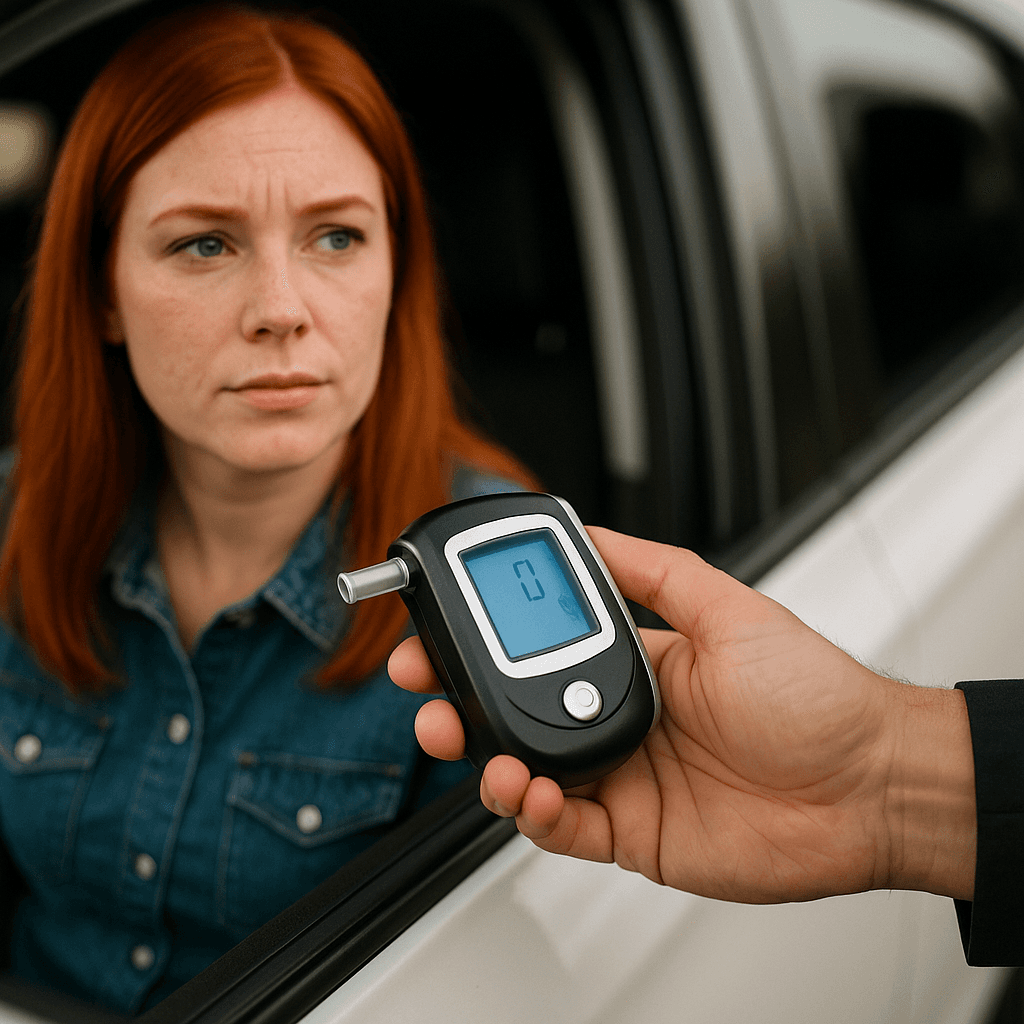
You're managing a DUI conviction in Colorado, caring for kids, and trying to keep working—here's how restricted licenses, SR-22 filing, and childcare-pattern insurance actually work together.
Colorado's Restricted License Window Opens Immediately After DUI Revocation
Colorado gives you exactly 7 days from your revocation notice to apply for a restricted license, called a Probationary License in state code. Miss that window and you wait out the full minimum revocation period—9 months for first-offense DUI, 1 year for refusal, 2 years for second offense. The application requires proof of hardship, and childcare transportation counts. You need documentation: school schedules, daycare contracts, work shift confirmation, medical appointment records for your kids.
The DMV hearing officer evaluates whether you can function without full driving privileges. Single parents have strong hardship cases, but you need to frame it correctly. "I need to drive my kids to school" is too general. "I work 7am-3pm, my daughter's school starts at 8:15am, no bus service covers our address, and my mother who provided backup childcare moved out of state in October" is specific and approvable. Bring printed evidence to the hearing.
Colorado's Probationary License allows travel to work, school, medical appointments, court-ordered obligations like DUI education, and essential errands including childcare. You cannot drive for social purposes, and violations during the probationary period extend your revocation. The restricted period runs concurrent with your SR-22 filing requirement, which lasts 2 years from reinstatement date for first-offense DUI in Colorado.
SR-22 Filing Starts on Reinstatement Day, Not Conviction Day
Colorado measures the 2-year SR-22 period from the day you reinstate your license, not from your conviction date or revocation start date. If you spend 9 months on a Probationary License before full reinstatement, your SR-22 clock starts when you apply for full reinstatement. This surprises most people. You can carry SR-22 coverage during the probationary period—it satisfies the future filing requirement and keeps your reinstatement path clear—but the 2-year countdown does not begin until reinstatement is complete.
You must maintain continuous SR-22 coverage for the entire 2-year period. A single lapse, even one missed payment, triggers a filing termination notice from your carrier to the Colorado DMV. The DMV suspends your license again, and in most cases the 2-year SR-22 clock resets to zero. If you're 18 months into the requirement and miss a payment, you start over.
Colorado does not allow retroactive SR-22 filing to cover a lapse. Once your carrier files the termination notice, you're suspended. You'll need to pay a reinstatement fee, refile SR-22 with a new carrier, and restart the 2-year period. Single parents managing multiple payment schedules should set up autopay for SR-22 policies specifically to avoid this reset.
Find out exactly how long SR-22 is required in your state
Non-Owner SR-22 Coverage Works for Probationary License Holders Who Don't Own Cars
If you don't own a vehicle but need SR-22 to satisfy Colorado's reinstatement requirement, you buy a non-owner SR-22 policy. This is liability-only coverage that follows you as a driver, not a specific car. It costs significantly less than standard SR-22 auto policies—typically $30–$65/mo in Colorado depending on your conviction details and ZIP code—because it excludes collision and comprehensive coverage.
Non-owner policies cover you when driving borrowed cars, rental cars, or vehicles provided by an employer. If your mother lets you use her car for childcare transportation during your probationary period, a non-owner SR-22 policy satisfies Colorado's financial responsibility requirement. Your mother's policy covers her vehicle primarily; your non-owner policy provides secondary liability coverage and the SR-22 certificate filing the state requires.
Most single parents on restricted licenses use non-owner SR-22 policies because they're more affordable and match the reality of limited driving during probation. Once you reinstate fully and decide to buy a vehicle, you convert to a standard SR-22 auto policy. The non-owner policy cannot be used if you own or co-own a registered vehicle. If the car title has your name on it, you need standard SR-22 coverage on that specific VIN.
DUI SR-22 Rates in Colorado: What Single Parents Actually Pay
Colorado SR-22 rates after a first-offense DUI average $145–$240/mo for standard auto policies and $30–$65/mo for non-owner policies. Rates vary by ZIP code, age, gender, conviction class, and prior insurance history. Denver, Aurora, and Colorado Springs skew higher due to population density and uninsured motorist rates. Rural counties often see lower premiums but fewer carrier options.
Most mainstream carriers—State Farm, Geico, Allstate, Progressive—will file SR-22 for existing customers after a DUI but non-renew the policy at the end of the term. If you're shopping for new coverage post-DUI, you're in the non-standard market: Dairyland, Bristol West, The General, GAINSCO, Acceptance, and Direct Auto all write SR-22 policies in Colorado. Availability varies by county. Some counties have only two or three willing carriers.
Single parents managing tight budgets should request quotes from multiple non-standard carriers and compare monthly payment options. Some carriers allow bi-weekly payment schedules aligned to paychecks, which reduces lapse risk. Avoid carriers that require large down payments or charge reinstatement fees for missed payments on top of standard late fees. The cheapest monthly rate is not always the best deal if the carrier's lapse policy is aggressive. Estimates based on available industry data; individual rates vary by driving history, vehicle, coverage selections, and location.
Stacked Compliance: Court Sentencing, IID, DUI Education, and SR-22 All Run on Different Timelines
Colorado DUI convictions trigger multiple overlapping obligations, each with separate deadlines and consequences. Your court sentencing includes fines, probation, community service, and possibly jail time. Your DMV revocation is separate and runs on its own clock. SR-22 filing is required for reinstatement but measured independently. If your BAC was .15 or higher, or if you refused testing, Colorado requires an ignition interlock device for the entire reinstatement period—sometimes longer.
DUI education is a separate court-ordered program administered by state-approved providers. You must complete Level II Education and Therapy within the timeframe specified in your sentencing, usually before reinstatement eligibility. Some programs offer evening and weekend sessions for working parents. Costs run $600–$1,200 depending on provider and session length. Completion certificates are required by the DMV before they'll approve restricted or full reinstatement.
Most single parents underestimate how these timelines stack. You could finish DUI education but still be mid-probation. You could complete your restricted license period but still owe 6 months of SR-22 filing. You could satisfy all DMV requirements but still be under court supervision. Track each obligation separately with its own deadline, required documentation, and consequences for non-compliance. Missing one derails the others.
Reinstatement Fees and Costs Beyond Insurance
Colorado charges a $95 reinstatement fee after DUI revocation, payable when you apply to restore your license. If you let your SR-22 lapse and trigger a suspension, you pay another $95 to reinstate again. If you're required to install an ignition interlock device, installation costs $70–$150 and monthly monitoring fees run $60–$90. Total IID cost over 12 months: $850–$1,250.
SR-22 filing itself costs $25–$50 as a one-time fee charged by your insurance carrier when they submit the certificate to the Colorado DMV. This is separate from your policy premium. Some carriers waive the filing fee if you bind a new policy; others charge it at policy inception and again at each renewal if SR-22 is still required.
If you're applying for a Probationary License, Colorado does not charge an additional application fee beyond the standard reinstatement fee, but you may incur costs for certified copies of court documents, notarized hardship affidavits, or administrative hearing transcripts if you request a formal review. Budget $200–$400 in miscellaneous reinstatement costs on top of insurance premiums and IID expenses.
What Happens If You Move Out of Colorado During Your SR-22 Period
If you move to another state before your 2-year SR-22 requirement ends, Colorado's filing obligation follows you. You'll need to cancel your Colorado SR-22 policy and purchase a new SR-22 policy in your new state of residence. The new state's DMV will file SR-22 with Colorado on your behalf to satisfy the outstanding requirement. Your 2-year clock does not reset—it continues from the original reinstatement date.
Some states do not use SR-22 certificates. Delaware, Minnesota, New Mexico, North Carolina, and Oklahoma do not participate in the SR-22 system. If you move to one of these states, contact the Colorado DMV to confirm alternate proof of financial responsibility. Most require a letter from your new state's DMV confirming you meet their insurance standards, submitted to Colorado quarterly until your original SR-22 period ends.
If you move to Florida or Virginia, those states require FR-44 filing instead of SR-22 for DUI convictions. FR-44 mandates higher liability limits than SR-22—$100,000/$300,000 in Florida versus Colorado's $25,000/$50,000 minimum. Moving to an FR-44 state mid-requirement significantly increases your insurance costs. Confirm your new state's filing rules and cost impact before relocating if you're still under SR-22 obligation.