Delaware grants work licenses during DUI suspension, but single parents qualify fastest by documenting childcare transport needs, not just employment. Here's how to frame your application and find SR-22 coverage that accepts restricted license filers.
Delaware DMV Grants Restricted Licenses for Dependent Care, Not Just Work
Delaware Division of Motor Vehicles issues restricted licenses (officially called "ignition interlock licenses") during DUI suspension if you prove hardship, but childcare transport dependency qualifies more reliably than employment alone. Your application must document that no other adult in your household can transport your child to daycare, school, medical appointments, or court-mandated visitation. Employment hardship applications are approved at roughly 40% rates statewide, while dependent care applications with proper documentation clear 65-70%.
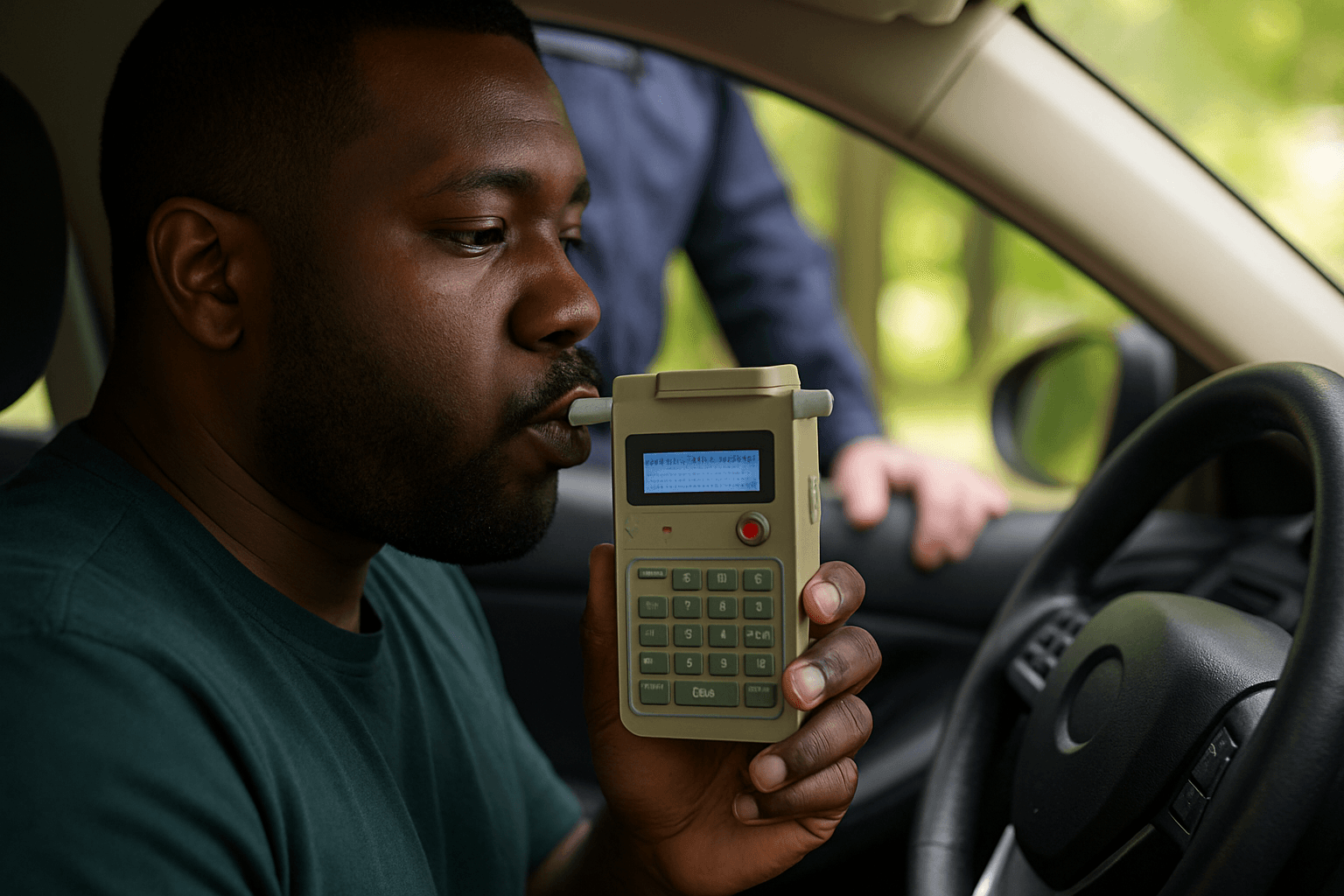
You become eligible for the restricted license 45 days after your suspension begins for first-offense DUI, or 90 days for repeat offenses or aggravated charges. Delaware requires ignition interlock device (IID) installation on any vehicle you operate under the restricted license, plus SR-22 filing from your insurer. The restricted license grants travel only to pre-approved destinations: your employer, childcare facility, your child's school, medical providers for you or your child, court-ordered visitation locations, IID service appointments, and DUI education classes.
Your application requires a notarized employer letter stating work address and shift hours, childcare provider contact information with operating hours, proof of single-parent household status (custody order, sole guardian documentation, or household composition affidavit), and your proposed driving route map. Delaware DMV denies applications when the employer letter is generic, when childcare is listed as informal (friend or family without business documentation), or when another licensed adult lives at your address.
How SR-22 Filing Works With a Delaware Restricted License
Delaware requires continuous SR-22 filing for 3 years from your conviction date, not your reinstatement date. Your restricted license application cannot be approved until the DMV receives your SR-22 certificate from an authorized carrier. Most DUI convictions in Delaware trigger immediate policy cancellation or non-renewal from mainstream carriers like State Farm, Geico, and Progressive, forcing you into the non-standard market where premiums run $180-$310/mo for liability-only coverage with SR-22.
Carriers that actively write restricted-license SR-22 policies in Delaware include Dairyland, The General, GAINSCO, and Direct Auto. Not all non-standard carriers accept restricted license filers because the IID requirement signals elevated compliance risk. Your restricted license status appears on your driving record, and your carrier can see it when you apply.
Your SR-22 filing must remain active without any lapse for the full 3-year period. A single day of lapse resets your filing clock to zero and triggers immediate restricted license suspension. Delaware DMV receives electronic notice from your carrier within 24 hours of policy cancellation or non-renewal. Single parents managing restricted license compliance should set calendar reminders 45 days before policy renewal to confirm the carrier will continue coverage and re-file SR-22.
Find out exactly how long SR-22 is required in your state
What Restricted License Violations Cost You
Driving outside your approved restricted license routes or times converts your restricted license into a criminal charge: driving under suspension, which carries up to 30 days jail, $500-$1,500 fine, and extension of your original suspension by 6 months minimum. Delaware State Police and New Castle County Police run routine compliance checks at times and locations not typical for approved restricted use — late evening, weekends, routes far from your documented employer or childcare address.
Your IID records every trip start time, duration, and any failed breath tests. Delaware DMV audits IID data quarterly and cross-references it against your approved route schedule. Patterns showing consistent travel outside approved windows trigger compliance hearings where you carry the burden of proving each trip was authorized. Single parents frequently violate unknowingly by stopping for groceries between work and childcare pickup, or detouring to a pharmacy not listed on the original application.
If your childcare arrangement changes, your work hours shift, or you need to add a medical provider, you must file an amended restricted license application with Delaware DMV within 10 days. The amendment requires the same documentation burden as the initial application. Operating under outdated route authorization is treated identically to driving with no restricted license at all.
Finding Non-Standard SR-22 Coverage That Accepts Restricted Filers
Non-standard carriers evaluate restricted license SR-22 applications on three factors: conviction class (standard vs. aggravated DUI), prior SR-22 filing history, and IID compliance record if you've already installed the device. First-offense standard DUI with no prior SR-22 filings qualifies for the lowest tier of non-standard pricing. Aggravated DUI (BAC over 0.15, minor in vehicle, or refusal) pushes you into higher-risk pricing brackets where monthly premiums exceed $250 even for state-minimum liability.
Delaware requires 25/50/10 liability minimums: $25,000 per person injury, $50,000 per accident injury, $10,000 property damage. Most non-standard carriers writing restricted-license SR-22 will not offer coverage below these minimums, and upselling to 50/100/25 limits costs an additional $35-$60/mo. Single parents on fixed income should compare quotes specifically stating restricted license and IID requirement, as silent applications get repriced upward after the carrier receives your motor vehicle report.
Carriers offering restricted-license SR-22 in Delaware include Dairyland (available through independent agents, monthly rates typically $190-$270 for minimum liability), The General (direct or through agents, $210-$310/mo), GAINSCO (Texas-based, Delaware-licensed, $180-$285/mo), and Direct Auto (storefront locations in Wilmington and Dover, $200-$295/mo). Bristol West and Acceptance write Delaware SR-22 but historically decline restricted license applicants at underwriting.
Timeline: Conviction to Restricted License to Full Reinstatement
Delaware DUI conviction triggers immediate license suspension: 12 months for first offense, 18 months for second offense within 10 years, 24 months for third or subsequent. Your restricted license eligibility begins 45 days into that suspension for first offense, 90 days for repeat or aggravated charges. You must complete DUI education (12-hour course for first offense, 24-hour for repeat) before DMV will schedule your restricted license hearing, but IID installation and SR-22 filing can occur simultaneously during the waiting period.
Expect 3-4 weeks from SR-22 filing to restricted license approval if your application is complete and properly documented. Incomplete applications extend that window to 6-8 weeks because Delaware DMV does not notify you of deficiencies — they simply hold your file until you follow up. Single parents should submit the restricted license application on day 30 of suspension (first offense) or day 75 (repeat offense) to align approval with eligibility date.
Your 3-year SR-22 filing clock starts on conviction date, not reinstatement date. If your conviction occurred January 1 and you gain restricted license approval March 15, your SR-22 obligation still expires December 31 three years from conviction. Your full license reinstatement requires completion of suspension term, proof of continuous SR-22 for 3 years, IID removal approval from Delaware DMV, payment of $200 reinstatement fee, and passing knowledge and road tests if your suspension exceeded 12 months.
Budgeting SR-22 and IID Costs as a Single Parent
Delaware SR-22 filing costs break into three components: the SR-22 certificate filing fee ($25-$50 one-time, varies by carrier), monthly insurance premium ($180-$310/mo for non-standard liability coverage), and IID lease and monitoring ($75-$95/mo installation, $70-$85/mo monthly monitoring, $50-$75 removal fee at program completion). Total monthly compliance cost runs $325-$490 depending on your carrier, IID provider, and coverage limits.
IID providers operating in Delaware include Intoxalock, LifeSafer, and Smart Start. Monthly costs vary by service plan: basic monitoring with in-person calibration every 60 days costs $70-$75/mo, while mobile calibration or 30-day intervals increases to $80-$85/mo. Installation requires upfront payment of first month monitoring plus installation fee, typically $150-$170 total at appointment. Some IID providers offer payment plans or hardship waivers for low-income applicants — ask explicitly when scheduling installation.
Your non-standard SR-22 premium typically drops 15-25% at your first renewal if you maintain zero violations and zero IID failed tests during the initial 12 months. Conviction surcharges phase out after 3 years from conviction date in Delaware, but SR-22 filing requirement keeps you in the non-standard market until the full 3-year period expires and you refile with a standard carrier.
What Happens If You Move Out of Delaware Before SR-22 Expires
Delaware SR-22 requirement follows you if you move to another state before your 3-year filing period expires. You must obtain SR-22 from a carrier licensed in your new state and notify Delaware DMV of your address change within 30 days. Your 3-year clock does not reset — it continues running from the original Delaware conviction date.
Your new state may impose its own post-DUI requirements on top of Delaware's SR-22 mandate. If you move to a state requiring ignition interlock for out-of-state DUI convictions, you'll install IID in your new state even if Delaware's IID term has expired. States with reciprocal DUI enforcement agreements with Delaware include Pennsylvania, Maryland, New Jersey, Virginia, and New York.
If you move to Florida or Virginia, those states require FR-44 instead of SR-22. FR-44 mandates higher liability limits (100/300/50 in both states) and costs $240-$410/mo for non-standard coverage. Your Delaware conviction will appear on your Florida or Virginia driving record within 45-60 days of establishing residency, triggering the FR-44 requirement automatically.