Iowa requires ignition interlock installation within 15 days of your temporary restricted license approval — before your SR-22 filing is required. Missing this sequence extends your suspension.
Iowa Requires IID Installation Before SR-22 Filing for Most DUI Convictions
Iowa DOT requires ignition interlock device installation within 15 days of receiving your temporary restricted license approval for first-offense OWI convictions. Your SR-22 filing requirement doesn't activate until your full reinstatement date, which typically falls 180 days after conviction for first offenses or one year for repeat offenses.
This creates a compliance gap most drivers miss: you're paying for IID monitoring and maintaining underlying liability coverage during the restricted license period, but you don't file SR-22 until you apply for full reinstatement. Installing IID first is not optional — Iowa Code 321J.4 mandates device installation before the DOT will approve your temporary restricted license, and that restricted license is the only legal way to drive during your revocation period.
The sequence matters because SR-22 filing starts the clock on your required filing period, which runs three years from reinstatement date in Iowa. Filing SR-22 early — before you're eligible for reinstatement — doesn't shorten your overall compliance timeline. It just means you're paying SR-22 premium surcharges before the state requires them.
What Happens If You File SR-22 Before Installing Your IID
Filing SR-22 before IID installation won't satisfy Iowa's reinstatement requirements and may complicate your restricted license approval. The Iowa DOT processes reinstatement steps in a fixed order: conviction recorded, revocation period begins, temporary restricted license approved contingent on IID installation, IID installed and logged with DOT, full reinstatement application submitted with SR-22 proof.
Carriers will accept SR-22 requests at any time — they don't verify where you are in Iowa's reinstatement process. That means you can pay for SR-22 coverage months before the state requires it, with no credit toward your three-year filing period. The filing period clock starts on your reinstatement date, not your filing date.
Iowa DOT's reinstatement checklist explicitly requires IID installation confirmation before they'll schedule your reinstatement hearing or approve full license restoration. SR-22 without IID completion leaves your file incomplete, and incomplete files don't move forward.
Find out exactly how long SR-22 is required in your state
How Iowa's IID Period Affects Your SR-22 Timeline
First-offense OWI in Iowa triggers a 180-day revocation minimum, with IID required for at least 12 months from the date your temporary restricted license is issued. That means your IID obligation runs 6 months beyond your initial revocation period, and your SR-22 filing requirement begins only after both are satisfied.
Repeat-offense OWI extends these timelines significantly: second offense carries a one-year revocation with two-year IID requirement, and third offense brings two-year revocation with IID required for the duration of the revocation plus an additional period set by the court. Your SR-22 filing period always starts at full reinstatement, which cannot occur until IID requirements are met.
This stacking creates a common miscalculation. Drivers assume SR-22 filing coincides with IID installation, but Iowa separates them by design. You'll carry underlying liability insurance throughout your IID period to keep the device active and meet restricted license conditions, but the SR-22 endorsement itself — and the associated premium increase of 60–90% over standard rates — doesn't apply until reinstatement.
What Iowa Requires for Temporary Restricted License With IID
Iowa issues temporary restricted licenses to first-time OWI offenders who complete a substance abuse evaluation and agree to IID installation. You apply through Iowa DOT after your revocation begins, typically 30–60 days post-conviction once court sentencing is finalized and your evaluation report is submitted.
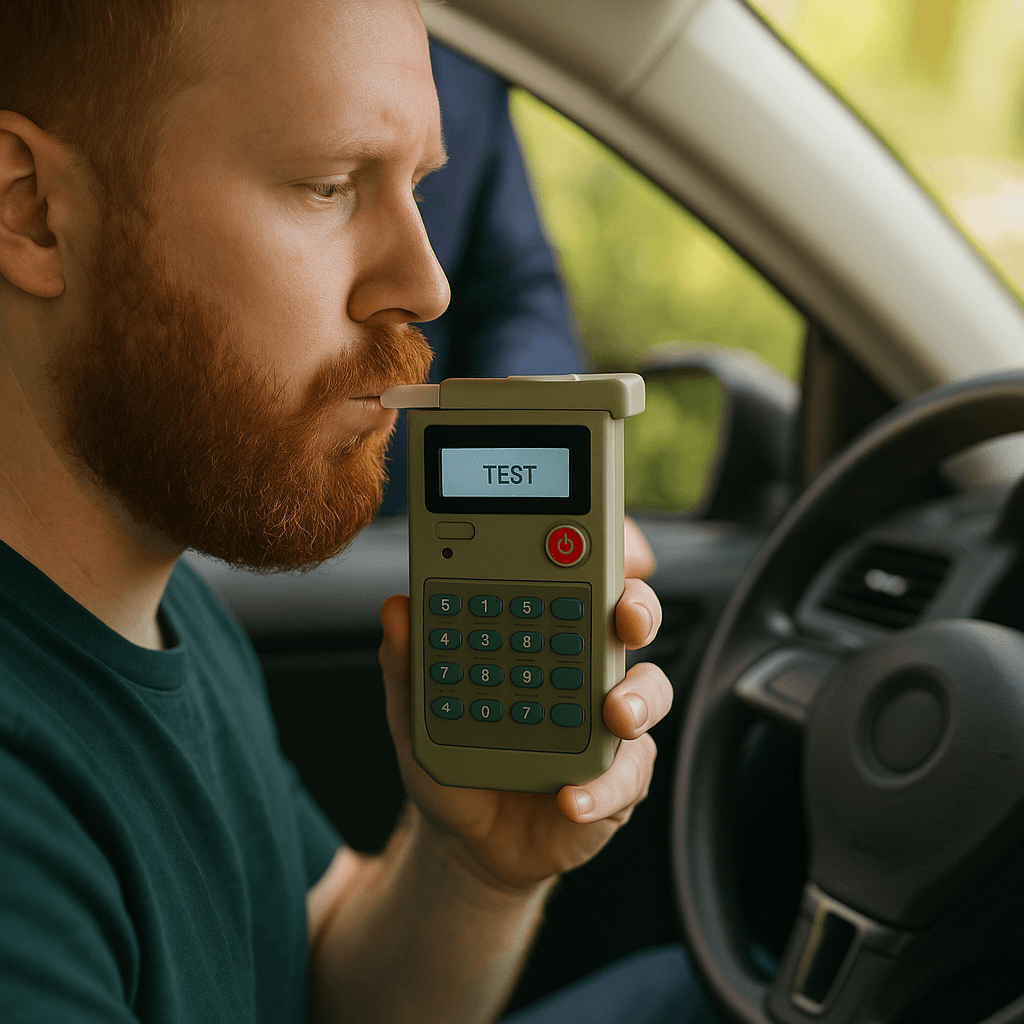
The restricted license allows driving to work, school, medical appointments, and court-ordered programs, but only in vehicles equipped with a state-certified IID. You're responsible for installation costs, monthly monitoring fees, and any required calibration appointments. Providers approved by Iowa DOT include LifeSafer, Intoxalock, Smart Start, and Guardian Interlock, with installation running $70–150 and monitoring fees of $60–90 per month.
Your restricted license approval is conditional: drive without an installed IID, fail a rolling retest, or attempt to tamper with the device, and Iowa DOT extends your revocation period by the length of the violation. Every failed start or missed calibration appointment is logged and reported to the state.
When You Actually Need to File SR-22 in Iowa After a DUI
Iowa requires SR-22 filing as part of your full license reinstatement application, which you submit after completing your revocation period and IID requirement. For first-offense OWI, that reinstatement window opens 180 days after conviction, but only if your 12-month IID period is complete. Most first-offense drivers file SR-22 around month 12–13 post-conviction.
Second-offense OWI pushes reinstatement eligibility to one year post-conviction with a two-year IID requirement, meaning SR-22 filing typically occurs 24–25 months after conviction. Third and subsequent offenses follow court-specific timelines, but reinstatement is never approved before IID obligations are satisfied.
You'll need SR-22 on file continuously for three years from your reinstatement date. Iowa DOT monitors filings electronically — if your carrier cancels your policy or you let coverage lapse, the state receives notification within 24 hours and re-suspends your license immediately. That re-suspension resets your SR-22 clock to zero.
How Much SR-22 Costs in Iowa After OWI Conviction
SR-22 insurance in Iowa after OWI conviction typically costs $140–$230 per month for state minimum liability coverage, compared to $75–$110 per month for drivers with clean records. The SR-22 certificate filing fee itself runs $15–$35 depending on carrier, but the real cost is the underwriting surcharge applied to DUI-convicted drivers.
Most major carriers — State Farm, Geico, Allstate, Progressive — will file SR-22 for existing customers but non-renew the policy at term. New OWI-SR-22 policies generally require the non-standard market: Direct Auto, Dairyland, GAINSCO, Bristol West, The General. State-by-state carrier availability varies, and not all non-standard carriers write in Iowa.
You'll carry this premium level for the full three-year SR-22 period. Rates typically decrease 10–15% per year if you avoid additional violations, but you won't return to standard-market pricing until your SR-22 requirement ends and your OWI conviction ages beyond the carrier's lookback window, usually five years from conviction date. Estimates based on available industry data; individual rates vary by driving history, vehicle, coverage selections, and location.
What Happens If You Install IID Late or Miss Your SR-22 Filing Deadline
Missing Iowa's 15-day IID installation deadline after receiving temporary restricted license approval extends your revocation period by the number of days you're late. If you're approved on March 1 and install on March 20, Iowa DOT adds 5 days to your overall revocation timeline, pushing your reinstatement eligibility date forward.
Failing to file SR-22 when you apply for full reinstatement stops your application immediately. Iowa DOT will not process reinstatement without proof of financial responsibility on file, and SR-22 is the only accepted proof for OWI-convicted drivers. Your reinstatement date becomes the date SR-22 is filed and approved, not the date you originally applied.
Both failures carry the same consequence: extended time without a valid license, extended time paying for IID monitoring, and delayed start to your SR-22 filing period. Iowa ties every compliance step to the next — skipping or delaying one step delays all subsequent steps, and there are no hardship exceptions for IID or SR-22 requirements after OWI conviction.