Iowa's SR-22 clock doesn't start until your full license is reinstated — not when you get your work permit. If you're managing court dates, childcare, and a restricted license, here's how the timeline actually works.
When Your SR-22 Filing Period Actually Starts in Iowa
Iowa requires SR-22 filing for 2 years after license reinstatement, but the clock starts the day your full driving privileges are restored — not when you receive your temporary restricted license. If you're granted a work permit 30 days after your DUI, you'll file SR-22 to activate that permit, but your 2-year requirement doesn't begin until the restricted period ends and your unrestricted license is issued. Most drivers on a 6-month or 1-year work permit don't realize they're adding that entire restricted period to their SR-22 timeline.
The Iowa DOT counts SR-22 compliance from the date stamped on your reinstatement letter for full privileges. If your OWI suspension is 180 days, you receive a work permit at day 30, and your full license returns at day 180, your SR-22 filing runs from day 180 through day 910 — not from day 30. Single parents managing court obligations, IID installation, childcare runs, and work commutes often assume the work permit starts the clock because that's when they pay the first SR-22 premium. It doesn't.
Carriers won't clarify this timeline because they're paid monthly whether the filing counts toward your requirement or not. The Iowa DOT provides reinstatement instructions but doesn't highlight the restricted-license gap. You need both documents — the work permit approval and the full reinstatement notice — to calculate your actual end date.
How Iowa's Temporary Restricted License Works for Single Parents
Iowa offers a temporary restricted license (TRL) for work, medical appointments, childcare, and court-ordered obligations during your OWI suspension period. You apply through the Iowa DOT Driver Services, pay a $200 application fee, submit proof of SR-22 filing, and install an ignition interlock device if required by your conviction class. First-offense standard OWI with BAC under 0.15 typically allows TRL eligibility after serving 30 days of your suspension. Aggravated OWI or second offense may require 90 days or longer before TRL approval.
The TRL permits driving only for approved purposes: work (including multiple jobs), medical care for you or your dependents, substance abuse treatment, court dates, probation meetings, and transporting children to school or daycare. You submit a driving schedule with your application listing every approved route and time window. Iowa law enforcement can stop you outside those windows and revoke the TRL immediately. If you're a single parent managing school dropoff at 7:45 AM, work from 8:30 AM to 5 PM, daycare pickup at 5:30 PM, and evening AA meetings twice weekly, every trip must appear on your filed schedule.
The TRL costs $200 to apply, requires SR-22 proof before approval, and adds 6-12 months of restricted driving to your timeline before full reinstatement. Most single parents need it because losing all driving privileges means losing employment and childcare stability. The trade-off is extending your total SR-22 requirement by the length of the restricted period.
Find out exactly how long SR-22 is required in your state
What SR-22 Insurance Costs After a DUI in Iowa
SR-22 filing adds $15-$50 to your monthly premium as a processing fee, but the DUI conviction itself drives the real increase. Iowa drivers with a first-offense OWI see liability premiums rise from an average of $95/mo before the conviction to $210-$320/mo after, a 120-180% increase that persists for 3-5 years even after SR-22 filing ends. Single parents on restricted licenses pay the full high-risk rate during the work permit period, then continue paying it through the 2-year post-reinstatement SR-22 requirement.
Most major carriers — State Farm, Allstate, Geico, Progressive — will file SR-22 for existing customers but non-renew the policy at the end of the current term, usually 6 months after conviction. That forces you into the non-standard market: Dairyland, The General, Bristol West, Direct Auto, and GAINSCO write Iowa DUI-SR-22 policies regularly. Non-standard carriers charge $240-$380/mo for state minimum liability (25/50/25 in Iowa) with SR-22 attached. If you're financing a vehicle and need full coverage, expect $420-$650/mo.
Iowa requires liability only for SR-22 compliance, so if you own your car outright and can absorb the financial risk of collision damage, dropping to state minimum cuts your premium nearly in half. Single parents managing IID lease payments ($75-$120/mo), court fines, DUI education fees, and childcare can't always afford comprehensive and collision coverage on top of high-risk liability rates. Estimates based on available industry data; individual rates vary by driving history, vehicle, coverage selections, and exact location within Iowa.
Managing IID, SR-22, and Childcare Logistics
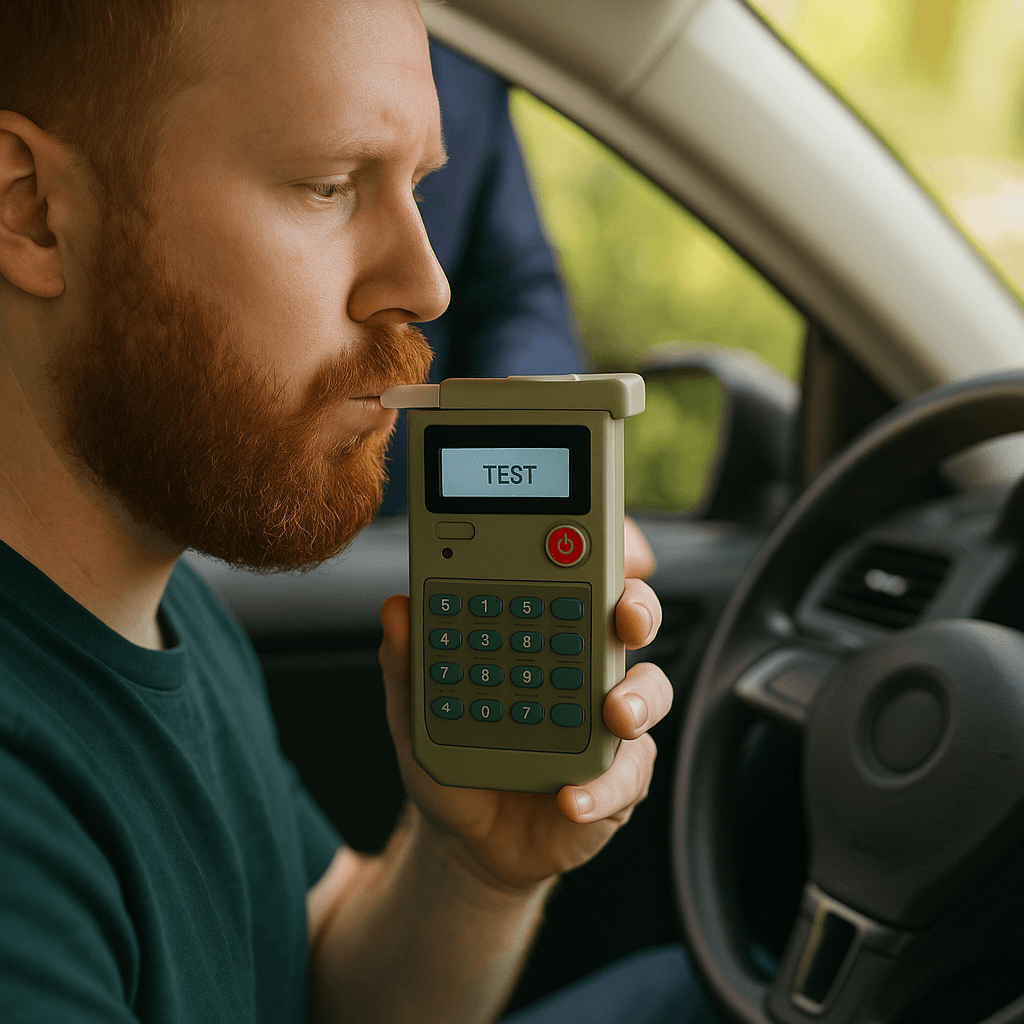
Iowa requires ignition interlock devices for all OWI convictions with BAC of 0.10 or higher, second offenses, and any OWI with a minor in the vehicle. The IID must be installed before your temporary restricted license is approved, and you'll pay $75-$120/mo for the lease, plus $100-$150 for installation and $75-$100 for removal. If you're a single parent, every cold start, every rolling retest, and every failed calibration appointment affects your ability to get kids to school and yourself to work on time.
The IID requirement runs concurrent with your TRL period but often extends beyond it. First-offense standard OWI carries a 1-year IID requirement; aggravated or repeat offenses require 1-2 years or longer. Your SR-22 filing must remain active throughout the IID period and for 2 years after full reinstatement, which means single parents often manage all three compliance layers simultaneously: restricted license for 6-12 months, IID for 12-24 months, SR-22 for 30-36 months total.
Childcare runs complicate IID compliance because failed tests or missed calibration appointments trigger probation violations. If your morning calibration window is 7-9 AM and your child's daycare opens at 7 AM, you're choosing between being late to calibration or late to work. Most IID providers in Iowa (Intoxalock, LifeSafer, Smart Start) offer mobile calibration, but you pay $50-$75 per visit. The logistical load is the hidden cost of DUI for single parents — not just the fines and fees, but the time tax of managing stacked compliance with zero margin for error.
How to Reinstate Your Full License and End SR-22
Iowa full license reinstatement after OWI requires completing your suspension period, fulfilling all IID requirements, paying a $200 civil penalty, submitting proof of continuous SR-22 coverage, and passing a vision test. You do not retake the written or driving exam unless your suspension exceeded 2 years. Once the Iowa DOT processes your reinstatement application and issues your unrestricted license, your 2-year SR-22 filing period begins that day.
You must maintain SR-22 for the full 2 years without a single lapse. If your policy cancels or you miss a payment and your carrier notifies the Iowa DOT, your license suspends immediately and your SR-22 clock resets to zero. Single parents managing tight budgets and irregular income streams are at high risk for accidental lapse — one missed auto-pay during a lean month triggers suspension, and reinstatement requires starting the 2-year filing period over from day one.
After 2 years of continuous filing, your carrier will notify the Iowa DOT that SR-22 is no longer required. You do not file paperwork to end it; the carrier files the release. At that point you can shop for standard insurance again, though your DUI will still appear on your motor vehicle record for 12 years and affect your rates for 3-5 years post-conviction. Most drivers see rates drop 20-40% once SR-22 is removed, and another 30-50% once the DUI ages past the 5-year mark.
Which Iowa Carriers Write Single Parents With DUI and SR-22
Non-standard carriers dominate the Iowa DUI-SR-22 market. Dairyland writes state minimum and full coverage policies with SR-22 attached and accepts first-offense and repeat-offense OWI. The General and Bristol West offer liability-only and full coverage options but may decline applicants with multiple violations in the past 3 years. Direct Auto operates storefronts in Cedar Rapids, Davenport, and Des Moines and writes same-day SR-22 policies for drivers who need immediate reinstatement filing. GAINSCO and Safe Auto write Iowa non-standard auto but require down payments of 20-30% of the 6-month premium.
If you had continuous coverage with a major carrier before your DUI, call them first. State Farm, Progressive, and Nationwide will file SR-22 for existing customers and may allow you to finish your current term before non-renewal. That buys you 3-6 months to compare non-standard quotes without a coverage gap. If your carrier cancels immediately, you have 15 days to file SR-22 with a new insurer before the Iowa DOT suspends your license for failure to maintain proof of financial responsibility.
Single parents should request quotes from at least three non-standard carriers and compare monthly payment plans. Some carriers allow monthly billing with no down payment; others require 2-3 months upfront. If you're balancing court costs, IID fees, and childcare, the carrier with the lowest total premium may not be affordable if they demand $800 down. Ask about payment plan options, grace periods, and reinstatement fees before binding coverage.
What Happens If You Move Out of Iowa During SR-22
If you move to another state while your Iowa SR-22 requirement is active, your 2-year filing obligation follows you. You'll need to notify your carrier, cancel your Iowa SR-22, and file SR-22 in your new state of residence immediately. Most states accept out-of-state SR-22 filings for 30-60 days, but Iowa will suspend your license if you don't maintain continuous coverage during the transfer. Contact the new state's DMV before you move to confirm their SR-22 rules and filing process.
Some states require SR-22 for different durations. If you move to a state with a 3-year requirement, your filing period extends. If you move to a state with a 1-year requirement, Iowa's 2-year rule still governs your obligation because the violation occurred under Iowa jurisdiction. Your carrier can file SR-22 in multiple states, but you'll pay separate filing fees for each state and maintain separate policies if the new state requires it.
Single parents moving for employment or family support should calculate the insurance cost difference before relocating. Michigan, California, and Louisiana have higher average DUI premiums than Iowa; Indiana, Ohio, and Wisconsin are comparable or slightly lower. If you're moving to reduce cost of living, factor in the SR-22 insurance reality — a cheaper apartment in a higher-premium state may not save you money.