Iowa sets your license revocation, ignition interlock requirement, and SR-22 filing period on different clocks. Missing the sequence costs you weeks or months of legal driving time.
Iowa Runs Three Separate Compliance Clocks After DUI
Iowa DUI convictions trigger three parallel requirements: license revocation, ignition interlock device installation, and SR-22 insurance filing. The Iowa Department of Transportation sets each on a separate timeline with different start dates, and completing them out of sequence delays your reinstatement even if you finish all three.
First-offense DUI with BAC under 0.15% carries 180-day license revocation, no IID requirement, and 2-year SR-22 filing. First-offense DUI with BAC 0.15% or higher adds mandatory IID for 12 months starting from reinstatement date, not conviction date. Second-offense DUI within 12 years requires 1-year revocation, 1-year minimum IID, and 2-year SR-22. Third or subsequent offense jumps to 6-year revocation, 6-year IID requirement, and 6-year SR-22 filing.
The critical mistake: most drivers assume all three clocks start at conviction. Iowa starts your revocation period at conviction, your IID requirement at reinstatement, and your SR-22 filing the day your policy activates with the form filed. Waiting to file SR-22 until after revocation ends means your 2-year SR-22 clock hasn't even started when you thought you were halfway done.
What Happens at Each DUI Checkpoint in Iowa
Your license revokes automatically on conviction date or OWI administrative suspension date, whichever comes first. Iowa uses an administrative per se suspension system: refusing breath or blood testing triggers immediate 1-year revocation regardless of criminal case outcome. If you later plead or are convicted of DUI, the court-ordered revocation runs concurrently with administrative revocation, not consecutively.
During revocation, Iowa offers temporary restricted license eligibility after serving the minimum ineligible period: 30 days for first-offense under 0.15% BAC, 45 days for first-offense 0.15% or higher, 90 days for second offense. Temporary restricted license requires SR-22 filing, IID installation if BAC was 0.15% or higher, completion of substance abuse evaluation, and proof of enrollment in a drinking driver course.
Full reinstatement after revocation period ends requires: SR-22 certificate on file with Iowa DOT, IID installed and verified for applicable convictions, drinking driver course completion certificate, substance abuse evaluation and treatment if ordered, reinstatement fee of $200, and application for new license. Missing any single item stops the entire reinstatement. Iowa DOT will not process your reinstatement application until all five elements appear in their system simultaneously.
Find out exactly how long SR-22 is required in your state
How Iowa's IID Requirement Changes Your Timeline
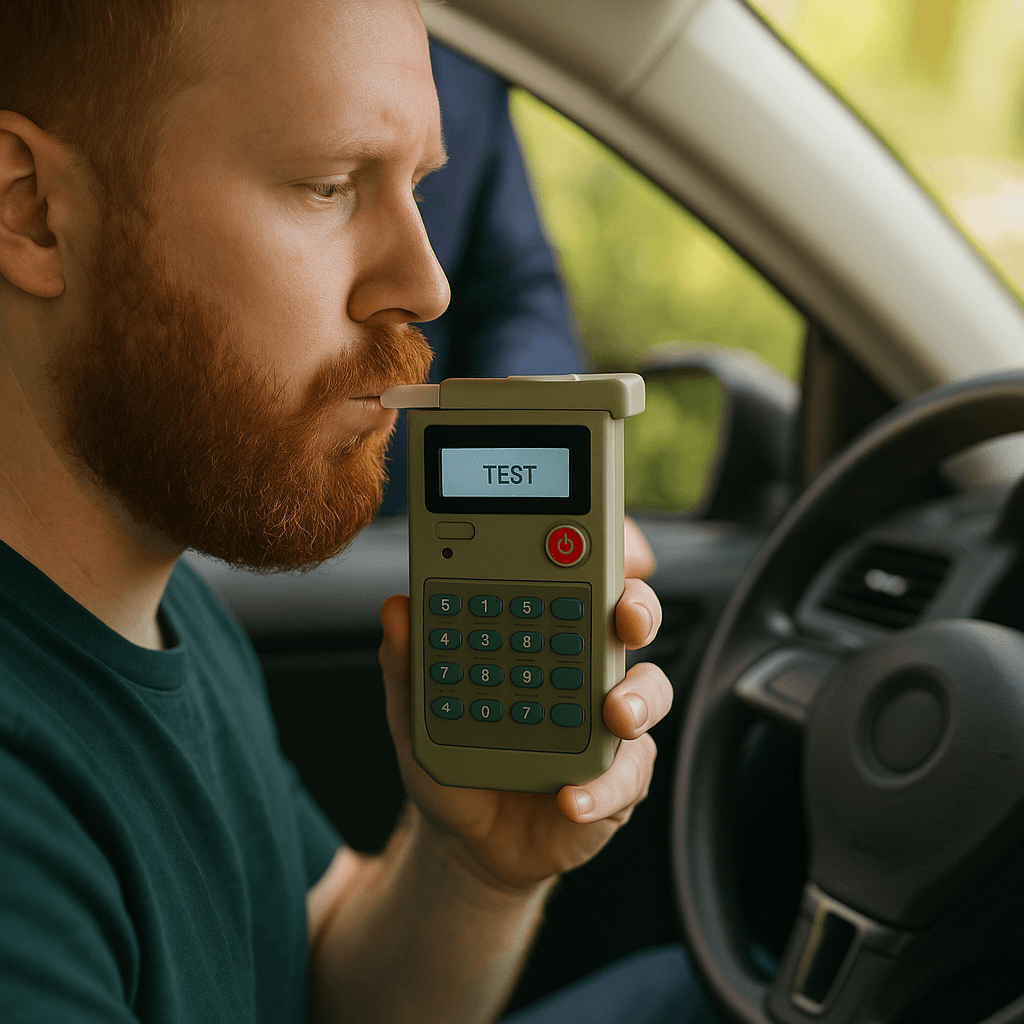
Iowa mandates ignition interlock for first-offense DUI with BAC 0.15% or higher, all second offenses, and all subsequent offenses. The device requirement starts on your reinstatement date or temporary restricted license issue date, not your conviction date. This sequencing matters because your IID clock doesn't begin until you're legally driving again.
First-offense high BAC requires 12 months of verified IID use. Second offense within 12 years requires minimum 12 months, extended to 24 months if violation occurs during the IID period. Third or subsequent offense requires 6 years minimum IID. Iowa counts IID time only while your license is valid and the device is installed—revocation periods, lapses in coverage, or device removal all pause your IID clock.
Iowa-approved IID providers include LifeSafer, Intoxalock, Smart Start, and Guardian Interlock. Installation cost runs $70–$125, monthly monitoring and calibration fees run $65–$85, and removal cost runs $50–$75. Most drivers pay $900–$1,100 total for a 12-month IID requirement. Your SR-22 policy must remain active the entire IID period—letting SR-22 lapse during IID monitoring triggers immediate license re-suspension and restarts your IID clock from zero.
SR-22 Filing Requirements and Start Date Rules
Iowa requires SR-22 for all DUI convictions, refusals, and reinstatements after suspension for alcohol-related violations. Your SR-22 filing period is 2 years for first and second offenses, 6 years for third or subsequent offenses. Iowa measures this period from the date your SR-22 certificate is filed with the DOT, not from conviction date or reinstatement date.
Most mainstream carriers—State Farm, Geico, Allstate, Progressive—will file SR-22 for existing customers but non-renew the policy at term end, typically 6 months after DUI. New SR-22 policies for Iowa DUI drivers route to the non-standard market: Dairyland, The General, Bristol West, Progressive's non-standard division, and GAINSCO all write Iowa SR-22 policies. Not all non-standard carriers operate in every Iowa county, and availability tightens significantly for second or third offenses.
Iowa SR-22 filing itself carries no state fee—the cost is embedded in your non-standard insurance premium. Post-DUI rates in Iowa average $180–$285/mo for minimum liability SR-22 coverage, compared to $65–$95/mo for clean-record drivers. High BAC first offense, second offense, or refusal pushes rates to $240–$350/mo. SR-22 filing counts as continuous only if the policy never lapses—even one day without active SR-22 on file triggers DMV notification to the court and immediate license re-suspension.
The Compliance Order That Actually Works in Iowa
File SR-22 and activate your non-standard policy before your revocation period ends. This starts your 2-year or 6-year SR-22 clock immediately, so it runs concurrently with your restricted license period and IID requirement rather than consecutively after them. Drivers who wait until reinstatement to file SR-22 extend their total compliance timeline by 6–18 months unnecessarily.
Schedule IID installation 7–10 days before your eligibility date for temporary restricted license or full reinstatement. Iowa DOT requires the IID provider to submit verification of installation directly to the state before processing your license application. Device verification typically takes 3–5 business days to appear in DOT systems. Installing IID the same day as your reinstatement appointment means you leave without a license even if every other requirement is complete.
Complete your substance abuse evaluation and drinking driver course enrollment during your revocation period, not after. Iowa DOT will not issue restricted or full license without proof of course enrollment on file. The evaluation alone takes 1–3 weeks to schedule in most Iowa counties, and some evaluators require payment in full at time of appointment. Court-ordered treatment adds 12–26 weeks depending on program intensity, and your reinstatement waits until treatment is verified complete.
What Resets Your Timeline in Iowa
SR-22 lapse for any reason—missed payment, policy cancellation, switching carriers without continuous coverage—triggers automatic notification from your insurer to Iowa DOT within 10 days. Iowa immediately re-suspends your license and restarts your SR-22 filing requirement from zero. If you were 18 months into a 2-year requirement, the lapse resets you to day one of a new 2-year period once you refile.
IID violations—failed startup test, missed rolling retest, tampering, or attempting to remove the device—extend your IID requirement and pause your reinstatement eligibility. Iowa requires IID providers to report violations within 48 hours. A single failed test with BAC over 0.025% adds 30 days to your IID requirement. Three violations within 12 months extends your total IID period by an additional 12 months.
New alcohol-related offense during SR-22 or IID period—even a public intoxication charge or open container citation—triggers review and typically extends both SR-22 and IID requirements. Iowa operates on a 12-year lookback period for DUI offenses, meaning any new violation within 12 years of your first DUI elevates you to second-offense status with corresponding longer revocation, IID, and SR-22periods.
How Iowa Handles Out-of-State Moves During SR-22
Iowa SR-22 requirement follows you to your new state if you move during your filing period. You must obtain SR-22 in your new state of residence and maintain it for the remainder of Iowa's original timeline. Most states accept Iowa's filing requirement and issue their own SR-22, but you remain responsible for notifying Iowa DOT of your new address and out-of-state SR-22 filing within 30 days of your move.
Iowa participates in the Driver License Compact and the Non-Resident Violator Compact, which means your Iowa DUI conviction reports to your new state's DMV and typically triggers that state's own SR-22 or equivalent filing requirement on top of Iowa's. Moving to a state with longer SR-22 duration than Iowa—California requires 3 years for first DUI—means you serve the longer period, not Iowa's 2-year minimum.
Iowa does not accept FR-44 filings from Florida or Virginia as substitutes for SR-22. If you move to Florida or Virginia during your Iowa SR-22 period, you must maintain both FR-44 in your new state and SR-22 filed with Iowa DOT simultaneously until Iowa's requirement period ends. This doubles your compliance cost and requires coordinating filings with carriers licensed in both states.