You just received a Massachusetts DUI conviction and now face three separate compliance requirements controlled by three different agencies. Most drivers complete them in the wrong order and waste weeks waiting for clearance that could have started earlier.
What happens to your Massachusetts license the day your DUI conviction processes
The Registry of Motor Vehicles suspends your license automatically when your DUI conviction is entered by the court — not when you're arrested, not when you're arraigned, but when the conviction is formally recorded. For a first-offense OUI, the RMV suspends for one year from conviction date. Second offense: two years. Third offense: eight years.
Your hardship license eligibility begins after a waiting period: first offense allows hardship application after three months, second offense after one year, third offense after two years. The RMV calls this a hardship license; the court system calls it a Cinderella license. Same thing.
Your arrest likely triggered a separate administrative suspension if you refused the breathalyzer or if your BAC was 0.08 or higher. That suspension runs concurrently with your conviction suspension in most cases, but refusal adds an extra 180 days for first offense or three years for subsequent offenses on top of the conviction suspension. The RMV does not merge these timelines — they stack.
Why the IID must be installed before you do anything else
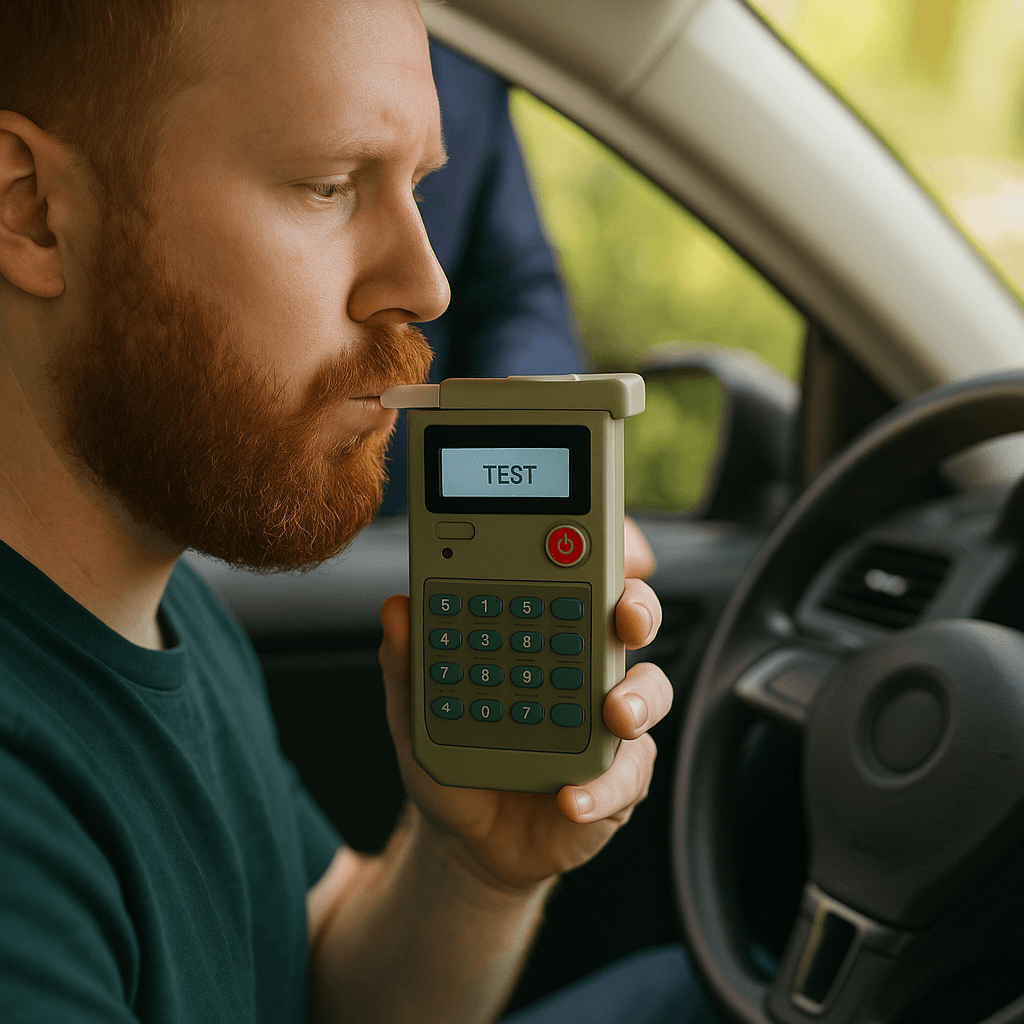
Massachusetts requires an Ignition Interlock Device for all hardship licenses after OUI conviction — no exceptions for first offense, no work-only carveouts. You cannot apply for a hardship license without proof the IID is already installed in your vehicle. Not scheduled. Not pending. Installed and certified by an RMV-approved vendor.
The IID installation appointment takes 7–14 days to schedule in most Massachusetts counties. After installation, the vendor submits compliance data to the RMV, which can take another 3–5 business days to appear in your RMV record. If you wait to install the IID until after your three-month hardship eligibility window opens, you lose another two weeks of driving eligibility waiting for vendor availability and RMV database updates.
Install the IID the week after conviction. You'll pay the installation fee ($100–$150) and monthly monitoring fee ($75–$95) whether you're driving or not, but front-loading installation means your RMV compliance record is already clean when your hardship window opens. Most DUI defendants wait until day 89 of their suspension to book IID installation and then spend day 91–105 wondering why their hardship application is still pending.
Find out exactly how long SR-22 is required in your state
When SR-22 filing becomes required and which carriers will write it
Massachusetts does not require SR-22 for first-offense OUI unless your license suspension was longer than standard (aggravated circumstances, injury, property damage). Second offense and higher: SR-22 is mandatory for the entire hardship license period plus two years after full license reinstatement. The RMV will not reinstate your hardship license without proof of SR-22 on file.
Your current carrier — State Farm, Geico, Allstate, Progressive — will file SR-22 for you if you already have a policy with them, but most will non-renew at your next policy term (typically six months after conviction). Do not assume your carrier will keep you. Call and confirm before your hardship hearing.
If you're shopping for new coverage with SR-22, expect to move into the non-standard market: Dairyland, The General, Bristol West, GAINSCO, and Direct Auto write Massachusetts post-DUI policies regularly. Monthly premiums after first-offense OUI with SR-22 typically run $210–$340/mo for liability-only coverage. Second offense: $280–$450/mo. SR-22 filing itself costs $25–$50, but the rate increase comes from the DUI conviction on your motor vehicle record, not the filing.
How the hardship license hearing works and what the RMV actually wants to see
You apply for your hardship license at the RMV Service Center that handles your county. Barnstable, Bristol, Essex, Middlesex, Norfolk, Plymouth, Suffolk, and Worcester each have dedicated hearing locations. You must bring: IID installation certificate from your vendor, proof of SR-22 filing (if required for your offense level), proof of enrollment or completion in the state-approved OUI education program (24D first offender program or multi-week program for repeat offenses), and a completed hardship license application with employer letter or documented need.
The hearing officer has full discretion to approve or deny. The RMV wants to see you've completed every compliance step before the hearing, not that you're planning to. Showing up with a scheduled IID appointment for next week gets you denied and a new hearing date 30 days out. Showing up with the IID installed, SR-22 active, and 24D program enrollment confirmed gets you approved that day in most cases.
Your hardship license restricts you to 12 hours of driving per day for work, education, medical appointments, OUI program attendance, and IID service appointments. The RMV issues a physical hardship license card — it's not a paper temp. You'll carry it for the remainder of your suspension period. Violate the restrictions (caught driving outside approved hours, failed IID breath test, any new traffic violation) and the RMV revokes the hardship immediately with no appeal process.
What happens if your IID records a fail or a violation during your hardship period
The IID logs every breath test: pass, fail, missed rolling retest, and tamper attempt. Your vendor uploads this data to the RMV every 30 days. A single failed startup test (BAC 0.02 or higher) triggers an automatic RMV review. Two fails in a 30-day period: your hardship license is suspended immediately and you start the application process over after a 90-day lockout.
Missed rolling retests count as violations. The IID prompts you to blow again 5–15 minutes after startup while you're driving. You have six minutes to pull over safely and provide the retest. Missing two retests in a monitoring period gets flagged the same as a failed breath test.
Mouthwash, breath spray, and hand sanitizer all trigger false positives at the 0.02 threshold. Wait 15 minutes after using any alcohol-based product before attempting a test. Energy drinks and certain cold medications cause fails less commonly but are documented in Massachusetts IID violation reviews. If you fail a test you believe is erroneous, request an immediate retest from the IID (most devices allow this within two minutes) and document it with your vendor before the data uploads to the RMV.
How long SR-22 filing continues after your full license is reinstated
Massachusetts requires SR-22 for two years beyond your full license reinstatement date for second and subsequent OUI offenses. Your conviction suspension ends, you apply for full reinstatement, you pay the $500 reinstatement fee, and your SR-22 requirement continues running for another 24 months. The clock starts from reinstatement date, not conviction date.
First-offense OUI drivers with no aggravating factors do not carry SR-22 beyond reinstatement unless the court ordered it as a specific sentencing condition. Check your sentencing paperwork — if SR-22 is listed as a probation requirement, it overrides the standard RMV rule.
Letting your SR-22 lapse even one day during the required filing period resets your entire compliance clock to zero in Massachusetts. The RMV treats a lapse as failure to maintain required insurance and re-suspends your license immediately. You'll pay a new reinstatement fee ($500) and restart SR-22 filing for the full required period. Set a calendar alert for 60 days before your SR-22 end date and confirm with your carrier that continuous coverage is locked in.
Which Massachusetts counties have the longest IID vendor wait times right now
Middlesex, Essex, and Worcester counties average 10–14 day waits for IID installation appointments as of current vendor availability. Suffolk County (Boston) runs 7–10 days. Barnstable and Plymouth: 5–7 days. Bristol, Norfolk, Hampden, and Berkshire counties typically have next-week availability.
Only RMV-approved vendors count for compliance: Intoxalock, LifeSafer, Smart Start, and Guardian Interlock operate in Massachusetts. The vendor you choose doesn't matter to the RMV as long as they're on the approved list. Price and appointment availability vary by location. Intoxalock and Smart Start have the widest Massachusetts service footprints.
If you don't own a vehicle, Massachusetts allows IID installation on a family member's car or a vehicle you have regular documented access to (employer vehicle with written permission, partner's car with title holder consent). You cannot get a hardship license without an IID-equipped vehicle registered to your compliance file at the RMV. Non-owner SR-22 policies exist but do not satisfy the IID requirement — you must have physical access to an IID-equipped vehicle to qualify for hardship driving privileges.