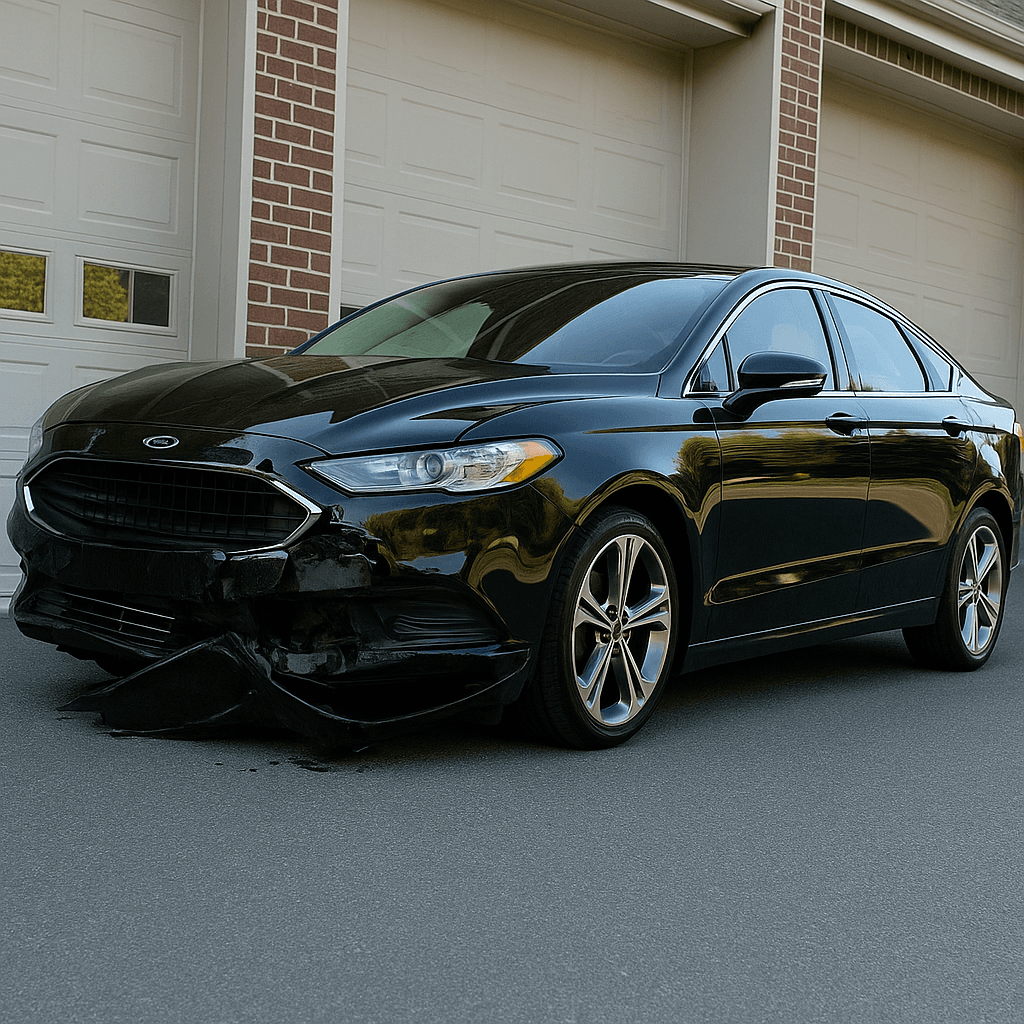
You just got hit with SR-22 filing after your DUI and your premium doubled. Dropping full coverage feels like the obvious fix—but DC's compulsory insurance law and your lender's requirements decide whether that's even an option.
DC Law Allows Liability-Only SR-22, But Your Lender Gets Final Say
Washington DC does not require full coverage insurance—you can legally satisfy SR-22 filing with a liability-only policy meeting the 25/50/10 minimum. The District's compulsory insurance statute and DMV SR-22 requirements say nothing about collision or comprehensive coverage.
But if you financed or leased your vehicle, your loan or lease agreement almost certainly requires comprehensive and collision until the vehicle is paid off. Drop that coverage without lender approval, and they will force-place a policy within 30-45 days at rates typically 200-400% higher than your quoted premium. Force-placed coverage protects the lender's asset, not you as the driver, and provides no liability coverage.
The decision isn't about what DC law permits. It's about what your lienholder will accept—and most won't budge on coverage requirements even after a DUI.
What Happens When You Drop Full Coverage on a Financed Car
Your lender monitors insurance coverage through electronic verification systems tied to your policy. When you drop collision or comprehensive, that change triggers a notification to the lender within 7-14 days.
The lender sends a demand letter requiring proof of full coverage reinstatement within 10-30 days depending on your contract terms. If you don't comply, they purchase force-placed insurance and add the premium to your loan balance. Force-placed policies in DC typically cost $1,800-$3,500 annually for coverage that protects only the vehicle's cash value—not liability, not you as a driver.
You're now paying for two policies: the liability-only SR-22 policy covering your legal filing requirement, and the force-placed policy satisfying your lender. That's not a cost reduction—it's a cost explosion. Some lenders also classify force-placement as a contract breach, which can trigger default clauses or accelerate your loan.
Find out exactly how long SR-22 is required in your state
How DC DUI Drivers Actually Cut Premium Costs Without Dropping Coverage
Raising your deductible from $500 to $1,000 or $2,500 reduces collision and comprehensive premiums by 15-30% without violating lender requirements. Most loan agreements specify coverage types but not deductible amounts, giving you room to adjust.
Switching to a non-standard carrier that specializes in DUI-SR-22 policies often produces lower all-in pricing than trying to strip down coverage with your current insurer. Bristol West, Dairyland, and Direct Auto write full-coverage SR-22 policies in DC with premiums structured for high-risk drivers—they don't penalize DUI as heavily as standard-market carriers because their entire book expects it.
Bundling your SR-22 policy with renters insurance or paying the full six-month term upfront typically unlocks 5-12% in discounts that partially offset the DUI surcharge. Some non-standard carriers also offer reinstatement discounts after 12 months of continuous SR-22 compliance without new violations.
When Dropping Full Coverage Actually Works in DC
You own your vehicle outright with no lien or lease. No lender means no coverage mandate beyond DC's 25/50/10 liability minimum and your SR-22 filing obligation. You can legally drop collision and comprehensive the day your loan is paid off.
Your vehicle's actual cash value is under $3,000-$4,000. Paying $800-$1,200 annually for collision coverage on a car worth $3,000 doesn't pass the math test—your deductible plus two years of premiums exceed the vehicle's total value. At that threshold, liability-only SR-22 with strong uninsured motorist coverage makes financial sense.
You have enough savings to replace the vehicle out of pocket if it's totaled or stolen. If a crash or theft would force you into a high-interest auto loan to replace the car, keeping comprehensive coverage at $40-$60/month is cheaper than financing a replacement at 18-24% APR as a post-DUI borrower.
What DC Requires for SR-22 Filing After DUI
DC requires SR-22 filing for three years following a DUI conviction, measured from your reinstatement date—not your conviction date or suspension start date. Your carrier must file form FR-1 with the DC DMV electronically, certifying continuous coverage at 25/50/10 minimum limits: $25,000 bodily injury per person, $50,000 per accident, $10,000 property damage.
The SR-22 filing itself costs $25-$50 as a one-time processing fee. The premium increase comes from the DUI conviction on your record, not the SR-22 form. Typical DC post-DUI premiums range $180-$320/month for liability-only coverage and $240-$450/month with full coverage, depending on your age, vehicle, and whether this is a first or repeat offense.
Letting your SR-22 lapse even one day resets your three-year clock to zero in DC. Your carrier must notify the DMV within 10 days of cancellation or non-renewal, which triggers an immediate license suspension. Reinstatement after an SR-22 lapse requires a new $198 reinstatement fee, proof of continuous coverage going forward, and starting your three-year filing period over.
How to Find Out If Your Lender Will Allow Lower Coverage
Call your lender's insurance compliance department—not customer service, not your loan officer. Ask specifically whether they will accept liability-only coverage or higher deductibles on a financed vehicle, and request the coverage floor in writing. Some credit unions and smaller lenders negotiate case-by-case, especially if you're near payoff.
Review your loan or lease agreement under the insurance or collateral protection clause. It will specify minimum coverage requirements, usually phrased as comprehensive and collision with a maximum deductible of $500-$1,000. If your agreement is silent on deductible caps, you have leverage to raise it.
If your lender refuses to budge and your payment is unsustainable, refinancing the loan or selling the vehicle and buying outright with cash may be your only path to liability-only SR-22. Refinancing post-DUI is difficult—expect rates of 12-21% if approved—but it removes the coverage mandate once the original loan is satisfied.