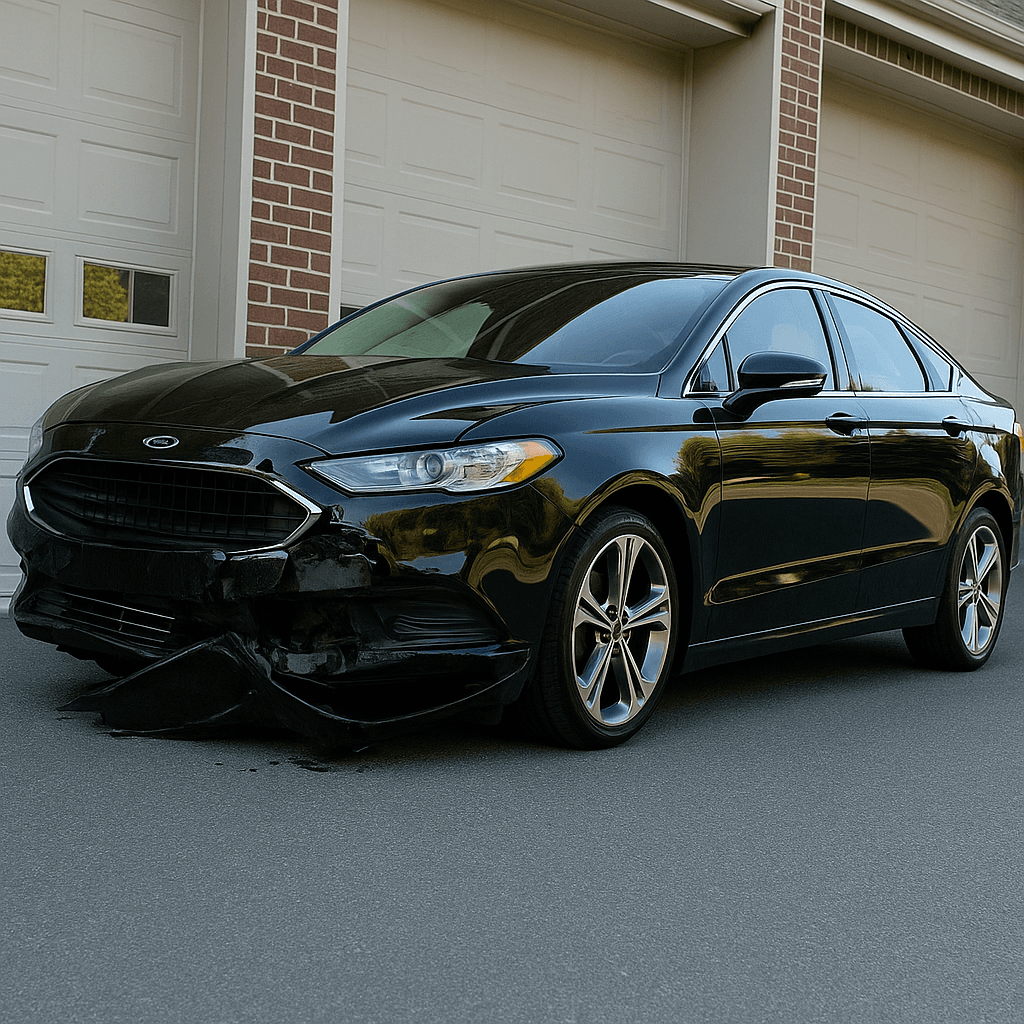
You need SR-22 filing in DC after a DUI, but carriers price full coverage at $350–$550/mo for high-risk drivers. Here's when liability-only makes financial sense and when it doesn't.
Why DC's Tort System Changes the Liability-Only Calculation
DC operates under a pure contributory negligence system, which means if you are found even 1% at fault in an accident, you cannot recover damages from the other driver. This creates asymmetric exposure: you can be sued for full damages if you cause an accident, but you cannot recover anything if you share fault — even minimal fault — in a crash someone else primarily caused.
Most DUI-SR-22 drivers gravitate toward liability-only policies because premiums are lower. In DC, liability-only SR-22 coverage typically runs $140–$220/mo after a DUI, compared to $350–$550/mo for full coverage. That $200–$300/mo savings is real, but it leaves your vehicle unprotected and creates gap exposure if you finance or lease.
The contributory negligence rule compounds this. If you carry liability-only and you're in an accident where you share even minor fault, you pay for your own vehicle damage out of pocket and you cannot sue the other driver for your injuries or lost wages. Carriers writing high-risk policies in DC know this creates claim exposure for their insureds, but they don't adjust minimum-coverage pricing to reflect it.
What Liability-Only SR-22 Actually Covers in DC
DC requires minimum liability limits of 25/50/10: $25,000 per person for bodily injury, $50,000 per accident, and $10,000 for property damage. Your SR-22 filing certifies you carry at least these minimums. Liability-only pays for damage you cause to others — their medical bills, their vehicle, their lost wages — but pays nothing for your own vehicle, your own injuries, or your own property damage.
If you cause an accident and the other driver's medical bills exceed $25,000, you are personally liable for the difference. If you total a $15,000 vehicle and the claim settles at $18,000, you pay the $8,000 overage out of pocket. DC's high cost of living and medical care means bodily injury claims frequently exceed state minimums.
Liability-only also excludes comprehensive and collision coverage, which means theft, vandalism, weather damage, hit-and-run, and at-fault crashes leave you paying for your own repairs or replacement. DC has the third-highest vehicle theft rate in the country, and street parking is the norm in most neighborhoods. A stolen vehicle with liability-only coverage is a total financial loss.
Find out exactly how long SR-22 is required in your state
When Liability-Only Makes Sense After a DUI
You own your vehicle outright with no lien or lease. Lenders and lessors require comprehensive and collision coverage as a condition of financing, and they track compliance through your SR-22 filing. If you drop to liability-only on a financed vehicle, your lender will force-place coverage at significantly higher premiums and you'll still owe the difference.
Your vehicle's actual cash value is under $3,000. If your car is worth less than the cost of six months of collision and comprehensive premiums, you're self-insuring a low-value asset at a premium that exceeds the replacement cost. Most non-standard carriers in DC price collision coverage at $1,200–$1,800/year for DUI-SR-22 drivers, which makes coverage on vehicles worth under $3,000 financially inefficient.
You have liquid savings to replace the vehicle if it's totaled or stolen. Liability-only transfers 100% of vehicle replacement risk to you. If you cannot replace a $6,000 vehicle out of pocket, liability-only creates transportation disruption risk that may affect your ability to meet court-ordered DUI program attendance, IID service appointments, or employment commutes required under probation terms.
When Full Coverage Is Worth the Premium Difference
You finance or lease your vehicle. Your lender requires comprehensive and collision coverage, and your SR-22 filing must certify that coverage is active. Dropping to liability-only triggers a lapse notice to your lender, who will force-place coverage at 2–3x the cost of a standard policy and add the premium to your loan balance. You'll still need SR-22, and you'll pay more for coverage you didn't choose.
You drive in high-theft or high-density areas. DC's vehicle theft rate is 549 per 100,000 residents, concentrated in Wards 5, 7, and 8. If you park on-street overnight in these areas, comprehensive coverage pays for theft, which liability-only does not. Collision coverage also pays for hit-and-run damage, which is common in high-density street parking zones where fault cannot be established.
Your vehicle is worth more than $5,000 and you cannot replace it out of pocket. A $10,000 vehicle totaled in an at-fault crash is a $10,000 loss under liability-only. Collision coverage pays actual cash value minus your deductible. If your deductible is $1,000, you recover $9,000. The annual cost of collision coverage for DUI-SR-22 drivers in DC is typically $1,200–$1,800, which means you break even on a total loss in the first year and you're protected for partial damage throughout your filing period.
How Carriers Price SR-22 Policies for DUI Drivers in DC
Most standard carriers — State Farm, Geico, Allstate, Progressive — will file SR-22 for existing customers after a DUI, but they typically non-renew at the end of the current policy term. New DUI-SR-22 policies in DC are written almost exclusively by non-standard carriers: Bristol West, Direct Auto, Dairyland, GAINSCO, National General, and Kemper.
Non-standard carriers price DUI-SR-22 policies using conviction class, BAC level, and prior violations as primary rating factors. A first-offense DUI with BAC under 0.15% and no prior moving violations prices lower than a second-offense DUI or a first-offense with aggravating factors like refusal, minor in vehicle, or property damage. Rate increases after a DUI in DC typically range from 80–140% over pre-conviction premiums.
Collision and comprehensive coverage on non-standard policies carry higher deductibles — typically $1,000 minimum, compared to $500 deductibles common on standard policies. Some carriers offer $500 deductibles for DUI-SR-22 policies, but the premium difference is often $40–$60/mo, which makes the lower deductible cost-inefficient unless you expect frequent claims. Uninsured motorist coverage is also priced higher for DUI-SR-22 drivers, but DC's 13% uninsured driver rate makes it a worthwhile addition if you can afford the $15–$25/mo premium.
What Happens If You Switch Coverage Mid-Filing Period
DC requires SR-22 filing for three years from the date of conviction, not from the date of reinstatement. If your license was suspended for six months, your SR-22 period begins the day you were convicted, not the day you reinstated. Switching from full coverage to liability-only mid-period does not reset your filing clock, but it does create lapse risk if the transition is not handled correctly.
You must maintain continuous SR-22 coverage for the full three-year period. If your carrier files an SR-26 cancellation notice with the DC DMV because you dropped coverage or switched carriers without overlapping effective dates, your license is suspended again and your filing period resets to zero. A one-day lapse triggers the same penalty as a six-month lapse.
If you switch from full coverage to liability-only, contact your carrier in writing and confirm the policy change does not cancel your SR-22 filing. Some carriers treat a reduction in coverage as a policy modification that maintains the SR-22. Others cancel the existing policy and issue a new liability-only policy, which creates a lapse gap if not timed correctly. Request written confirmation that your SR-22 remains active and that no SR-26 will be filed before you authorize the change.
How Your Filing Period Affects Coverage Decisions
DC's three-year SR-22 requirement is longer than most states, which means you're managing premium cost over 36 months, not 12 or 24. If you pay $350/mo for full coverage SR-22 for three years, your total outlay is $12,600. If you pay $160/mo for liability-only, your total outlay is $5,760. The $6,840 difference is real money, but it assumes zero claims and zero vehicle loss over three years.
Most DUI-SR-22 drivers see rate reductions after 24–30 months of conviction-free driving, especially if they complete DUI education, maintain continuous coverage, and avoid new violations. Carriers re-rate policies at renewal, and conviction age is a primary factor. A DUI that is 30 months old prices lower than a DUI that is 6 months old, even on the same policy with the same carrier.
If you start with liability-only to manage cost in year one and your financial situation improves, you can add comprehensive and collision coverage at renewal without affecting your SR-22 filing. The opposite is also true: if you start with full coverage and your vehicle depreciates below $3,000 in year two, you can drop collision coverage and maintain liability-only SR-22 for the remainder of your filing period. Your SR-22 filing certifies minimum liability limits, not comprehensive or collision, so changes to physical damage coverage do not affect compliance.