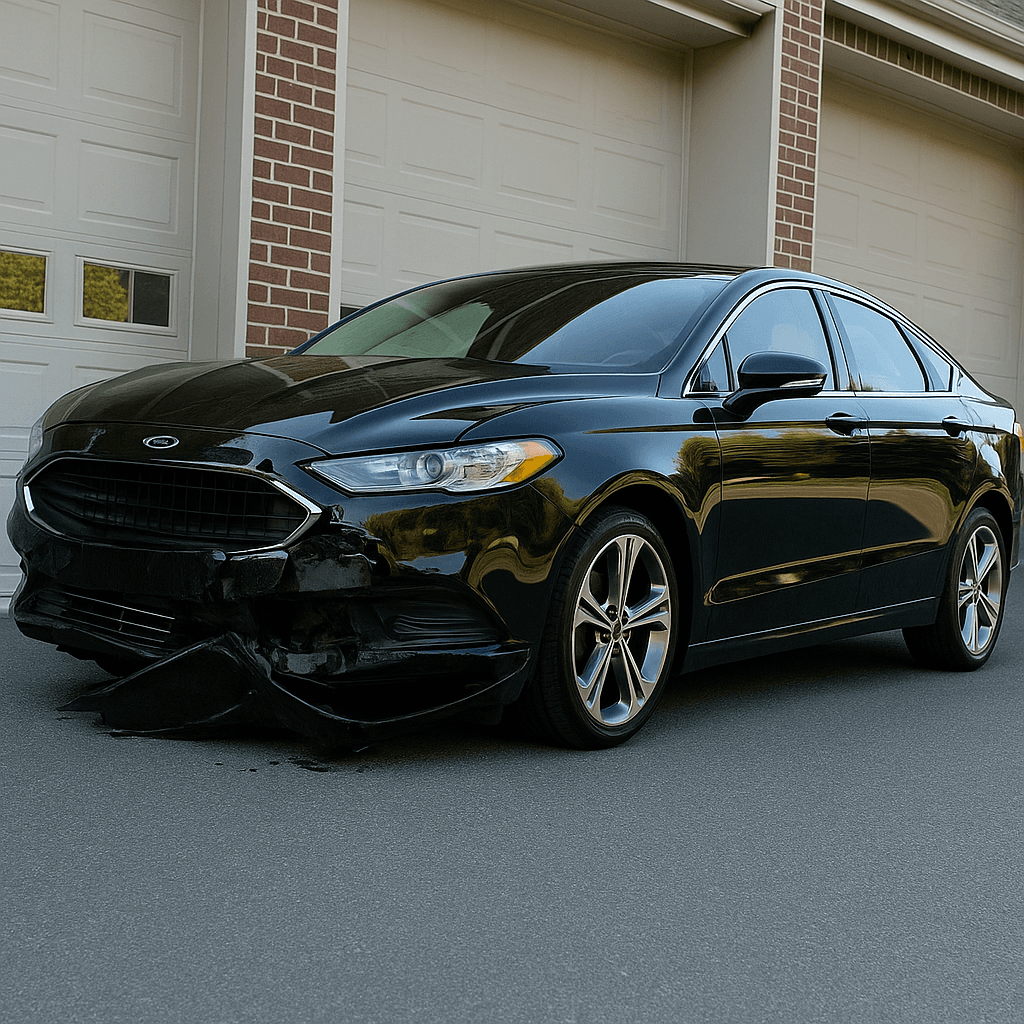
A DUI conviction in DC triggers mandatory SR-22 filing and full-coverage requirements from your lender. Miss either one and your vehicle gets repo'd — here's what you need in place.
DC Lenders Require SR-22 Plus Full Coverage After a DUI — Not Either/Or
Your auto lender's contract includes a financing clause requiring you to maintain continuous coverage that protects their collateral. When DC's DMV notifies you of mandatory SR-22 filing after a DUI, your lender simultaneously enforces collision and comprehensive minimums — typically $500 or $1,000 deductible maximums.
Most mainstream carriers (State Farm, Geico, Allstate) will file SR-22 for existing customers but non-renew at policy term after a DUI. When your policy cancels, your lender receives a lapse notification within 10 days. You then have 10–15 days to secure replacement coverage before the lender places force-placed insurance on your vehicle at 2–4 times your previous premium, billed directly to your loan balance.
DC requires SR-22 for 3 years after a DUI conviction, measured from conviction date. Your lender's full-coverage requirement runs for the entire loan term. If you paid $18,000 for a vehicle and still owe $14,000, you're managing both requirements simultaneously until the loan is paid off — whichever timeline is longer.
What Collision and Comprehensive Minimums Actually Cost After a DUI in DC
Liability-only SR-22 coverage after a DUI in DC typically runs $140–$210/mo. Adding collision and comprehensive to meet lender requirements increases that to $240–$380/mo for a financed sedan with a $1,000 deductible. The DUI conviction itself triggers a 70–130% rate increase; the full-coverage add pushes total monthly cost 40–60% higher than liability-only.
Your lender requires limits that cover the vehicle's actual cash value, not the loan balance. A 2019 Honda Accord worth $16,000 requires collision and comprehensive limits at or above that amount. Deductible caps vary by lender — most allow $500 or $1,000 maximums. Choosing a $1,000 deductible instead of $500 typically saves $30–$50/mo but increases your out-of-pocket cost if you file a claim.
Non-standard carriers writing DUI-SR-22 policies in DC include Direct Auto, Dairyland, The General, Bristol West, and GAINSCO. Not all write full-coverage policies for DUI drivers. Direct Auto and Dairyland have the widest acceptance for financed vehicles after a first-offense DUI; repeat-offense or aggravated convictions typically require appointed agents who specialize in high-risk placements.
Find out exactly how long SR-22 is required in your state
What Happens If You Drop Collision or Comprehensive to Lower Your Premium
Your lender monitors your insurance status through continuous verification systems tied to your policy. If you drop collision or comprehensive to reduce cost, your insurer notifies the lender within 10 days. The lender then sends a breach notice giving you 10–15 days to reinstate full coverage or accept force-placed insurance.
Force-placed coverage protects only the lender's interest, not yours. If your vehicle is totaled in an at-fault accident, the lender receives the payout to cover the loan balance — you receive nothing and still owe any deficiency if the payout falls short. Force-placed premiums run $200–$400/mo for coverage that provides zero benefit to you as the driver.
Dropping to liability-only also violates DC's SR-22 filing requirement if your SR-22 certificate was issued under a full-coverage policy. DC requires continuous coverage at the level certified when the SR-22 was filed. Switching from full coverage to liability-only without filing a new SR-22 creates a lapse, which resets your 3-year filing period to zero and triggers a new suspension.
How to Meet Both Requirements Without Paying for Coverage Twice
A single non-standard auto policy can satisfy both your lender's full-coverage requirement and DC's SR-22 filing mandate. You do not need separate policies. When you request a quote, specify that you need collision, comprehensive, and SR-22 filing on a financed vehicle — the carrier bundles all three into one policy and files the SR-22 certificate with DC's DMV on your behalf.
Your lender requires proof of coverage showing their name as lienholder and loss payee. This appears on your declarations page under "Additional Interests." Your carrier sends this directly to the lender when the policy binds. If your lender does not receive verification within 30 days of your policy start date, contact your carrier to request a duplicate lienholder notification — most non-standard carriers send this automatically, but manual requests are common after DUI placements.
SR-22 filing fees in DC run $15–$50 depending on carrier, paid once at policy inception and again at each renewal. This is separate from your premium. Some non-standard carriers include the filing fee in your quoted rate; others bill it separately. Confirm whether the quote includes filing before you bind coverage.
What to Do If Your Lender Threatens Repossession Before You Secure Coverage
If you receive a repossession notice before securing SR-22 and full coverage, contact your lender immediately to request a 10-day extension. Most lenders grant one extension if you provide proof that you've applied for coverage — a quote confirmation or binder from a non-standard carrier is sufficient. Do not wait for the policy to bind; forward the binder to your lender the day you receive it.
If your vehicle has already been repossessed, you can recover it by providing proof of active full-coverage insurance with SR-22 filing and paying repossession fees, which typically run $300–$600 in DC. The lender is not required to accept late coverage — repossession authority exists once the breach period expires. Your best option is securing coverage within the initial 10–15 day window the lender provides in the breach notice.
If no non-standard carrier will write you a full-coverage policy due to a repeat-offense or aggravated DUI, contact an appointed high-risk agent who can place coverage through surplus lines carriers. These policies cost 20–40% more than standard non-standard placements but accept conviction classes that Direct Auto and Dairyland decline.
When You Can Drop Full Coverage and Keep Just SR-22 Liability
You can drop collision and comprehensive once your loan is paid off, but you must maintain liability coverage with SR-22 filing for the full 3-year period DC requires. Switching from full coverage to liability-only the day after your final loan payment typically reduces your monthly premium by $100–$170, depending on your vehicle's value and your conviction details.
Before you drop full coverage, confirm with your carrier that they will continue SR-22 filing under a liability-only policy. Most non-standard carriers allow this transition without re-filing; a few require you to cancel and re-apply under a new liability-only SR-22 policy. If re-filing is required, do it before canceling your full-coverage policy to avoid a lapse, which resets your 3-year clock.
If you trade in your financed vehicle for a paid-off vehicle before your SR-22 period ends, you still need continuous liability coverage with SR-22 for the remaining filing period. A break in coverage of even one day constitutes a lapse under DC law, triggering a new suspension and restarting the 3-year requirement from the date coverage resumes.