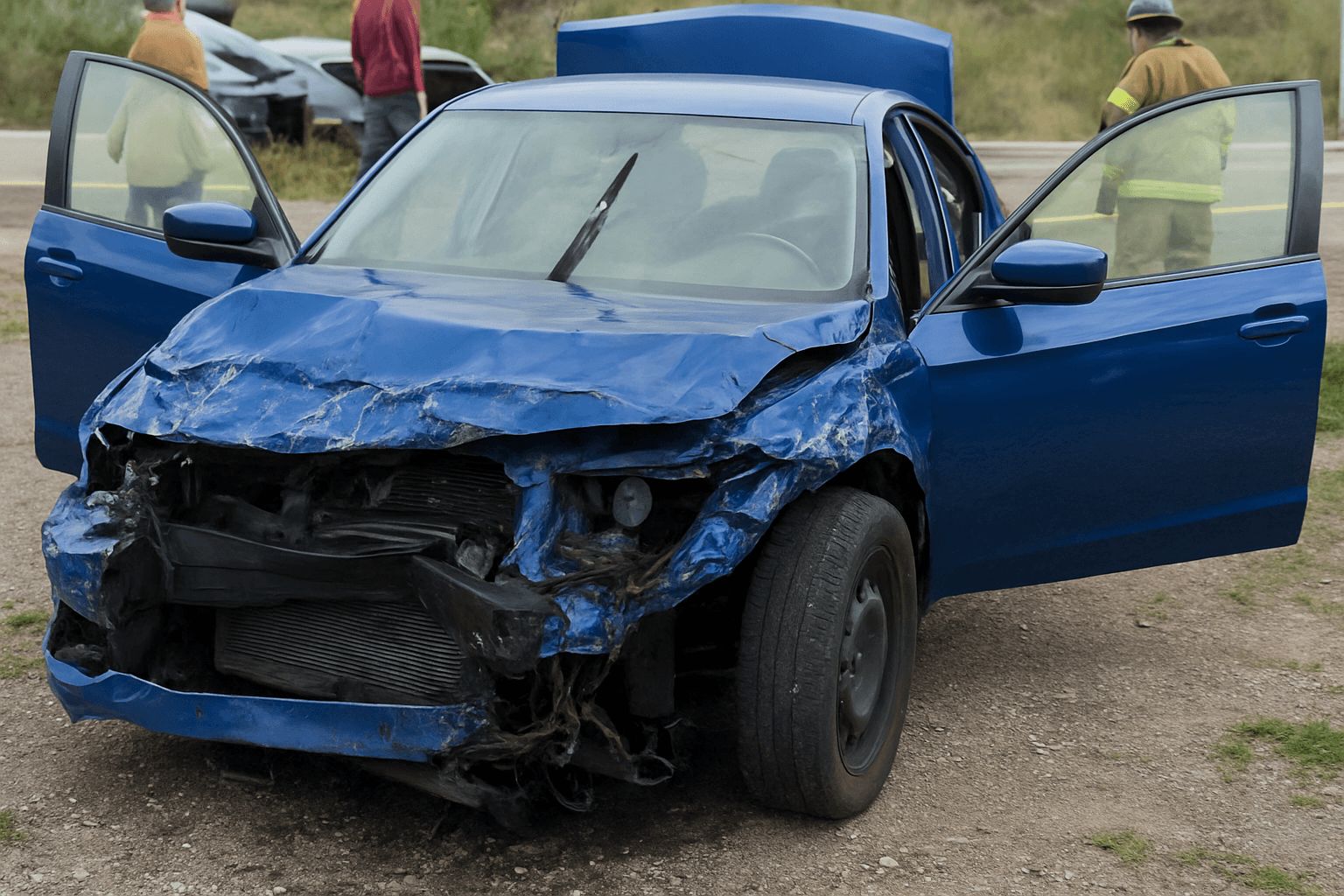
South Carolina requires SR-22 filing for 3 years after a DUI, but full coverage is not a legal mandate—only liability. The real question: will your lender, court order, or carrier let you drop it?
South Carolina SR-22 Requires Liability Coverage—Not Full Coverage
South Carolina law requires you to carry 25/50/25 liability coverage and file SR-22 for 3 years after a DUI conviction. The state does not mandate collision or comprehensive coverage—those are full coverage components. If you own your vehicle outright with no lien, you can legally file SR-22 with liability-only coverage and meet state reinstatement requirements.
Full coverage becomes required only when your lender holds the title. Every auto loan and lease contract includes a clause requiring collision and comprehensive coverage until the loan is paid off. Drop full coverage without lender consent, and you trigger the force-placed insurance clause—your lender will buy coverage on your behalf at 3-5 times your quoted rate and add it to your loan balance. Most lenders add repossession language for coverage lapses exceeding 10-30 days.
Some DUI court orders include enhanced insurance requirements as part of sentencing—typically higher liability limits like 50/100/50 or 100/300/100, occasionally with uninsured motorist coverage mandates. Review your sentencing paperwork before making coverage changes. If your order specifies coverage levels, those override the state minimum and bind you until your probation or compliance period ends.
What Happens to Your Premium If You Drop to Liability-Only SR-22
Dropping from full coverage to liability-only typically cuts your premium by 40-60%, depending on your vehicle value and deductible structure. A 2018 sedan with $500 collision deductible might cost $220/mo for full coverage SR-22 in South Carolina; liability-only SR-22 on the same profile drops to $90-$130/mo. The savings come entirely from removing collision and comprehensive—your SR-22 filing fee ($25-$50 annually) and DUI rate surcharge remain unchanged.
Non-standard carriers writing SR-22 after DUI—Bristol West, Direct Auto, Dairyland, GAINSCO, Safe Auto—sometimes impose minimum coverage requirements that exceed state liability limits. GAINSCO requires 50/100/50 liability minimums for SR-22 policies in several states; Safe Auto frequently mandates uninsured motorist coverage at limits matching your liability coverage. These carrier-imposed minimums add $15-$40/mo over bare state minimum liability but still cost far less than full coverage.
Your rate drop assumes you keep the same carrier. Most mainstream carriers—State Farm, Geico, Allstate—non-renew at policy term after a DUI. If you're mid-term and drop full coverage, expect a non-renewal notice 30-60 days before your term ends. Non-standard carriers expect DUI filings and typically allow mid-term coverage changes, but call your carrier before dropping collision to confirm they'll maintain your SR-22 filing through the change.
Find out exactly how long SR-22 is required in your state
Lender Requirements Override Your Legal Right to Drop Full Coverage
Your loan contract includes a collateral protection clause requiring comprehensive and collision coverage at limits your lender specifies—typically actual cash value or replacement cost coverage with deductibles no higher than $1,000. Drop full coverage while carrying a loan, and your lender receives a lapse notice from your insurer within 10-15 days. Most lenders send one warning letter giving you 10-20 days to reinstate coverage before they act.
Force-placed insurance, also called collateral protection insurance or lender-placed coverage, protects the lender's interest in the vehicle—not your liability or injury costs. Premiums run $150-$400/mo depending on vehicle value, added directly to your loan balance with interest. The coverage typically includes no liability protection, meaning you're paying for collision coverage you can't use for your own claims and still need to maintain separate liability coverage to satisfy your SR-22 requirement. You're now paying for two policies.
Paying off your loan is the only guaranteed path to dropping full coverage without lender consequences. If your loan balance is under $3,000-$5,000 and you can access funds—tax refund, family loan, selling another asset—paying off the lien eliminates the collateral requirement immediately. Request a lien release from your lender, update your title with the South Carolina DMV, then contact your insurer to drop collision and comp. Your SR-22 filing remains active on your new liability-only policy.
Non-Standard Carriers That Write Liability-Only SR-22 in South Carolina
Most non-standard carriers writing SR-22 after DUI in South Carolina will write liability-only policies if you own your vehicle outright. Direct Auto, Bristol West, Dairyland, and Safe Auto actively write liability-only SR-22 policies for South Carolina DUI filings. The General writes liability-only SR-22 in South Carolina but applies stricter underwriting for DUI profiles—expect higher premiums or coverage denials if your DUI included aggravating factors like refusal, high BAC above 0.15, or property damage.
Progressive and Geico will file SR-22 for existing customers but typically non-renew DUI policies at term. If you're currently mid-term with either carrier and drop to liability-only, expect a non-renewal notice within 60 days. Neither carrier actively writes new SR-22 policies for DUI convictions in South Carolina—applications route to their non-standard subsidiaries or decline entirely.
Carrier availability for liability-only SR-22 changes frequently based on loss ratios and state filings. Quote with at least three non-standard carriers before dropping full coverage. Rates for identical liability-only SR-22 coverage in South Carolina vary by $40-$80/mo between carriers even with the same violation history. Apply through an independent agent writing multiple non-standard carriers—they can bind coverage before you cancel your current full-coverage policy, eliminating the lapse risk during the transition.
The Financial Break-Even Point: When Dropping Full Coverage Makes Sense
Compare your vehicle's actual cash value against your annual full coverage premium to find your break-even threshold. If your car is worth $4,000 and full coverage SR-22 costs $2,400/yr while liability-only costs $1,200/yr, you're paying $1,200/yr to insure a $4,000 asset. A total loss pays out actual cash value minus your deductible—likely $3,500 after a $500 deductible. You'd need to total your car every 2.9 years for full coverage to break even financially.
Vehicles worth under $5,000 rarely justify full coverage premiums for high-risk drivers. Collision and comprehensive coverage on a 2010 sedan with 150,000 miles costs the same as coverage on a 2010 sedan with 80,000 miles—insurers rate on year, make, and model, not condition. Your $3,000 vehicle might carry a $180/mo full coverage premium while returning a $2,500 total loss payout. Drop to liability-only at $85/mo and bank the $95/mo difference—after 26 months you've saved enough to replace the car if you total it.
Age and condition matter more than purchase price. A 15-year-old vehicle with high mileage faces increasing mechanical breakdown risk unrelated to collision. Comprehensive coverage pays for theft, vandalism, weather damage, and animal strikes—but a $500 deductible on a $4,000 car means you're self-insuring the first 12.5% of every claim anyway. Run the math: monthly savings multiplied by 12 months versus realistic claim payout after deductible. If savings exceed payout within 18-24 months, liability-only is the financially rational choice assuming no loan.
What Happens to Your SR-22 Filing When You Change Coverage Levels
Your SR-22 filing stays active when you drop from full coverage to liability-only—the filing tracks your liability coverage, not your collision or comp. South Carolina requires continuous SR-22 filing for 3 years from your DUI conviction date. Drop collision and comprehensive but maintain liability at or above 25/50/25 limits, and your filing remains valid. Your carrier submits an updated SR-22 form to the South Carolina DMV reflecting your new liability-only policy within 10 days of the change.
Changing carriers mid-filing-period requires careful timing to avoid an SR-22 lapse. Your current carrier files an SR-26 cancellation notice with the DMV the day your policy cancels. If your new liability-only policy doesn't bind and file SR-22 before your old policy cancels, the DMV receives the SR-26 without a replacement SR-22 on file—that's a lapse. South Carolina suspends your license immediately upon SR-22 lapse notification, and most DUI court orders restart your 3-year filing clock from zero after any lapse.
Bind your new liability-only SR-22 policy with an effective date matching or preceding your full coverage cancellation date. Your new carrier files the SR-22 electronically with the South Carolina DMV within 24-48 hours of binding. Verify your new SR-22 is filed before you cancel your old policy—call the South Carolina DMV at (803) 896-5000 and confirm they show an active SR-22 filing under your license number. Only then cancel your full coverage policy. A single-day SR-22 gap triggers suspension and restarts your filing period in South Carolina.