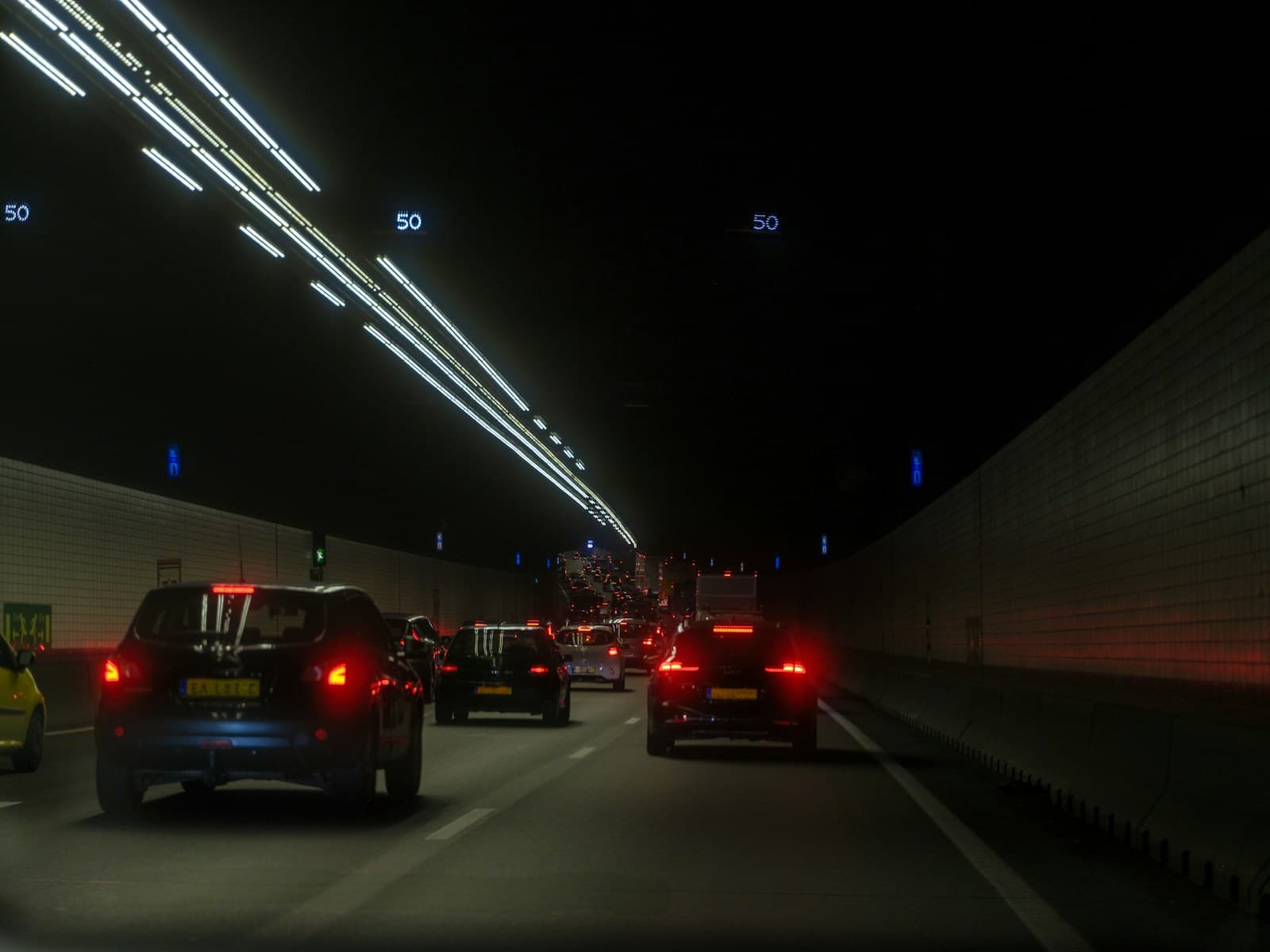
Kentucky's Operational Only license requires proof of your employer's shift schedule before approval. Night shift workers miss this requirement constantly, extending their suspension by weeks while they reapply.
Kentucky's Operational Only License Allows Night Shift Commuting — If You Document It Correctly
Kentucky issues an Operational Only license (also called a hardship or work license) after DUI suspension, but approval requires submitting proof of your employment schedule with your application — not after. Night shift workers at hospitals, warehouses, manufacturing plants, and 24-hour facilities qualify for the same restricted license as daytime workers, but Kentucky's Transportation Cabinet reviews each application individually based on the hours you submit. Your approval letter specifies the exact hours you can drive, matched to your employer's shift start and end times plus reasonable travel time.
Most DUI filers assume they can update their driving hours later if their shift changes. You cannot. Kentucky requires a new application, new filing fee, and new review period every time your work schedule changes. If you work rotating shifts or on-call hours, request the broadest window your employer will verify upfront — midnight to 8 a.m. for night shift, for example, rather than a narrow 2 a.m. to 6 a.m. window that won't cover schedule variations.
Your SR-22 must be active before the Transportation Cabinet processes your Operational Only application. Kentucky ties hardship license approval to continuous SR-22 filing, which means any lapse resets your eligibility. Most non-standard carriers file SR-22 electronically within 24 hours, but paper filers can delay approval by 7 to 10 days.
What You Must Submit to Prove Your Night Shift Schedule
Kentucky requires a notarized employer verification letter on company letterhead stating your job title, shift start and end times, workdays per week, and the employer's physical address. The letter must be signed by a supervisor or HR representative with contact information Kentucky can verify. A pay stub or work badge is not sufficient — the Transportation Cabinet calls or emails employers to confirm schedules before issuing restricted hours.
If your employer operates multiple shifts or locations, the letter must specify which shift and site you are assigned to. Night shift workers at hospitals or warehouses with staggered start times should request a 30-minute buffer on each end — if your shift starts at 11 p.m., request driving privileges from 10:30 p.m. to accommodate clocking in early or staying late for handoff.
Self-employed night shift workers or gig drivers face additional scrutiny. Kentucky requires a signed affidavit explaining your work, client contracts or delivery platform screenshots showing night hours, and three months of income records proving the work is ongoing. Uber, DoorDash, and Instacart drivers rarely qualify because Kentucky considers gig work discretionary rather than employment-based necessity.
Find out exactly how long SR-22 is required in your state
How Kentucky Defines Driving Hours for Night Shift Commutes
Kentucky's Operational Only license restricts you to direct travel between home and work, home and court-ordered programs (DUI education, substance abuse treatment), and home and medical appointments. You cannot stop for gas, groceries, or food on the way unless your approval letter explicitly states otherwise. The Transportation Cabinet calculates reasonable travel time based on your home address and employer's location — typically 15 minutes per 10 miles, rounded up.
If you live 25 miles from your night shift job, Kentucky allows approximately 40 minutes each way. Your restricted hours must cover your shift start time minus travel time, through your shift end time plus travel time. A night shift running 11 p.m. to 7 a.m. with a 40-minute commute requires driving privileges from 10:20 p.m. to 7:40 a.m. Driving outside those hours — even by 10 minutes — is operating on a suspended license, a separate misdemeanor that triggers immediate SR-22 filing period restart.
Kentucky does not grant separate windows for multiple jobs. If you work two part-time night shifts at different locations, you must choose one job for your Operational Only application or request a combined window that covers both — which the Transportation Cabinet approves only if the jobs are on different nights or the locations are within the same geographic area.
What Happens If Your Shift Changes or You Switch Jobs Mid-Filing Period
Kentucky requires you to file a new Operational Only application within 10 business days of any employment change — new employer, different shift hours, or different work location. The filing fee is $50 per application, and review takes 15 to 20 business days. You are not legally allowed to drive to your new night shift job during the review period unless your original restricted hours happen to overlap.
Most night shift workers learn this after they have already started the new job and been pulled over during hours not listed on their approval letter. Kentucky State Police and local law enforcement verify Operational Only hours during every traffic stop by calling the DUI Suspension Unit directly. If your current shift does not match your filed hours, the stop becomes a suspended license charge regardless of whether you have a pending application.
If you are terminated or laid off during your SR-22 filing period, Kentucky does not allow you to keep your Operational Only license for job searching. Your driving privileges revert to full suspension until you secure new employment and file a new application with employer verification. Unemployment does not qualify as acceptable cause for restricted driving.
How SR-22 Filing Costs Change for Night Shift Drivers in Kentucky
Kentucky requires SR-22 filing for three years after DUI conviction for first offenses, five years for aggravated or repeat-offense DUI. Night shift workers pay the same SR-22 filing fee as daytime workers — typically $25 to $50 per year depending on carrier — but non-standard auto insurance premiums run higher for drivers who list night commuting as their primary vehicle use.
Carriers view night driving as higher risk due to reduced visibility, increased impaired driver prevalence, and fewer witnesses in the event of a claim. Expect monthly premiums of $180 to $290 for state minimum liability with SR-22 if you drive nights regularly, compared to $145 to $230 for daytime-only commuting. The gap widens if you work in a high-theft or high-accident zip code — Louisville, Lexington, and Covington night shift routes add 15% to 25% to base premiums.
Non-owner SR-22 policies cost less if you do not own a vehicle but need to maintain your Operational Only license for carpooling or borrowing a vehicle for work. Monthly premiums for non-owner SR-22 in Kentucky typically range from $45 to $75, with night shift use adding $10 to $20 per month depending on your conviction class and filing period remaining.
What Kentucky Law Enforcement Checks During Night Shift Traffic Stops
Kentucky State Police and county sheriffs run your license plate and driver's license through the DUI Suspension Unit database during every traffic stop. The database shows your Operational Only approval status, restricted driving hours, approved addresses, and SR-22 compliance status in real time. Officers verify three things: you are driving during your approved window, you are traveling between approved locations, and your SR-22 is active with no lapses.
If you are stopped at 3 a.m. on your way to a night shift job and your approval letter lists 11 p.m. to 7 a.m. as your restricted hours, the stop is clean as long as you are on a direct route. If you are stopped at the same time but your restricted hours are 6 a.m. to 6 p.m. for a different job, the officer issues a citation for operating on a suspended license — a Class B misdemeanor carrying up to 90 days in jail and a $250 fine, plus immediate vehicle impoundment.
Kentucky does not provide grace periods for expired Operational Only licenses or lapsed SR-22 during a traffic stop. If your SR-22 lapsed even one day before the stop, your restricted license is void and the suspension period resets to zero. Most night shift workers discover lapses during traffic stops rather than through mail notifications, because carriers are not required to notify you before canceling SR-22 for non-payment — only required to notify the state.
How to Avoid the Most Common Operational Only Application Mistakes
Kentucky's Transportation Cabinet rejects 30% to 40% of first-time Operational Only applications due to incomplete employer verification, incorrect address formatting, or missing SR-22 proof. Night shift workers face higher rejection rates because employer letters often fail to specify exact shift hours — writing "overnight shift" or "graveyard shift" instead of "11:00 p.m. to 7:00 a.m." triggers automatic rejection.
Request your employer verification letter at least two weeks before filing your application. Kentucky requires notarization, and most employers take 5 to 10 business days to process notarized letters through HR and legal review. If your employer refuses to notarize, ask for the letter on company letterhead with the HR director's original signature and direct phone number — Kentucky sometimes accepts this with follow-up verification, but it extends processing time by 10 to 15 days.
Submit your SR-22 certificate and employer letter together in a single application packet. Kentucky processes complete packets in 15 to 20 business days but holds incomplete packets indefinitely without notification. If you submit your SR-22 proof in week one and your employer letter in week three, the Transportation Cabinet treats it as a new application filed in week three, resetting your review timeline.