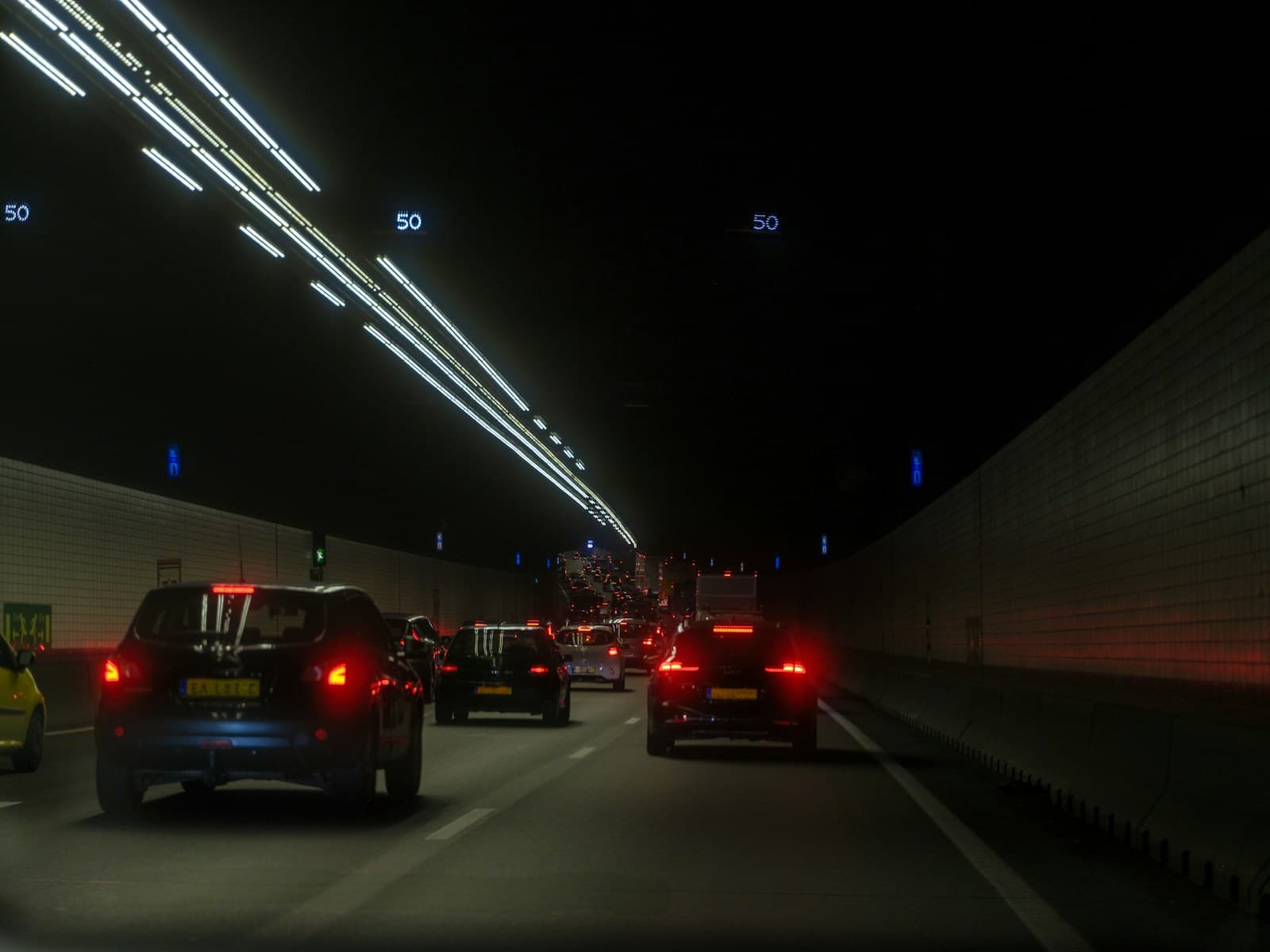
Ohio's occupational driving privilege covers employer-required hours, including overnight shifts. If your restricted license petition lists your actual work schedule, you can drive to and from night work legally.
Ohio Restricted Licenses Cover Night Shift Hours If You Document Them Correctly
Ohio's occupational driving privilege applies to any shift your employer requires, including overnight and rotating schedules. The BMV does not restrict occupational driving to daylight hours. Your petition on Form 2439 must list your actual work schedule, the employer's address, and your normal route.
Most drivers assume restricted licenses only cover 9-to-5 commutes. Ohio Revised Code 4510.021 defines occupational purposes as employment, medical treatment, court-ordered programs, and essential family care. Night shifts fall squarely within employment purposes. If you work 11 PM to 7 AM, your restricted license can authorize driving during those hours.
The enforcement issue is documentation, not timing. Carry your restricted license, your employer's signed letter confirming your shift schedule, and a copy of your court petition. If stopped during your authorized window, law enforcement verifies your stated route and timing against your documentation. Driving outside your authorized hours or route — even by one mile or ten minutes — violates the privilege and triggers immediate suspension.
What You Must Include on Form 2439 for Night Shift Authorization
Ohio's restricted license petition requires your employer's exact address, your job title, your shift start and end times, and the days you work. For night shifts, specify the overnight window: "10:45 PM departure to 7:15 AM return, Monday through Friday." Do not round to midnight or generalize to "overnight."
The court reviews your petition against the ALS order or court-imposed suspension. First-offense DUI typically qualifies for restricted privileges after 15 days of hard suspension. High-BAC convictions and repeat offenses face longer waiting periods. If your petition is approved, the BMV issues a restricted license valid only for the purposes, routes, and times you listed.
Include any required stops between home and work. If you drop your child at overnight daycare before your shift, list the daycare address and the detour it adds to your route. Ohio courts grant multi-stop occupational privileges routinely, but only if you document each stop on the initial petition. Adding stops later requires a new court hearing.
Find out exactly how long SR-22 is required in your state
SR-22 Filing Is Required Before the BMV Will Issue Your Restricted License
Ohio requires continuous SR-22 filing for three years after a DUI conviction, measured from your conviction date. The BMV will not process your restricted license application until your SR-22 is on file. Most carriers file SR-22 electronically within 24 hours of binding your policy, but you must confirm the BMV received it before your court hearing.
Night shift workers face the same SR-22 requirement as any DUI offender. Your filing obligation does not change based on work hours or restricted license status. If your SR-22 lapses for any reason — missed payment, policy cancellation, switching carriers without continuous coverage — the BMV suspends your restricted license immediately and resets your three-year filing clock to zero.
Expect SR-22 premiums between $140 and $280 per month for a first-offense DUI in Ohio, depending on your age, county, and violation details. Non-standard carriers like Bristol West, Dairyland, and The General write most post-DUI policies. Mainstream carriers typically non-renew at your policy term after a DUI, even if they file SR-22 initially.
What Happens If You're Stopped Outside Your Authorized Hours
Driving outside your restricted license window is a first-degree misdemeanor in Ohio, punishable by up to six months in jail and a $1,000 fine. The BMV also terminates your restricted privilege permanently. You cannot petition for another restricted license after violating the first one.
Ohio law enforcement can verify your restricted license status instantly via the LEADS database. If you are stopped at 9 PM and your authorized window is 10:45 PM to 7:15 AM, the officer sees the violation immediately. "I was leaving early to get gas" is not a defense. The statute allows zero tolerance for departures outside your court-authorized timeframe.
Your SR-22 carrier will be notified of the violation. Most non-standard carriers non-renew policies after a restricted license violation, which creates a second SR-22 lapse and compounds your reinstatement timeline. One violation outside your authorized hours can add 18 months to your total suspension period when you factor in lapse penalties and new waiting periods.
Rotating Shifts and Schedule Changes Require Court Amendment
If your employer changes your shift schedule after your restricted license is issued, you must petition the court to amend your driving privilege before working the new hours. Driving under a schedule change without court approval violates your restricted license, even if the new hours are work-related.
Ohio courts handle amendment petitions more quickly than initial applications, typically within 7 to 10 business days. Submit your employer's updated shift letter and a motion to modify your restricted driving privilege. The filing fee is $25 in most Ohio counties. Do not start driving the new schedule until the court signs the amended order and the BMV updates your restriction file.
Rotating shifts create documentation challenges. Some Ohio courts grant broader occupational windows — for example, "any hours between 10 PM and 8 AM as required by employer" — if you submit a letter confirming rotating or on-call status. Franklin County and Cuyahoga County courts have granted these broader authorizations. Smaller county courts are less likely to approve open-ended windows and may require you to petition each time your schedule rotates.
Your Restricted License Does Not Shorten Your SR-22 Filing Period
Ohio's three-year SR-22 requirement runs independently of your restricted license. Even if you complete your full suspension period and regain unrestricted driving privileges, you must maintain SR-22 filing until three years from your conviction date. Most drivers finish their suspension within 6 to 12 months but continue SR-22 filing for another two years.
The filing clock starts on your conviction date, not your reinstatement date or your restricted license issue date. If you were convicted on March 15, your SR-22 obligation ends March 15 three years later, regardless of when your license was suspended or reinstated. This is the most commonly miscalculated deadline among Ohio DUI offenders.
After your three-year period ends, contact your carrier to remove the SR-22 filing. The BMV does not notify you when your requirement expires. If you forget to remove it, you continue paying SR-22 fees unnecessarily. If you cancel it early, you reset your clock to zero and face a new three-year period.