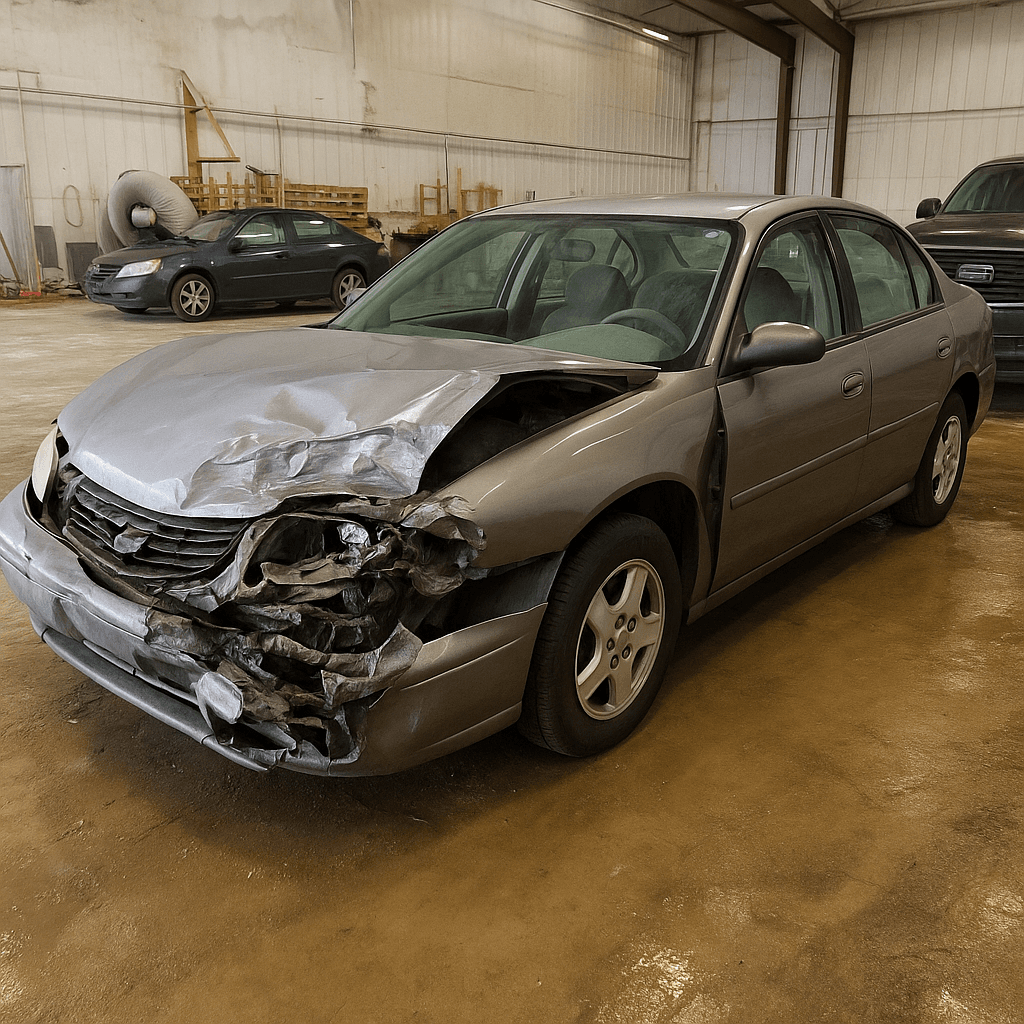
Your New Jersey lender will enforce full coverage with higher deductibles during your DUI case and SR-22 filing period. Here's what changes in your loan agreement and how much it costs.
Your Lender Will Enforce Collision and Comprehensive Coverage Through Your Entire SR-22 Period
New Jersey lenders require collision and comprehensive coverage on any financed vehicle, and this requirement stays in force during your DUI case, license suspension, and the full 3-year SR-22 filing period the state mandates after a DUI conviction. Your loan agreement gives the lender the right to force-place coverage at your expense if you drop below their minimum — and force-placed insurance typically costs 200–400% more than a standard policy.
Most lenders will audit your insurance certificate within 10–15 days of your DUI arrest if your carrier sends a non-renewal notice. State Farm, Geico, Allstate, and Progressive typically non-renew DUI policies at the current term end, which gives you 30–90 days to replace coverage before the lender intervenes. If you let coverage lapse even one day, the lender can add force-placed insurance to your loan balance immediately.
You cannot remove collision or comprehensive coverage, lower your deductibles without lender approval, or switch to liability-only until the loan is paid off and your SR-22 filing period ends. Refinancing with a different lender will not remove the full-coverage requirement — the new lender will enforce the same terms as long as the lien exists and you remain in an SR-22 filing period.
Carriers Apply Mandatory Deductible Minimums for DUI Drivers in New Jersey
New Jersey non-standard carriers that write DUI policies — including Bristol West, Dairyland, The General, Direct Auto, and GAINSCO — typically enforce a $500 minimum deductible for collision and comprehensive coverage, with many requiring $1,000 deductibles for first-offense DUI and $1,000–$2,500 for repeat-offense or aggravated DUI convictions. Your lender's loan agreement often specifies a maximum allowable deductible of $500 or $1,000, which means you may need written lender approval to accept a higher deductible.
If your lender's maximum deductible is $500 and the only carrier willing to write you requires $1,000, you have three options: pay down the loan below the threshold where the lender releases the collateral requirement (typically when loan-to-value drops below 110%), request a deductible waiver in writing from the lender, or accept the $1,000 deductible and risk the lender force-placing a lower-deductible policy if they audit your certificate and reject it. Most lenders will approve a $1,000 deductible for DUI drivers if the vehicle value exceeds $15,000 and you provide proof that no lower-deductible option exists in the non-standard market.
Deductible minimums stay in effect for the full SR-22 filing period. You cannot lower your deductible or remove full coverage until both the lien is released and your 3-year SR-22 requirement ends.
Find out exactly how long SR-22 is required in your state
How Much Full Coverage Costs After a DUI in New Jersey
Full coverage for a financed vehicle after a DUI in New Jersey typically costs $320–$525 per month in the non-standard market, compared to $140–$210 per month for a clean-record driver with the same coverage limits and deductibles. The mandatory SR-22 filing fee adds $25–$50 at policy inception, and New Jersey's required liability minimums (15/30/5) do not satisfy most lenders — expect your lender to require at minimum 100/300/50 liability, $500–$1,000 collision and comprehensive deductibles, and often uninsured motorist coverage at matching limits.
First-offense standard DUI convictions with BAC below 0.15% typically fall in the $320–$425/month range for full coverage. Aggravated DUI (BAC 0.15% or higher, minor in vehicle, school zone violation) or repeat-offense DUI pushes premiums to $425–$525/month or higher. These estimates assume a 35-year-old driver with a financed sedan valued at $18,000–$25,000 and no additional violations in the prior 3 years.
Your rate will drop moderately after year one if you maintain continuous coverage and avoid new violations, but the DUI surcharge remains in your premium calculation for the full 3-year SR-22 period and often 1–2 years beyond that depending on carrier underwriting rules.
What Happens If You Try to Drop Coverage or Refinance During Your SR-22 Period
If you drop collision or comprehensive coverage, lower your limits below the lender's minimum, or let your policy lapse during your SR-22 filing period, New Jersey law requires your carrier to notify the MVC within 10 days. The MVC will suspend your license and registration immediately, and your lender will receive notification of the lapse within 15–20 days through their automated insurance tracking system.
Once the lender receives lapse notification, they can force-place a collateral protection policy on your vehicle within 30 days and add the premium cost to your loan balance. Force-placed policies typically cost $1,800–$3,600 annually and provide only physical damage coverage for the lender's interest — you remain personally liable for any damage you cause, and the policy does not satisfy New Jersey's SR-22 requirement, which means your license stays suspended until you reinstate with a valid SR-22 policy.
Refinancing your auto loan will not remove the full-coverage requirement. The new lender will require proof of continuous collision and comprehensive coverage, and if you're still in your 3-year SR-22 filing period, they will enforce the same deductible and limit requirements as the original lender. Some lenders will not refinance a loan for a driver with an active SR-22 requirement — Ally, Capital One Auto Finance, and most credit unions typically decline refinance applications until the SR-22 period ends and the DUI conviction ages past 3 years.
When You Can Remove Full Coverage and Lower Your Deductibles
You can remove collision and comprehensive coverage only after two conditions are met: the vehicle loan is paid off or refinanced without a collateral requirement, and your 3-year SR-22 filing period ends. New Jersey requires SR-22 filing for 3 years from the date of license reinstatement after a DUI suspension, not from the conviction date — if your suspension lasted 7 months and you reinstated on month 8, your SR-22 period runs 3 years from that reinstatement date.
Once your loan is paid off but you're still in your SR-22 period, you can drop full coverage and switch to liability-only if you own the vehicle outright. Your SR-22 filing will remain active on the liability-only policy, and your rate will drop significantly — liability-only SR-22 policies in New Jersey typically cost $110–$180/month compared to $320–$525/month for full coverage.
If you're still making loan payments when your SR-22 period ends, the lender will continue requiring collision and comprehensive coverage until the lien is released, but you may be able to switch back to a standard-market carrier like State Farm, Progressive, or Geico at that point if you've maintained 3 years of continuous coverage with no new violations. Standard-market full coverage for a post-DUI driver with a clean 3-year period typically costs $160–$240/month in New Jersey.