Pennsylvania lenders require collision and comprehensive coverage on financed vehicles after a DUI — not just SR-22 liability. Most DUI drivers discover this requirement only after their carrier cancels their policy, forcing a rushed search in the non-standard market where full coverage premiums run $220–$380/month.
Pennsylvania Lenders Require Full Coverage Throughout Your Loan Term, DUI or Not
Your lender's financial interest clause does not disappear after a DUI conviction. Every auto loan contract in Pennsylvania requires collision and comprehensive coverage until the vehicle is paid off, regardless of your driving record. The SR-22 filing satisfies Pennsylvania DMV reinstatement requirements, but it covers only liability — property damage and bodily injury to others. Your lender still holds a lien on the vehicle and will enforce the full coverage requirement through forced-place insurance if you drop physical damage coverage.
Most DUI drivers focus exclusively on SR-22 compliance and assume liability coverage is sufficient. It's not. The loan contract supersedes state minimum requirements. If you carry only SR-22 liability on a financed vehicle, your lender will purchase collateral protection insurance on your behalf and add the premium to your loan balance. Forced-place premiums typically run 2–3 times higher than voluntary market rates and cover only the lender's interest, not yours.
Pennsylvania requires SR-22 filing for three years after a DUI conviction, measured from the conviction date. During that entire period, if your vehicle has an outstanding loan, you must maintain both SR-22 liability and lender-required physical damage coverage simultaneously. Dropping either coverage triggers compliance failures — one with PennDOT, one with your lender.
Why Most DUI Drivers Lose Their Collision and Comprehensive Coverage First
Pennsylvania allows carriers to cancel or non-renew policies mid-term after a DUI conviction. Most major carriers — State Farm, Geico, Allstate, Progressive — will file SR-22 for existing customers but issue a non-renewal notice effective at the policy term end, typically 6–12 months after conviction. Some carriers cancel immediately if the DUI involved an at-fault accident or injuries. Either scenario forces you into the non-standard insurance market.
The non-standard market writes DUI-SR-22 policies, but full coverage premiums are substantially higher than liability-only. Pennsylvania DUI drivers with financed vehicles typically pay $220–$380/month for collision, comprehensive, and SR-22 liability combined through non-standard carriers like Bristol West, Dairyland, GAINSCO, or Direct Auto. The same driver choosing liability-only SR-22 pays $120–$180/month. Many drivers drop physical damage coverage to reduce premiums, unaware that the lender will enforce the contract through forced-place insurance.
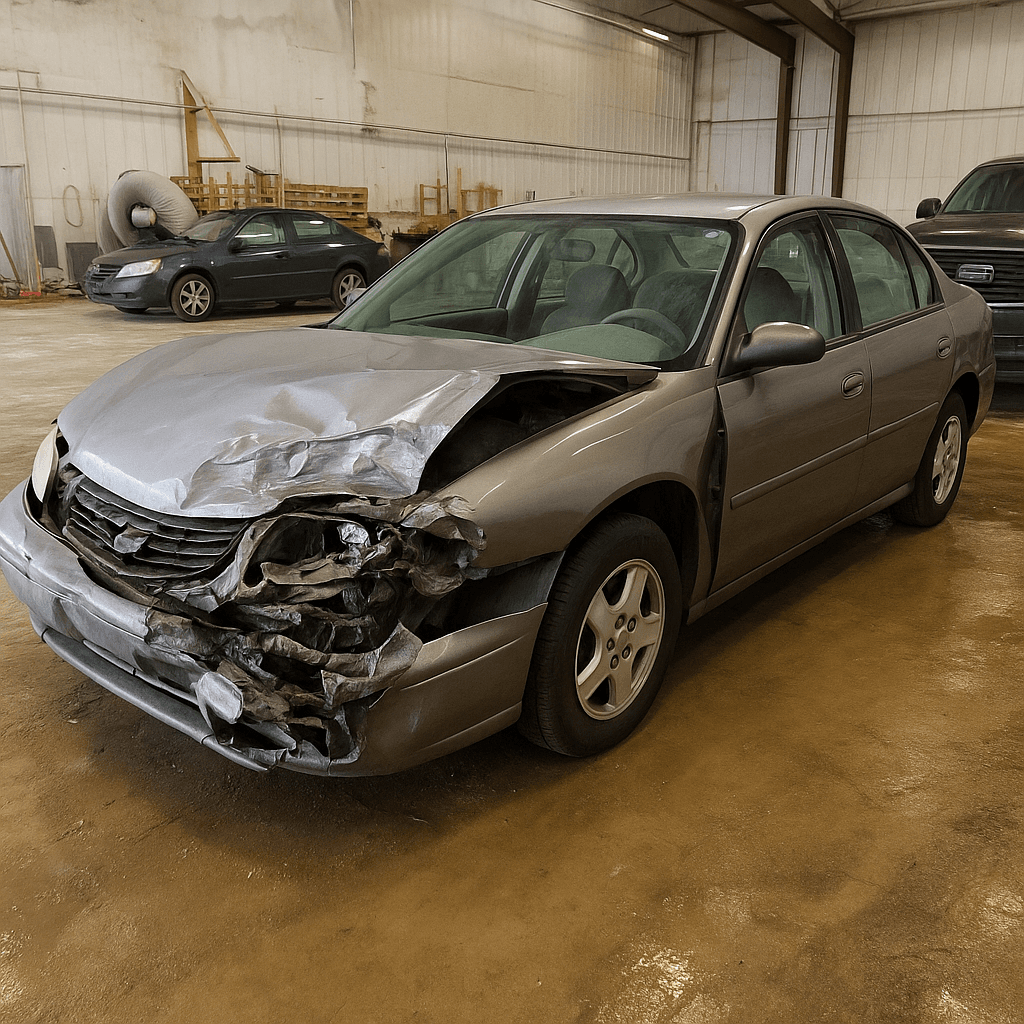
Forced-place insurance appears on your loan statement as "collateral protection" or "lender-placed coverage." Premiums are added to your monthly loan payment. Coverage protects only the lender's financial interest — if your vehicle is totaled, the lender receives the loan payoff, but you receive nothing for any equity above the loan balance. You're still obligated to repay the full loan even if the vehicle is a total loss.
Find out exactly how long SR-22 is required in your state
What Collision and Comprehensive Coverage Cost After a DUI in Pennsylvania
Pennsylvania DUI drivers pay 70–130% higher premiums than clean-record drivers for the same coverage. Full coverage including collision, comprehensive, and SR-22 liability typically costs $220–$380/month through non-standard carriers, compared to $95–$140/month for clean-record drivers with standard carriers. The surcharge applies for three to five years depending on carrier underwriting rules — most carriers maintain DUI surcharges for three years minimum, some extend to five.
Collision coverage pays for damage to your vehicle after an at-fault accident, minus your deductible. Comprehensive covers theft, vandalism, weather damage, and animal strikes. Lenders require both with deductibles no higher than $1,000, though most non-standard carriers offer $500 or $1,000 deductibles as standard. Higher deductibles reduce monthly premiums by $15–$30/month but increase out-of-pocket costs if you file a claim.
Carriers writing DUI-SR-22 policies with full coverage in Pennsylvania include Bristol West, Dairyland, GAINSCO, Direct Auto, The General, Safe Auto, and Acceptance. Availability varies by county — Philadelphia and Allegheny County have the most carrier options, while rural counties may have only two or three non-standard carriers willing to write full coverage for DUI drivers. Comparing quotes from at least three carriers is necessary because rate variation between non-standard carriers runs 30–50% for identical coverage.
How Lenders Discover You Dropped Physical Damage Coverage
Your insurance carrier reports coverage changes to lienholders electronically within 24–48 hours. When you reduce coverage from full to liability-only, your lender receives an automatic notification showing collision and comprehensive were removed. Most lenders send a warning letter giving you 10–15 days to reinstate coverage before purchasing forced-place insurance on your behalf.
Some lenders skip the warning letter and purchase collateral protection immediately. This occurs most often with subprime auto lenders and buy-here-pay-here dealers who already classify DUI drivers as high-risk borrowers. The forced-place premium appears on your next loan statement, typically $80–$150/month added to your existing payment. You're billed retroactively from the date you dropped coverage, not from the date the lender purchased the policy.
Reinstating voluntary full coverage does not automatically cancel forced-place insurance. You must provide proof of collision and comprehensive coverage to your lender, request cancellation of the collateral protection policy, and wait for the lender to process the change. Most lenders require 30 days' notice to cancel forced-place coverage, meaning you may pay double premiums for one month while the transition processes.
Your Options If You Cannot Afford Full Coverage on a Financed Vehicle
Refinancing your loan to reduce the monthly payment frees budget room for insurance premiums, but most lenders will not refinance loans for borrowers with recent DUI convictions. Subprime lenders may offer refinancing at higher interest rates, which often negates any payment reduction benefit. Paying down the loan to eliminate the lien entirely removes the lender's coverage requirement, but few DUI drivers have the cash reserves to pay off a vehicle loan within the three-year SR-22 filing period.
Selling the financed vehicle and purchasing a cheaper vehicle outright eliminates the lender requirement. You can then carry liability-only SR-22 coverage without collision or comprehensive. If you have no vehicle, non-owner SR-22 insurance satisfies Pennsylvania's filing requirement at $25–$50/month. This option works only if you can function without a personal vehicle or if you have access to a vehicle titled in someone else's name.
Voluntary surrender of the vehicle to the lender stops the insurance requirement but damages your credit and leaves you responsible for any deficiency balance after the lender sells the vehicle at auction. Most vehicles sold at auction bring 40–60% of retail value, leaving deficiency balances of $3,000–$8,000 on typical auto loans. Lenders pursue deficiency judgments aggressively, and Pennsylvania permits wage garnishment for deficiency balances.
Some DUI drivers reduce coverage limits to state minimums and increase deductibles to $1,000 to lower premiums. Pennsylvania requires $15,000 bodily injury per person, $30,000 per accident, and $5,000 property damage as minimums. Lenders typically accept state minimum liability limits but enforce the collision and comprehensive requirement. Increasing deductibles from $500 to $1,000 reduces monthly premiums by approximately $20–$30.
What Happens If You Let Either SR-22 or Physical Damage Coverage Lapse
Pennsylvania treats SR-22 lapses and physical damage coverage lapses as separate compliance failures with different consequences. An SR-22 lapse triggers an automatic license suspension notice from PennDOT. Your carrier must notify PennDOT electronically within 24 hours of cancellation or non-renewal. PennDOT suspends your license effective immediately and requires reinstatement fees, proof of insurance, and a new three-year SR-22 filing period starting from the reinstatement date, not the original conviction date.
A physical damage coverage lapse triggers forced-place insurance from your lender but does not affect your license status. You remain legally licensed to drive as long as SR-22 liability coverage remains active. The lender adds forced-place premiums to your loan balance, but your driving privileges are unaffected. Most DUI drivers prioritize SR-22 compliance over lender compliance because the license suspension consequence is immediate and visible.
Letting both coverages lapse simultaneously creates a compounding problem. PennDOT suspends your license for the SR-22 lapse. Your lender purchases forced-place insurance and may accelerate the loan, demanding full payoff within 30 days. Driving on a suspended license in Pennsylvania is a summary offense carrying fines of $200–$1,000 and possible vehicle impoundment. Reinstatement requires paying PennDOT's restoration fee ($25–$100 depending on suspension reason), obtaining new SR-22 coverage, and maintaining it for three years from the reinstatement date.