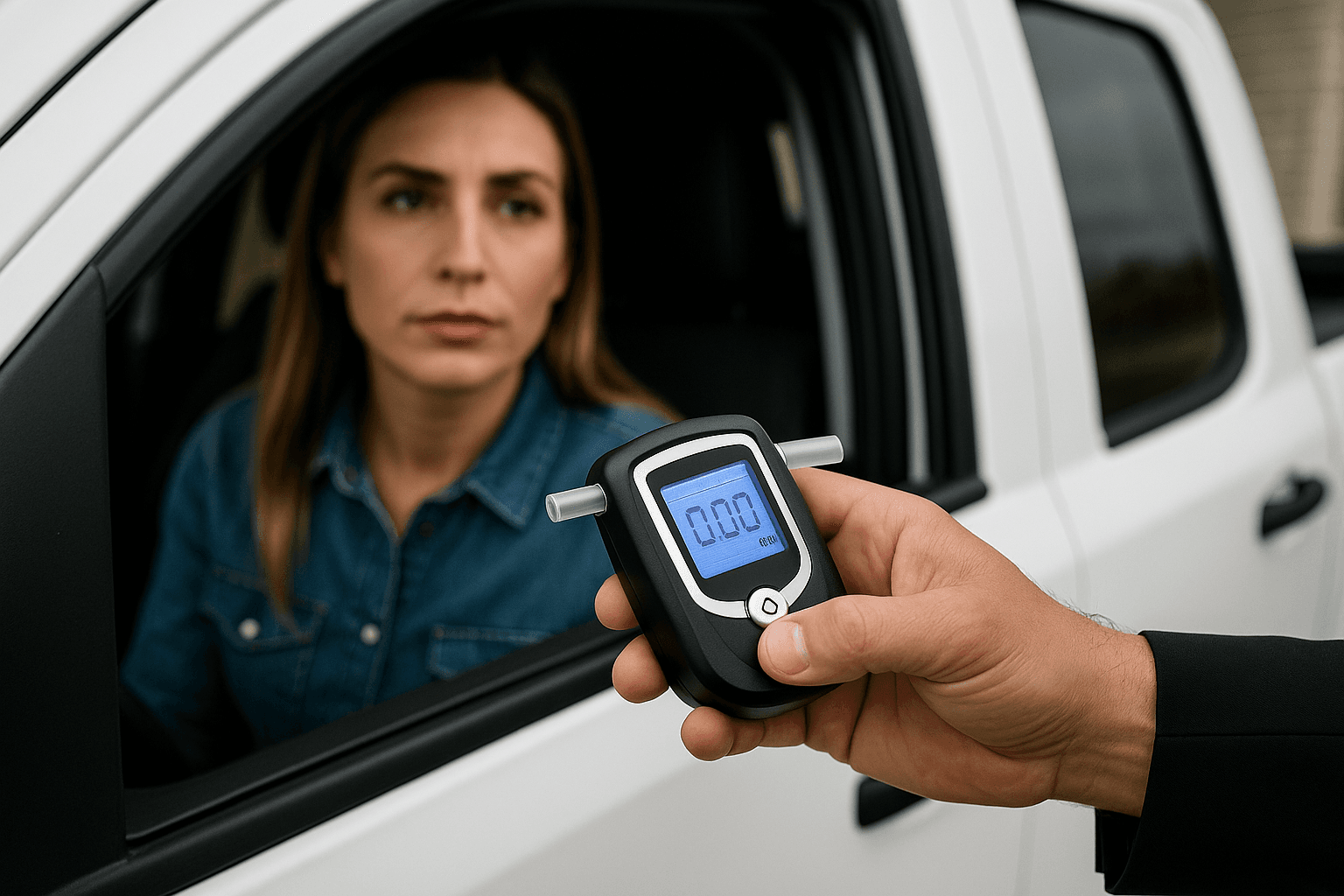
Pennsylvania suspends your license at arrest, not conviction. You have 72 hours to request a PennDOT hearing or lose your appeal rights entirely — before your first court date.
Request Your PennDOT Hearing Within 72 Hours of Arrest
Pennsylvania imposes administrative license suspension at arrest, separate from criminal prosecution. You have 72 hours from arrest to request an Occupational Limited License (OLL) hearing through PennDOT, or you forfeit your right to challenge the suspension. This window runs regardless of weekends, holidays, or whether you've been released from custody.
Most drivers miss this deadline because they focus on posting bail and finding a criminal attorney first. The criminal case and the administrative suspension run on parallel tracks — winning your DUI case in court does not automatically restore your license if you missed the PennDOT hearing window.
Request the hearing online through PennDOT's Driver and Vehicle Services portal or by certified mail to the Bureau of Driver Licensing, PO Box 68682, Harrisburg, PA 17106-8682. The filing fee is $50. If approved, you'll receive a hearing date within 30 days, and your license remains valid until the hearing decision.
Contact Your Current Auto Insurance Carrier Within 24 Hours
Call your carrier the business day after arrest. Pennsylvania law does not require insurers to cancel policies immediately after a DUI arrest, but most major carriers — State Farm, Geico, Allstate, Progressive — will non-renew at your policy term, typically 6 months out. Calling early lets you understand your timeline before you're dropped.
Ask three specific questions: Will you file SR-22 when required? Will you renew my policy at expiration? What is my new premium after this conviction? Most mainstream carriers will file SR-22 for existing customers but quote renewal rates 80–150% higher than your current premium. If they refuse to file SR-22 or state they will non-renew, you have advance notice to shop the non-standard market.
Do not wait for your carrier to contact you. Pennsylvania does not notify insurers of arrests automatically — conviction reporting to PennDOT typically occurs 10–30 days after sentencing, triggering the SR-22 requirement. If you're proactive, you control the transition timeline instead of facing a coverage gap at renewal.
Find out exactly how long SR-22 is required in your state
Secure a Copy of Your Arrest Report and Blood Test Results
Request a copy of the criminal complaint and arrest documentation from the arresting agency within the first week. Pennsylvania DUI cases hinge on blood alcohol content (BAC) results, breath test calibration records, and officer dashcam footage. Your attorney needs these to evaluate suppression motions, procedural errors, and whether the stop itself was lawful.
Pennsylvania uses blood testing for most DUI arrests — breath tests are less common. Blood results typically take 4–8 weeks to process through the state lab, but the arrest report will note whether blood was drawn, at what time, and by whom. Chain-of-custody issues, improper refrigeration, or delays exceeding 2 hours between draw and refrigeration can suppress results.
If you refused blood or breath testing, Pennsylvania's implied consent law triggers an automatic 12-month license suspension for first-time refusal, 18 months for second refusal. Refusal does not prevent DUI conviction — prosecutors proceed with officer observations, field sobriety tests, and circumstantial evidence. The refusal suspension runs concurrently with any DUI-related suspension, but the SR-22 filing period typically begins later and runs longer.
Consult a DUI Attorney Before Your Preliminary Hearing
Pennsylvania DUI preliminary hearings typically occur 10–21 days after arrest. This hearing determines whether sufficient evidence exists to proceed to trial — it is not the trial itself. Hiring an attorney before this hearing preserves your options for plea negotiation, ARD admission, or case dismissal based on procedural defects.
First-offense DUI defendants with BAC below 0.16% and no accident often qualify for Pennsylvania's Accelerated Rehabilitative Disposition (ARD) program. ARD is a pretrial diversion program requiring 6–12 months of supervision, DUI education, court costs around $2,000–$3,500, and potential license suspension of 30–90 দিন depending on BAC tier. Successful ARD completion allows record expungement and avoids a conviction — but you still face SR-22 filing requirements during supervision.
Attorneys in Pennsylvania DUI cases typically charge $2,500–$7,500 for first-offense representation, more for aggravated cases involving high BAC, minors in the vehicle, or accidents with injury. Payment plans are standard. Public defenders are available only if you meet income thresholds, and DUI cases are considered defensible enough that most courts expect private representation.
Understand Pennsylvania's Three-Tier BAC Penalty Structure
Pennsylvania DUI penalties scale across three BAC tiers: General Impairment (0.08–0.099%), High BAC (0.10–0.159%), and Highest BAC (0.16%+). Your tier determines mandatory minimum sentences, fines, license suspension length, and whether jail time is required — even for first offense.
First-offense General Impairment carries 6 months unsupervised probation, $300 fine, alcohol highway safety school, and no mandatory license suspension if you enter ARD. First-offense High BAC adds 48 hours to 6 months in jail, $500–$5,000 fine, and 12-month license suspension. First-offense Highest BAC requires 72 hours to 6 months in jail, $1,000–$5,000 fine, and 12-month suspension with ignition interlock device (IID) required for the final year of restoration.
SR-22 filing is required for all convicted DUI defendants and ARD participants in Pennsylvania, starting from the date of sentencing or ARD acceptance. The filing period is typically 3 years, measured from reinstatement date, not conviction date. Pennsylvania does not accept FR-44 — that applies only in Florida and Virginia.
Prepare for SR-22 Filing and Non-Standard Insurance Shopping
Pennsylvania requires SR-22 filing as proof of financial responsibility after DUI conviction or ARD acceptance. The SR-22 is not insurance — it is a certificate your insurer files with PennDOT confirming you carry at least state minimum liability coverage: $15,000 bodily injury per person, $30,000 per accident, $5,000 property damage.
Most major carriers will file SR-22 for existing customers but non-renew at term. When shopping the non-standard market, expect quotes from Bristol West, Dairyland, GAINSCO, The General, Direct Auto, and Safe Auto. Pennsylvania SR-22 premiums for first-offense DUI typically range $140–$280/month depending on age, county, and BAC tier. High BAC and repeat offenses push premiums to $250–$400/month.
SR-22 lapses reset your filing clock to zero in Pennsylvania. If your policy cancels for non-payment or you drop coverage before the 3-year period ends, PennDOT receives electronic notice within 24 hours and re-suspends your license. Reinstatement after SR-22 lapse requires a new SR-22 filing, restoration fee of $88, and restarting the full 3-year filing period from the new reinstatement date.
Calculate Your Total Financial Obligation in the First Week
Pennsylvania DUI costs stack across criminal fines, court fees, attorney fees, increased insurance premiums, license restoration fees, and potential ignition interlock lease costs. First-offense defendants should budget $8,000–$15,000 total over the first 3 years, before considering lost wages from court appearances, jail time, or job loss.
Breakdown for first-offense High BAC (0.10–0.159%): attorney $3,500, ARD court costs $2,800, alcohol highway safety school $275, PennDOT restoration fee $88, SR-22 filing fee $25–$50, insurance premium increase $3,600 over 3 years (assuming $100/month increase over prior rate). If ignition interlock is required, add $900–$1,500 annually for device lease, calibration, and installation.
Payment plans are available for most costs except insurance premiums. Courts allow installment payments for fines and ARD fees over 6–12 months. Ignition interlock providers bill monthly. Insurance premiums are due monthly or semi-annually depending on carrier. Missing any payment triggers cascading consequences — insurance lapse resets SR-22 filing, ARD violations convert to conviction, unpaid fines generate bench warrants.