Pennsylvania triggers three separate compliance deadlines after a DUI conviction — suspension, SR-22 filing, and IID installation. Getting the sequence wrong resets your reinstatement clock to zero.
Pennsylvania suspends your license at conviction, not at sentencing
Your Pennsylvania driver's license suspension begins the day the court enters your DUI conviction, not when you receive the sentencing order or when PennDOT mails you a suspension notice. For a first-offense DUI with BAC between 0.08% and 0.099%, you face a 12-month suspension starting that conviction date. High-BAC DUI (0.10%–0.159%) triggers 12 months. Highest-BAC DUI (0.16% or above) or refusal triggers 12–18 months depending on prior offense history.
PennDOT sends a formal suspension notice 7–14 days after conviction, but the suspension period has already started. Many drivers lose 10–14 days of their suspension timeline waiting for paperwork that has no bearing on the statutory start date. The conviction date controls everything downstream: IID eligibility, occupational license availability, and SR-22 filing deadlines.
If you were arrested but not yet convicted, your license remains valid until the court enters judgment. Pre-trial diversions, ARD (Accelerated Rehabilitative Disposition), and continuances delay the conviction date and therefore delay the suspension start. ARD completion in Pennsylvania typically results in no conviction and no suspension, but refusal of chemical testing triggers an automatic 12-month suspension regardless of ARD participation.
Ignition interlock installation happens during suspension, not after
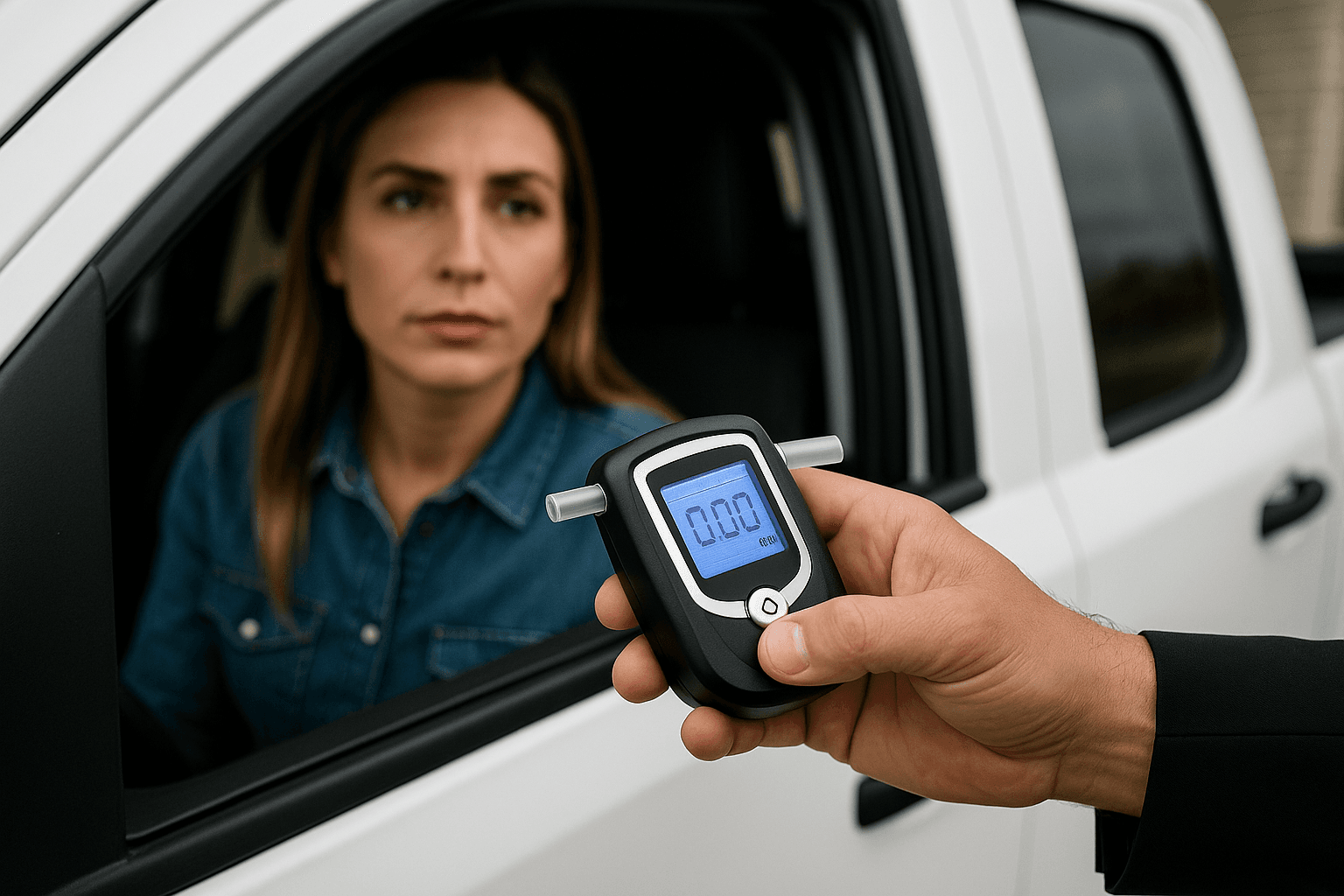
Pennsylvania requires ignition interlock device installation for all DUI convictions with BAC 0.10% or higher, all refusals, and all repeat offenses. The IID requirement begins immediately after conviction and runs concurrently with your suspension period, not sequentially. For first-offense high-BAC DUI, you serve a 12-month suspension and must maintain IID for 12 months — these are the same 12 months.
You may install the IID at any point during your suspension to satisfy the requirement, but most drivers wait until they apply for an occupational license or approach reinstatement. That delay costs you nothing if you don't drive, but if you're eligible for an occupational limited license after the first 60 days of suspension, you must have the IID already installed before PennDOT will issue that license. The IID certification (form DL-16) from your installation provider goes to PennDOT with your occupational license application.
IID installation runs $75–$150 upfront, plus $75–$100 monthly monitoring and calibration fees. Pennsylvania-approved IID providers include Intoxalock, LifeSafer, Smart Start, and Guardian Interlock. You pay the provider directly. Insurance does not cover IID costs. The 12-month IID period must be violation-free — any failed start attempt or circumvention resets your clock to zero and extends your suspension.
Find out exactly how long SR-22 is required in your state
SR-22 filing is required before reinstatement, not during suspension
Pennsylvania does not require SR-22 filing during your suspension period. You file SR-22 as part of the reinstatement process, typically 30–45 days before your suspension end date. PennDOT will not process your reinstatement application without proof of SR-22 on file, but filing earlier does not shorten your suspension or IID requirement.
SR-22 is a liability insurance certificate filed by your carrier with PennDOT certifying you carry at least Pennsylvania's minimum liability limits: $15,000 bodily injury per person, $30,000 per accident, and $5,000 property damage. Pennsylvania requires 12 months of continuous SR-22 coverage following reinstatement. If your policy lapses or cancels for any reason during that 12-month period, your carrier notifies PennDOT within 10 days and your license is automatically re-suspended until you file new SR-22 and pay a $70 restoration fee.
Most major carriers (State Farm, Geico, Allstate, Progressive) will file SR-22 for existing customers but typically non-renew at your policy term. New DUI-SR-22 policies in Pennsylvania generally require the non-standard market: Direct Auto, Dairyland, The General, Bristol West, Acceptance, or GAINSCO. Monthly premiums for DUI-SR-22 coverage in Pennsylvania run $140–$280/mo depending on your county, vehicle, and conviction class. The SR-22 filing fee itself is $25–$50 depending on carrier. Estimates based on available industry data; individual rates vary by driving history, vehicle, coverage selections, and location.
Reinstatement requires every compliance piece completed and paid in full
Pennsylvania reinstatement after DUI is not automatic. You must submit a formal restoration application to PennDOT, provide proof of completed alcohol education (DUI school), submit your IID completion certificate if required, file SR-22, and pay a $500 restoration fee ($1,000 for highest-BAC or repeat offense). All requirements must be satisfied before PennDOT issues your new license.
DUI school in Pennsylvania is a 12.5-hour Alcohol Highway Safety School program approved by the Pennsylvania Department of Transportation. You complete this during your suspension period. The certificate of completion goes to the court and to PennDOT as part of your reinstatement packet. Cost runs $150–$300 depending on county. Some high-BAC and repeat-offense convictions require additional drug and alcohol treatment beyond the standard highway safety school, determined by a court-ordered evaluation.
Most drivers apply for reinstatement 30–45 days before their suspension end date to allow processing time. PennDOT restoration applications take 10–21 business days to process if all documents are submitted correctly. Missing any single component — IID certificate, DUI school completion, SR-22 proof, or payment — stops the application and extends your suspension until you provide it. Pennsylvania does not prorate the restoration fee. You pay the full amount regardless of how long your suspension lasted.
Pennsylvania occupational licenses shorten the no-driving window to 60 days
Pennsylvania offers occupational limited licenses for work, school, and medical appointments after you serve 60 days of your DUI suspension. You apply through PennDOT using Form DL-15, provide proof of employment or school enrollment, submit an IID installation certificate if required, and pay a $150 application fee. PennDOT typically issues the occupational license within 10–15 business days if your application is complete.
Occupational licenses restrict you to driving between home, work, school, DUI treatment programs, and medical appointments only. The license specifies your authorized routes and timeframes. Driving outside those restrictions is treated as driving under suspension, a summary offense carrying $200 fines and potential jail time for repeat violations. Most occupational licenses require IID installation even for first-offense standard DUI convictions that wouldn't otherwise require interlock.
You maintain the occupational license until your full reinstatement date, at which point you apply for standard license restoration using the process above. The occupational license period does not reduce your total suspension length or your SR-22 filing requirement. It simply allows limited driving during the suspension window. Not all counties process occupational license applications at the same speed — Philadelphia and Allegheny County applications often take 3–4 weeks, while rural counties process in 7–10 days.
The costliest mistake is missing the SR-22 filing window at reinstatement
Pennsylvania drivers lose an average of 45–90 additional suspension days because they apply for reinstatement without SR-22 already on file. PennDOT does not process incomplete applications. Your suspension continues in full effect until every requirement is met, including SR-22 proof submitted by your carrier.
File your SR-22 30 days before your reinstatement application date. Your carrier submits the certificate electronically to PennDOT within 24–72 hours of your policy effective date. You receive a stamped SR-22 certificate for your records, but PennDOT pulls the filing data directly from their system when processing your restoration. Timing matters because most non-standard carriers require 7–14 days to underwrite and issue a DUI-SR-22 policy, and you cannot file SR-22 without an active policy in force.
If your SR-22 policy lapses at any point during your 12-month filing period, PennDOT re-suspends your license automatically and you start the SR-22 clock over. One missed payment, one coverage gap, one policy cancellation — and you're back to zero. Pennsylvania does not prorate SR-22 compliance. You must maintain 12 consecutive months of uninterrupted coverage from your reinstatement date.