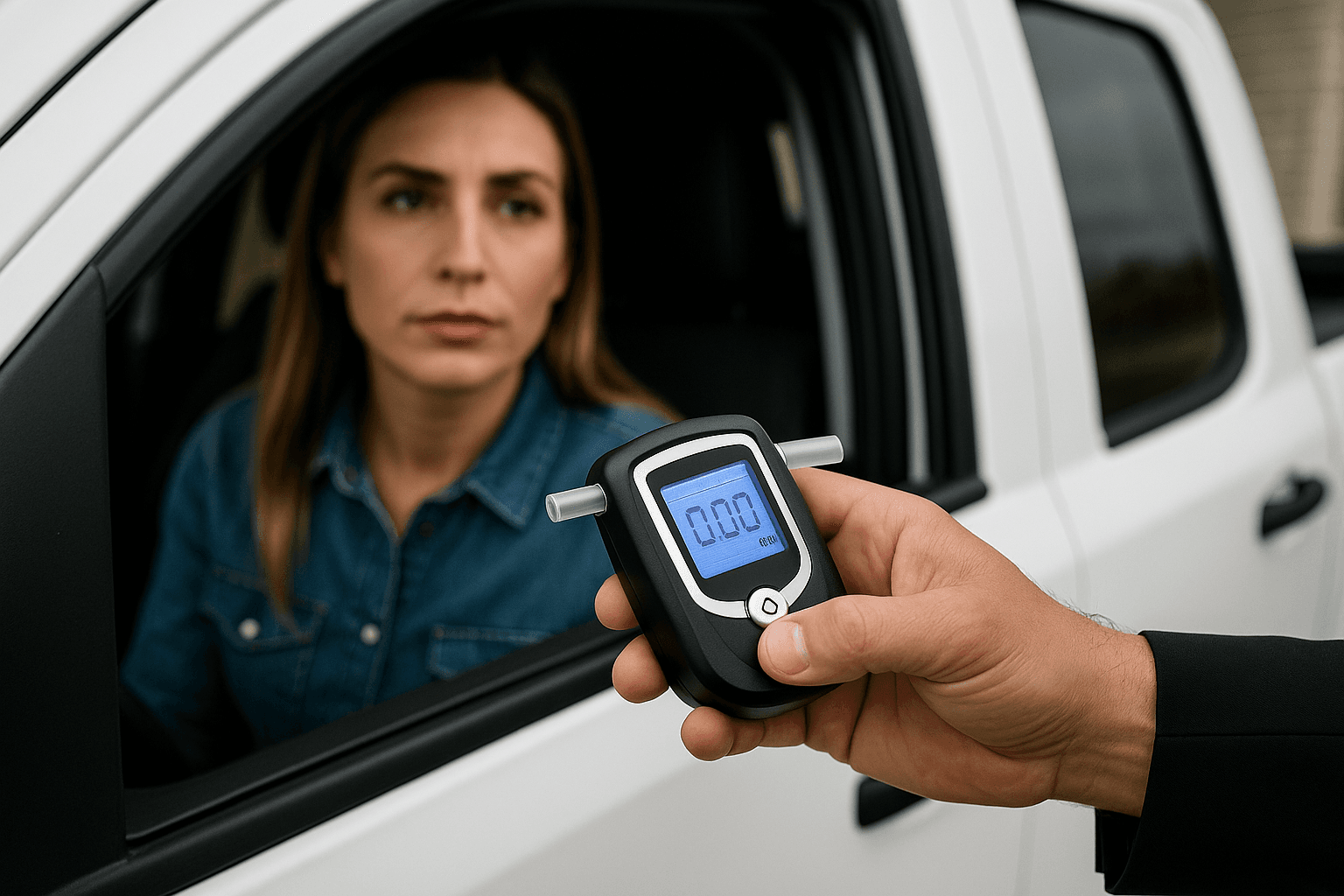
A DUI conviction as an active duty service member triggers both civilian SR-22 requirements and military administrative action that can restrict or revoke your base access. Here's how West Virginia's 3-year filing requirement intersects with command notification and security clearance review.
What Happens to Your Base Access After a DUI Conviction in West Virginia
West Virginia reports DUI convictions to the National Driver Register within 10 days of sentencing, which triggers an automatic Security, Suitability, and Credentialing Reciprocity (SSCR) notification to your installation security office. Your command receives the report regardless of whether the arrest happened on or off base, and regardless of whether you're still in your restricted license period. Most installations suspend your installation driving privileges immediately and flag your Common Access Card for security manager review.
Base access itself — walking through the gate or accessing facilities on foot — typically remains intact during the initial review period unless your conviction involves aggravating factors like refusal, injury, or a BAC above 0.15. Driving privileges on the installation are separate from pedestrian access and are almost always revoked pending completion of the Military Substance Abuse Program and reinstatement of your civilian license with SR-22 proof of insurance.
The timeline problem most service members miss: West Virginia requires SR-22 filing for 3 years from your license reinstatement date, not your conviction date. If your suspension is 6 months and you delay reinstatement by 4 months, your SR-22 clock doesn't start until month 10. Your command's administrative timeline starts at conviction. These clocks don't sync.
How West Virginia's SR-22 Requirement Works for Active Duty Members
West Virginia mandates SR-22 filing for 3 years after any DUI conviction, measured from the date you reinstate your license with the DMV. The filing itself costs $50–$65 through your insurer, but the insurance policy backing it — typically a non-standard auto policy after DUI — runs $160–$280/mo for minimum liability coverage in West Virginia, compared to $85–$120/mo before conviction.
If you don't own a vehicle or you're living on base without a personal car, you still need continuous SR-22 coverage. A non-owner SR-22 policy covers you when driving a borrowed or rental vehicle and satisfies the state filing requirement. Monthly cost for non-owner SR-22 in West Virginia typically runs $40–$75/mo. Your base legal assistance office cannot waive the SR-22 requirement, and your command cannot satisfy it on your behalf — it's a DMV obligation independent of military status.
Carriers that write SR-22 policies for service members in West Virginia include Bristol West, Dairyland, The General, and GAINSCO. USAA and Navy Federal will file SR-22 for existing customers but typically non-renew at your policy term after a DUI. New SR-22 policies post-conviction usually require the non-standard market.
Find out exactly how long SR-22 is required in your state
Security Clearance Impact and Administrative Separation Risk
A DUI conviction is a mandatory self-report event under the Continuous Evaluation system if you hold a security clearance. You're required to report the arrest within 3 business days through your security manager, and the conviction itself within 3 days of sentencing. Failing to self-report is a separate adjudicative concern that carries more clearance risk than the DUI itself.
Most first-offense DUI convictions with BAC below 0.15 and no aggravating factors result in a clearance warning or formal counseling, not revocation. The adjudicative guideline focuses on pattern behavior, concealment, and whether the incident suggests poor judgment that affects your reliability. Repeat offenses, refusal cases, or DUI with injury shift the risk profile significantly and often trigger interim clearance suspension pending final adjudication.
Administrative separation is command discretion, not automatic. First-offense DUI typically results in non-judicial punishment under Article 15 (reduction in rank, forfeiture of pay, extra duty, restriction) and mandatory enrollment in the substance abuse program. Second DUI or aggravated first DUI with BAC above 0.20 significantly increases separation probability. If you're separated before completing your SR-22 filing period, the filing requirement follows you into civilian life — it's a state obligation that survives discharge.
Managing the SR-22 Filing While Stationed in West Virginia
Your SR-22 filing must remain continuous for the entire 3-year period. A lapse of even one day — due to missed payment, policy cancellation, or switching carriers without overlap — resets your filing clock to zero in West Virginia. The DMV receives electronic notice of any lapse within 24 hours, and your license is re-suspended until you file a new SR-22 and pay a reinstatement fee.
If you're transferred to another state during your filing period, West Virginia's SR-22 requirement does not automatically transfer. You'll need to confirm whether your new duty station state accepts out-of-state SR-22 filings or requires you to obtain a new license and file SR-22 in the new state. Most states require you to transfer your license within 30 days of establishing residency, which can create a filing gap if not coordinated carefully. Your insurer can maintain your West Virginia SR-22 while you hold an out-of-state license, but you'll need to confirm your new state's reciprocity rules with their DMV.
Deployment does not pause your SR-22 clock. If you deploy during your filing period, your policy and SR-22 must remain active. Some carriers offer deployment suspension for the underlying auto policy but continue the SR-22 filing separately. Confirm this with your carrier before deployment — letting the SR-22 lapse while overseas creates a reinstatement problem you'll face the day you return.
What to Do in the First 30 Days After Conviction
Step one: contact your installation legal assistance office within 72 hours of sentencing. They'll walk you through self-reporting requirements for your clearance (if applicable), coordinate with your security manager, and outline the command notification timeline. Do not wait for your command to call you in — proactive self-reporting is an adjudicative mitigator.
Step two: obtain SR-22 insurance before your license reinstatement date. West Virginia requires proof of SR-22 filing at the DMV when you apply for reinstatement after suspension. Shopping for SR-22 coverage 2–3 weeks before your eligibility date gives you time to compare non-standard market quotes and avoid last-minute filing gaps. Expect quotes to vary by 40–60% between carriers for identical coverage.
Step three: enroll in your installation's substance abuse program immediately, even if your court sentence doesn't mandate treatment. Voluntary early enrollment is a command mitigation factor and a clearance adjudication positive. Completing the program before your administrative board (if convened) strengthens your retention case. Your SR-22 filing period and your program completion timeline are independent — complete both.