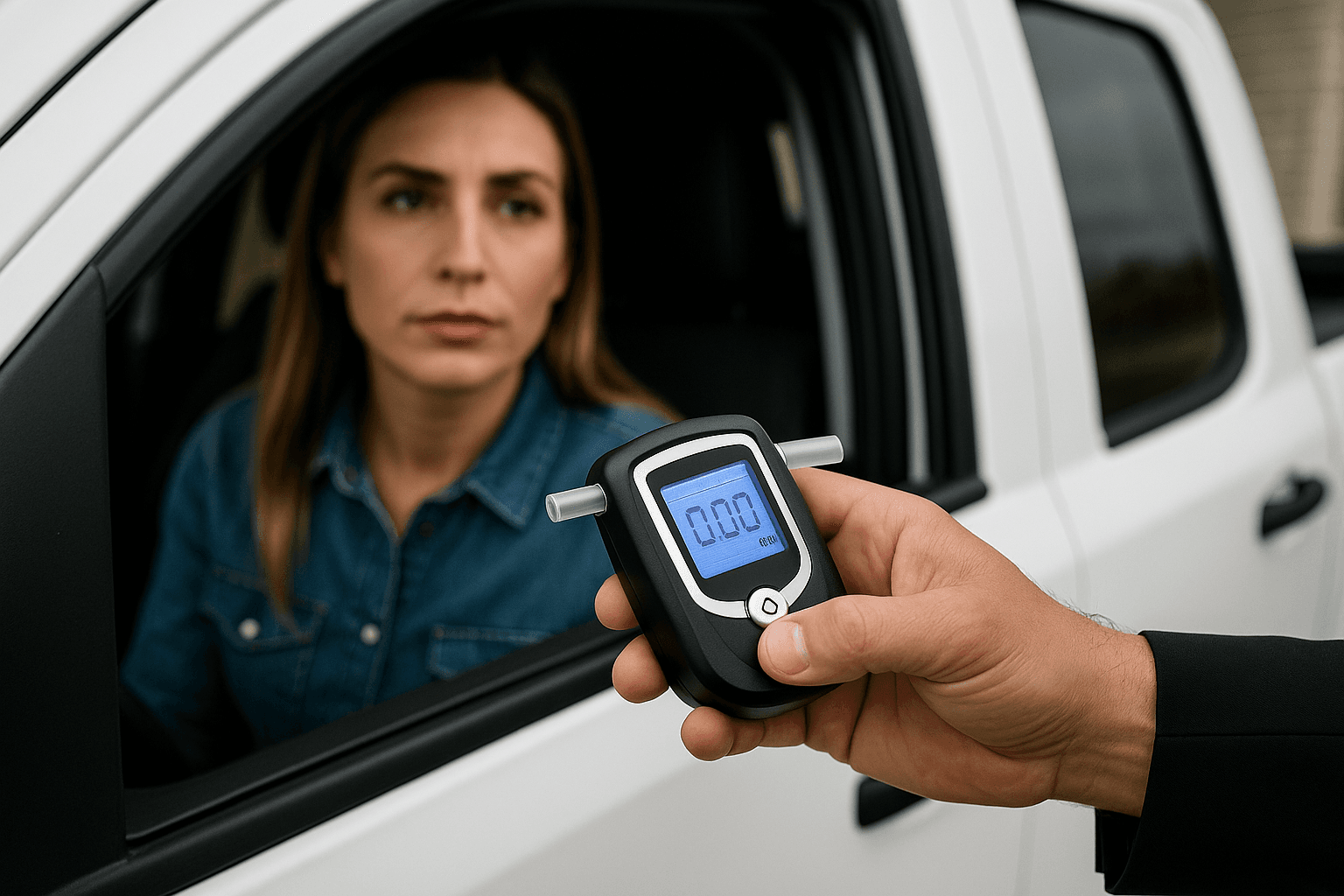
A DUI conviction in South Carolina triggers both civilian SR-22 requirements and military administrative action that can restrict or revoke your base access — and the timelines don't align.
What Happens to Your Base Access After a DUI in South Carolina
Your installation commander has independent authority to suspend or revoke your base driving privileges and installation access immediately after a DUI arrest, before any civilian court conviction. This is an administrative action under military regulation, not a criminal penalty, and it happens on a separate timeline from South Carolina's DMV process.
Most installations in South Carolina issue a mandatory suspension of on-base driving privileges for 12 months after a first-offense DUI, regardless of whether you're convicted in civilian court. If your duties require regular base access by vehicle, this creates an immediate work disruption that your command may or may not accommodate with alternative transportation or duty reassignment.
South Carolina requires SR-22 filing for 3 years after a DUI conviction, measured from your conviction date. Your base access restriction runs on a different clock, set by your installation's traffic court or provost marshal. The two processes do not coordinate automatically — satisfying one does not satisfy the other, and reinstatement from one authority does not trigger reinstatement from the other.
South Carolina SR-22 Filing Requirements for Military Members
South Carolina mandates SR-22 filing as a condition of license reinstatement after any DUI conviction, refusal of breath or blood testing, or accumulation of specific point thresholds. The filing period is 3 years from the date of conviction, not the date of arrest or the date you file the SR-22.
Your SR-22 must remain active and uninterrupted for the full 3-year period. If your insurer cancels your policy or you allow coverage to lapse for any reason, South Carolina's DMV receives an SR-26 termination notice within 24 hours, your license is suspended immediately, and your 3-year clock resets to zero on the date you file a new SR-22.
Military members stationed in South Carolina on orders maintain their home-of-record state license in most cases, but South Carolina's SR-22 requirement applies if you were convicted in a South Carolina court or if your violation occurred on a South Carolina roadway. If you hold a South Carolina license as your legal residence, the SR-22 requirement follows you to your next duty station and you must maintain continuous filing even after PCS.
Find out exactly how long SR-22 is required in your state
How Installation Traffic Court Decisions Affect Your SR-22 Timeline
Your installation's traffic court or magistrate handles the administrative suspension of your on-base driving privileges separately from South Carolina's civilian court system. The base suspension typically begins on the date of your DUI arrest or the date you're formally notified by your command, whichever comes first.
This administrative suspension does not satisfy South Carolina's SR-22 filing requirement. You must file SR-22 with the South Carolina DMV to reinstate your state driver's license, and you must separately apply for reinstatement of base driving privileges through your installation's provost marshal or security forces office after completing your installation-imposed suspension period.
Most South Carolina installations require proof of SR-22 filing and proof of high-risk insurance coverage as a condition of base driving privilege reinstatement, even after your administrative suspension period ends. This means you cannot regain base access by vehicle until you've both completed your installation suspension and filed SR-22 with South Carolina's DMV — two separate compliance requirements with two separate authorities.
Non-Standard Insurance Options for Service Members After DUI
Most major carriers that serve military members — USAA, Armed Forces Insurance, Navy Federal — will file SR-22 for existing policyholders after a first DUI, but typically non-renew the policy at its term. USAA does not write new policies for drivers with a DUI in the prior 5 years in South Carolina.
Service members shopping for new SR-22 coverage after a DUI in South Carolina are routed to the non-standard market: Dairyland, Progressive's non-standard division, Bristol West, The General, and Direct Auto all write DUI-SR-22 policies in South Carolina. Monthly premiums for liability-only SR-22 coverage after a first DUI in South Carolina typically range from $110 to $190 per month, depending on age, vehicle, and county.
South Carolina charges a one-time $5 SR-22 filing fee when your insurer submits the form electronically to the DMV. This fee is separate from your insurer's policy premium. Some non-standard carriers charge an additional SR-22 processing fee of $15 to $25 at policy inception, but this is not universal.
What Happens If You PCS Before Your SR-22 Period Ends
South Carolina's 3-year SR-22 filing requirement does not terminate when you PCS to another state. If you were convicted in South Carolina or if South Carolina issued the SR-22 requirement, you must maintain continuous SR-22 filing for the full 3 years regardless of where you're stationed.
When you PCS, notify your insurer immediately and request that your SR-22 filing be transferred to your new state of residence if you're changing your legal residence, or maintained with South Carolina if you're keeping your South Carolina license. Your insurer will file the SR-22 with the appropriate state DMV. If there's any gap in coverage during your move, South Carolina's DMV receives a termination notice and your filing clock resets.
If you PCS to a state that does not require SR-22 or uses a different financial responsibility form, your insurer can still file SR-22 with South Carolina remotely. You do not need to return to South Carolina to maintain compliance, but you do need a carrier licensed to file electronically in South Carolina. Confirm this before you cancel your South Carolina policy.
Hardship License and Restricted Driving Privilege Options
South Carolina offers a provisional license called a Route Restricted License for first-offense DUI convictions after completing a minimum suspension period of 30 days. This restricted license allows you to drive to and from work, school, medical appointments, and court-ordered programs, but requires SR-22 filing and ignition interlock device installation for the duration of the restricted period.
Military members whose duties require driving on base face a complication: your Route Restricted License is valid for civilian roadways in South Carolina, but your installation commander has independent authority to deny base driving privileges even if you hold a valid state-issued restricted license. Most South Carolina installations do not recognize restricted state licenses for on-base driving during the administrative suspension period.
If your duties require regular vehicle access to base and your command will not accommodate alternative transportation, you may need to request a duty reassignment or temporary additional duty assignment off-base until both your state restricted license period and your installation suspension period have ended. This is a command decision, not a DMV or legal entitlement.
Administrative Separation Risk and How SR-22 Compliance Affects It
A DUI conviction is not an automatic basis for administrative separation from military service, but it is a basis for adverse administrative action including non-judicial punishment, reduction in rank, forfeiture of pay, or initiation of separation proceedings under Chapter 14 (Army), administrative separation (Navy/Marines), or administrative discharge (Air Force).
Maintaining continuous SR-22 compliance and completing all court-ordered conditions — DUI school, community service, probation, ignition interlock — demonstrates mitigation during administrative review. Allowing your SR-22 to lapse, failing to reinstate your license, or driving on a suspended license after your DUI conviction significantly increases the likelihood of separation initiation.
Your South Carolina SR-22 filing status is not automatically reported to your command, but your security clearance periodic review, any subsequent traffic stop on or off base, or any attempt to reinstate base driving privileges will surface your DUI conviction and your current license status. Proactive compliance with both South Carolina's DMV requirements and your installation's administrative process is the only path that preserves your service record and base access.