Oregon splits DUI compliance across three agencies with three different timelines. You just got sentenced — here's the exact order to handle DMV reinstatement, SR-22 filing, and IID installation so nothing resets your clock.
What Oregon Requires This Week After a DUII Conviction
Oregon starts your SR-22 clock on the DMV reinstatement date, not your conviction date or sentence date. That means you control when the three-year filing period begins by controlling when you reinstate your license after suspension.
Your conviction triggered three separate compliance tracks: a DMV suspension (30 to 90 days for first offense, one year for refusal or second offense within five years), a court-ordered SR-22 filing requirement (three years for most first-offense DUII convictions), and likely an Ignition Interlock Device requirement (one year minimum for most DUII convictions as of 2024). Each track has its own agency, its own timeline, and its own consequence for non-compliance.
The priority order this week: (1) complete DUII Diversion intake or sentencing requirements to get your court compliance letter, (2) schedule IID installation with an Oregon-certified provider before your hardship permit or full reinstatement application, (3) buy an SR-22 policy from a carrier licensed in Oregon, (4) file for reinstatement with Oregon DMV once SR-22 and IID are both active. Starting SR-22 before IID installation is common and extends your filing period by months because DMV won't reinstate without both.
How Oregon's Three-Agency DUII Compliance System Actually Works
Oregon DMV handles license suspension and reinstatement. Oregon courts handle sentencing, diversion eligibility, and the SR-22 filing order. Oregon DOT's Ignition Interlock Program certifies providers and monitors compliance. None of these agencies coordinate timelines automatically.
DMV suspends your license for 90 days (first offense) or one year (refusal, second offense within five years) starting from your arrest date or conviction date, whichever triggers suspension first under Oregon's administrative per se law. The court orders SR-22 filing as a condition of diversion or sentencing, and that order becomes active on your reinstatement date, not your conviction date. The IID requirement runs separately — one year minimum for first offense, two years for aggravated (BAC .15+, minor in vehicle, injury), five years for second offense.
Most drivers assume all three requirements end together. They don't. Your SR-22 filing period is three years from reinstatement. Your IID requirement is one to five years from installation. Your court probation may run 18 months to three years from sentencing. Each clock starts on a different date and ends independently.
Find out exactly how long SR-22 is required in your state
Why Your SR-22 Filing Period Starts Later Than You Think in Oregon
Oregon Revised Statute 809.380 requires SR-22 filing "during the period of suspension and for three years thereafter." That "thereafter" clause is load-bearing — your three-year SR-22 clock does not start until the day DMV reinstates your license, not the day you buy the policy or install your IID.
If you serve a 90-day suspension and wait two months after eligibility to reinstate because you haven't saved the reinstatement fee or scheduled IID installation, your SR-22 requirement extends by two months. If you never formally reinstate and drive on a hardship permit for a year, your SR-22 clock never starts because you're still suspended.
The common failure mode: buying SR-22 insurance during suspension, assuming the clock started, then letting the policy lapse 35 months later because "three years are up." Oregon DMV will issue a new suspension notice for SR-22 lapse, reset your filing requirement to three years from the new reinstatement date, and you're back in the non-standard market paying higher rates for another full cycle.
Which Carriers Write SR-22 Policies for Oregon DUII Convictions
Most major carriers — State Farm, Geico, Allstate, Progressive — will file SR-22 for existing customers after a first-offense DUII but non-renew at the six-month or annual policy term. New DUII-SR-22 policies generally require the non-standard market in Oregon.
Carriers actively writing new DUII business in Oregon as of 2024 include Bristol West, Dairyland, The General, GAINSCO, Acceptance Insurance, and Kemper Direct. State availability varies — Dairyland writes statewide, Bristol West primarily in Portland metro and Eugene-Springfield, The General in most counties except rural eastern Oregon. Monthly premiums for minimum liability SR-22 coverage after first-offense DUII typically range $180 to $290 per month depending on age, county, and whether you own the vehicle.
Non-owner SR-22 policies cost $40 to $75 per month in Oregon and satisfy the filing requirement if you don't own a vehicle and won't be driving regularly. If you're on a hardship permit and only driving to work, treatment, or IID service appointments, non-owner SR-22 works until full reinstatement. Once you reinstate fully and resume regular driving, you'll need an owned-vehicle policy if you're driving a car registered to you.
How Oregon's Ignition Interlock Requirement Affects Your SR-22 Timeline
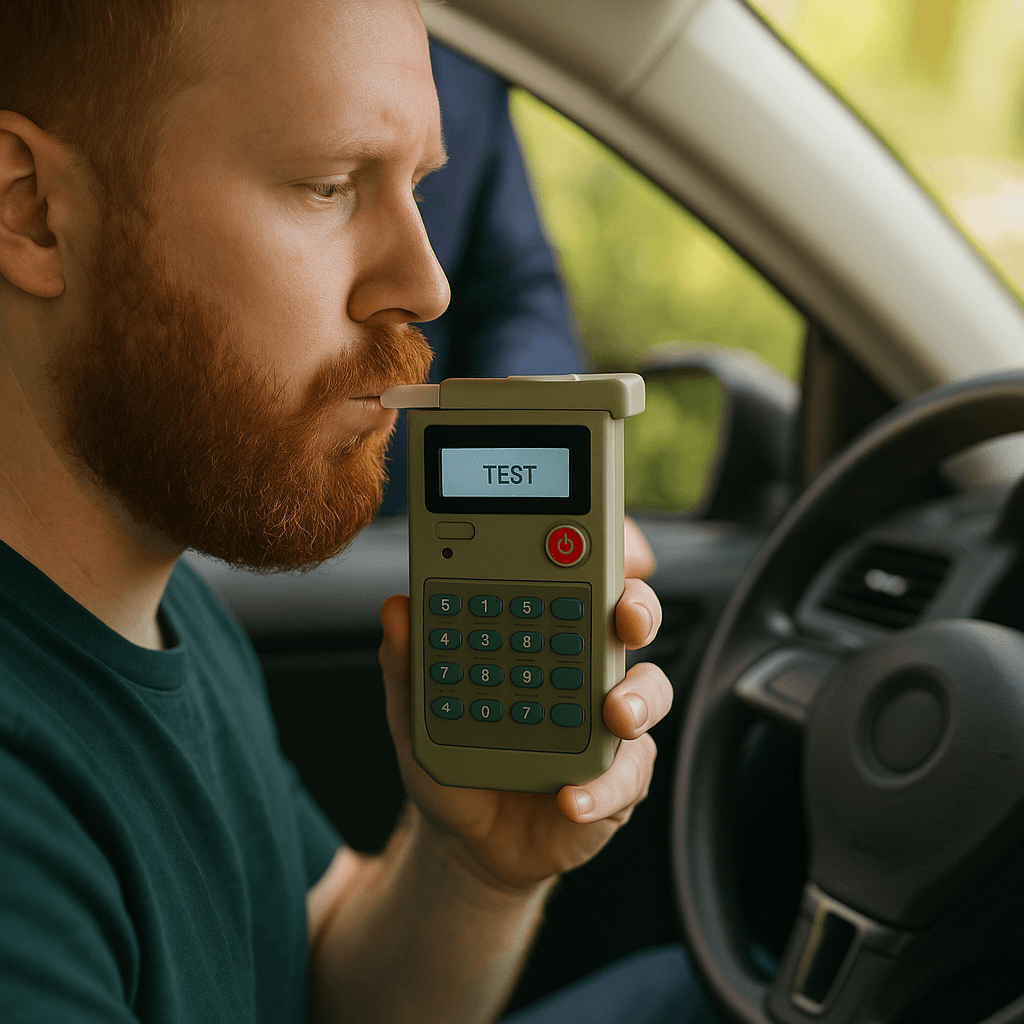
Oregon requires IID installation before DMV will issue a hardship permit or reinstate your license after most DUII convictions. The device must be installed by an Oregon DOT-certified provider, calibrated monthly, and monitored for violations. Any failed start attempt, circumvention, or missed calibration appointment extends your IID period.
Your IID requirement and SR-22 requirement run on separate timelines, but both must be active simultaneously for reinstatement. If you complete your one-year IID requirement 18 months into your three-year SR-22 period, you still owe 18 more months of SR-22 filing even though the device is removed. If you let your SR-22 lapse during the IID period, DMV suspends your license again and your IID clock may reset depending on the lapse duration.
Installation costs in Oregon typically run $75 to $150, monthly lease and calibration fees average $85 to $110, and removal costs $50 to $75. Budget $1,100 to $1,400 annually for the device itself, separate from your SR-22 insurance premium. Combining both requirements: expect total monthly compliance costs of $265 to $400 during the overlap period.
What Happens If You Miss the Reinstatement Window in Oregon
Oregon DMV does not automatically reinstate your license when your suspension period ends. You must apply for reinstatement, pay the $75 reinstatement fee, provide proof of SR-22 filing, provide proof of IID installation (if required), and pass a knowledge retest if your suspension exceeded one year.
If you wait six months after suspension eligibility to reinstate, your SR-22 three-year clock doesn't start until that reinstatement date. If you never reinstate and continue driving on a suspended license, you're committing a Class A misdemeanor in Oregon (ORS 811.175), which carries up to one year in jail and a $6,250 fine, and any subsequent DUII arrest during that period escalates to felony DUII if it's your third offense.
The financial consequence of delayed reinstatement: every month you delay adds one month to your SR-22 filing requirement, which costs $180 to $290 per month in the non-standard market. A six-month delay costs you $1,080 to $1,740 in extended premiums. Reinstate as soon as you're eligible and all compliance requirements are met.