Oregon DMV won't accept your SR-22 until reinstatement fees are paid and your IID installation is confirmed. Filing early costs you money on coverage you can't use yet.
Which compliance step unlocks your Oregon driving privileges first
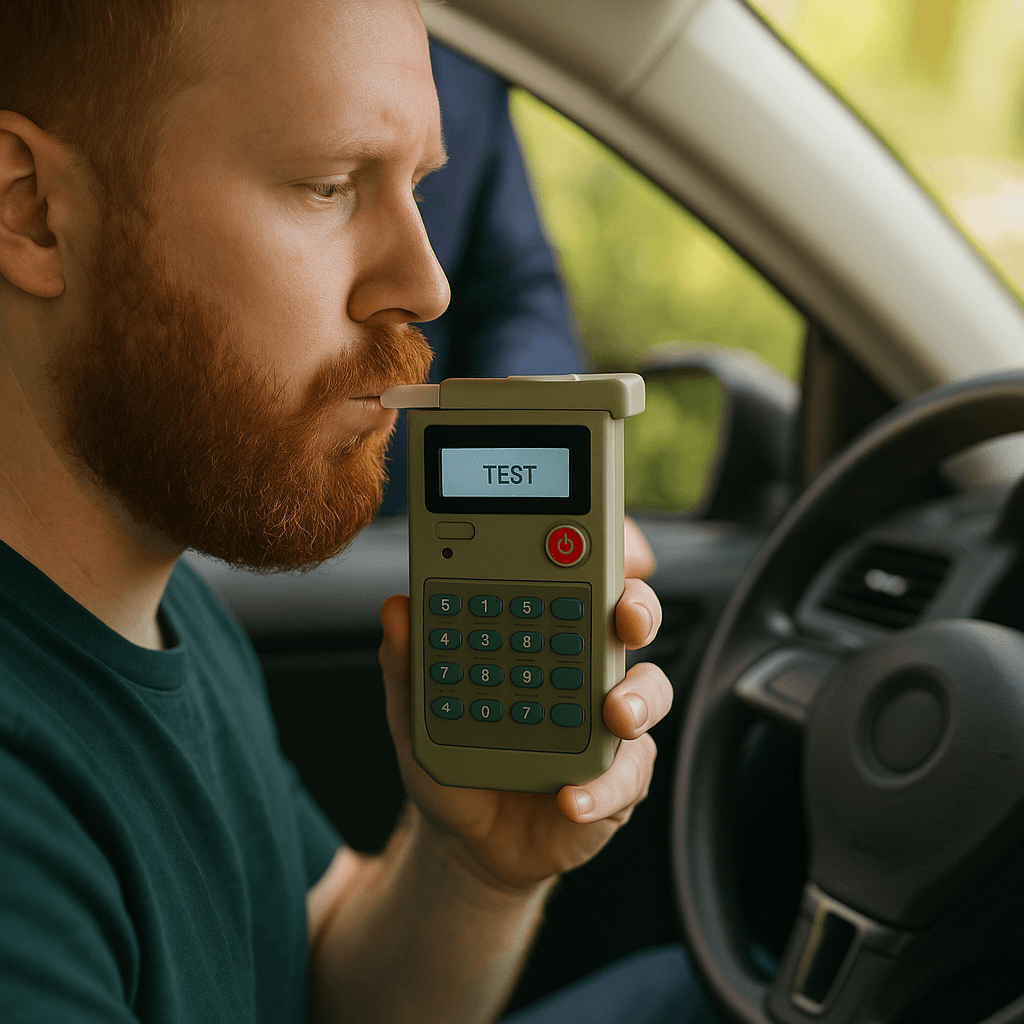
Oregon reinstatement follows a strict sequence: court sentencing and diversion completion, IID installation confirmation submitted to DMV, reinstatement fee payment, then SR-22 filing acceptance. Your SR-22 becomes active only after DMV processes your reinstatement application and confirms IID compliance. Filing SR-22 the day after your conviction means paying for liability coverage on a vehicle you cannot legally drive for 90 to 120 days while waiting for diversion program completion and IID installation.
Oregon's DUII Intensive Supervision Program (diversion) runs 12 months for first offenders but allows hardship permit eligibility after 30 days if IID is installed. Aggravated DUI convictions (BAC 0.15% or higher, refusal, minor in vehicle) skip diversion and mandate immediate 90-day hard suspension with no hardship permit option. During hard suspension, SR-22 filing accomplishes nothing because DMV has not opened a reinstatement case yet.
The IID installation window creates the bottleneck. Oregon-approved IID providers (Intoxalock, LifeSafer, Smart Start) typically schedule installation 10 to 21 days after your application depending on regional availability. The provider submits installation confirmation (Form 7503) to DMV electronically, but DMV processing adds another 7 to 14 business days before your reinstatement eligibility opens. Only then does your SR-22 filing trigger coverage activation.
How Oregon court fees and diversion costs delay your SR-22 start date
Oregon DUII sentencing includes mandatory fees totaling $1,000 to $2,400 before any diversion or IID costs: $490 criminal fine minimum, $255 court assessment fee, $200 to $400 attorney fees if public defender assigned, and potential victim impact panel fees of $50 to $75. Multnomah, Lane, and Washington counties add local surcharges pushing total court costs to $2,000+ for first-offense standard DUII. Payment plans are available but enrollment delays diversion program entry in most counties.
Diversion program fees add $490 to $650 depending on county (Multnomah County charges $650, rural counties typically $490 to $520). Monthly probation fees range $40 to $65 for the 12-month program term. The diversion program requires proof of enrollment before DMV will accept a hardship permit application, which in turn requires proof of IID installation. Until you complete diversion enrollment and pay the first installment, your hardship permit timeline does not begin.
DMV reinstatement fees must be paid before SR-22 filing acceptance: $75 reinstatement application fee, $75 IID compliance fee, and $10 per year for SR-22 future filing certification. Total DMV cost before SR-22 activation: $160 to $185 depending on your required SR-22 duration. Oregon assigns SR-22 filing periods by conviction class: 3 years for standard first-offense DUII, 5 years for aggravated DUII or second offense within 15 years, permanent requirement for third offense or felony DUII.
Find out exactly how long SR-22 is required in your state
Why filing SR-22 before IID installation wastes your premium dollars
Non-standard carriers (The General, Dairyland, GAINSCO, Bristol West, Direct Auto) require full 6-month premium payment upfront for SR-22 policies after DUI conviction. Oregon monthly SR-22 premiums for post-DUI drivers range $140 to $280/mo depending on age, county, and prior insurance history. A 6-month policy costs $840 to $1,680 paid at binding.
If you file SR-22 in week one after conviction but cannot install IID for 45 days due to provider availability and diversion enrollment delays, you pay for 6 to 8 weeks of liability coverage on a suspended license. Oregon law prohibits driving without valid license and IID simultaneously installed and operating — your SR-22 does not create an exception. If stopped during this window, you face additional driving while suspended charges (Class A misdemeanor, $1,000 to $6,250 fine, possible 364 days jail) on top of your existing DUII case.
The correct filing sequence: complete diversion enrollment, schedule and complete IID installation, submit IID confirmation to DMV, pay reinstatement fees, wait for DMV reinstatement eligibility letter (typically 10 to 15 business days after fee payment), then contact non-standard carriers for SR-22 quotes. Your coverage activates the day DMV receives electronic SR-22 filing from your carrier, and you can drive legally under hardship permit rules (work, medical, diversion meetings only) immediately. Filing earlier converts premium dollars into coverage you cannot use.
How Oregon hardship permits interact with SR-22 filing requirements
Oregon issues hardship permits (officially called Ignition Interlock Device permits) after 30 days of diversion program participation for standard first-offense DUII, or after 90-day hard suspension completion for aggravated or repeat offenses. The permit allows driving to employment, medical appointments, court-ordered treatment, diversion meetings, and educational programs only. All other driving remains prohibited and creates new criminal exposure.
Hardship permit eligibility requires proof of three items submitted simultaneously: IID installation confirmation from approved provider, SR-22 certificate of insurance showing minimum Oregon liability limits (25/50/20), and diversion enrollment verification letter. DMV will not process a hardship permit application missing any of these three documents. The SR-22 certificate must show your name exactly matching your driver license, your IID-equipped vehicle VIN, and current effective date.
Most Oregon counties require in-person hardship permit application at DMV field offices (online applications available only for standard first-offense diversion cases in select counties as of current DMV pilot programs). Appointment wait times range 14 to 28 days in Portland metro area, 7 to 14 days in rural counties. If your SR-22 filing is delayed or incomplete when your appointment arrives, you reschedule and wait another 2 to 4 weeks. Filing SR-22 too early costs money; filing too late costs calendar time without driving privileges.
What Oregon SR-22 filing periods mean for your insurance timeline
Oregon calculates SR-22 duration from your hardship permit effective date or full reinstatement date, not conviction date or suspension start date. A first-offense standard DUII conviction on January 15 triggering 12-month diversion and 30-day wait for hardship permit means your 3-year SR-22 clock starts March 1 at earliest (30-day diversion wait + IID installation + DMV processing). Your SR-22 requirement ends March 1 three years later, assuming no lapses.
Any SR-22 lapse resets your filing clock to day zero in Oregon. If your carrier non-renews at policy term and you have a coverage gap of even 24 hours, DMV receives automatic lapse notification and suspends your license immediately. Reinstatement after SR-22 lapse requires new reinstatement fees ($75 + $10/year remaining on SR-22 term), new SR-22 filing, and 30-day processing delay before driving privileges resume. A 2-day lapse in year two of a 3-year requirement resets your timeline to 3 full years from the new filing date.
Aggravated DUII convictions (BAC 0.15%+, refusal, injury, minor in vehicle) trigger 5-year SR-22 requirements starting from reinstatement date after 90-day hard suspension. Third-offense DUII or felony DUII convictions create permanent SR-22 requirements in Oregon with no end date — you file continuously until you leave the state or surrender your license. Permanent filers pay the same non-standard market rates as term-limited filers, but rate decreases after 3 to 5 violation-free years vary significantly by carrier.
Which Oregon carriers will write SR-22 policies after DUI conviction
Mainstream carriers (State Farm, Allstate, Progressive standard lines, GEICO) non-renew Oregon policyholders at term after DUI conviction in 87% of cases based on current underwriting guidelines. Progressive and GEICO may retain existing customers if no prior violations exist and BAC was below 0.12%, but premium increases range 110% to 180% at renewal. New DUI-SR-22 applicants cannot bind coverage with standard market carriers in Oregon.
Non-standard market availability in Oregon: The General, Dairyland, GAINSCO, Bristol West, Direct Auto, Acceptance Insurance, and Kemper Specialty all write post-DUI SR-22 policies statewide. Safe Auto and National General write select counties only (primarily Portland metro, Salem, Eugene). Monthly premiums for minimum liability (25/50/20) with SR-22 endorsement range $140 to $215/mo for drivers ages 25 to 54 with first-offense standard DUII, $195 to $280/mo for aggravated DUII or drivers under 25.
Carrier acceptance varies by conviction class and IID compliance status. Bristol West and Dairyland accept aggravated DUII and second-offense cases with active IID at standard non-standard rates. The General and GAINSCO tier aggravated cases into higher-risk pools with $210 to $260/mo minimums. Third-offense and felony DUII convictions limit carrier options to Acceptance, Dairyland, and Kemper in most Oregon counties, with 6-month premiums often requiring $1,800 to $2,200 upfront payment.
How to sequence Oregon compliance steps without wasting money or time
Week 1 after conviction or diversion sentencing: enroll in court-ordered diversion program, pay initial enrollment fee or arrange payment plan, request diversion enrollment verification letter for DMV. Do not contact insurance carriers yet. Week 2 to 3: contact Oregon-approved IID providers (Intoxalock 24-hour helpline, LifeSafer, Smart Start regional offices), schedule installation for earliest available date, confirm provider will submit Form 7503 electronically to DMV after installation. IID installation costs $75 to $125, monthly monitoring $70 to $90.
Week 3 to 5: complete IID installation, confirm provider submitted installation notice to DMV (request confirmation email), pay DMV reinstatement fees online or at field office ($75 reinstatement + $75 IID fee + $10/year SR-22 certification fee). Week 5 to 7: wait for DMV reinstatement eligibility letter or online account status update showing "eligible for IID permit." This processing window cannot be shortened — calling DMV does not accelerate the timeline.
Once DMV confirms reinstatement eligibility: contact 3 to 4 non-standard carriers same day for SR-22 quotes (compare The General, Dairyland, Bristol West, GAINSCO minimally). Provide conviction date, BAC level if known, current vehicle VIN, and IID installation confirmation. Bind coverage with lowest premium carrier offering same-day SR-22 electronic filing. Schedule DMV hardship permit appointment for 3 to 5 business days after SR-22 filing to allow DMV system update. Bring printed SR-22 certificate, IID installation receipt, and diversion enrollment letter to appointment. Most Oregon drivers regain limited driving privileges 60 to 90 days post-conviction following this sequence — filing SR-22 in week 1 does not reduce that timeline but adds 8 to 12 weeks of unusable premium cost.