Indiana's BMV won't accept your SR-22 filing until IID installation and court compliance are complete. Filing out of sequence resets your timeline and costs you twice.
Indiana Requires IID Installation Before SR-22 Filing
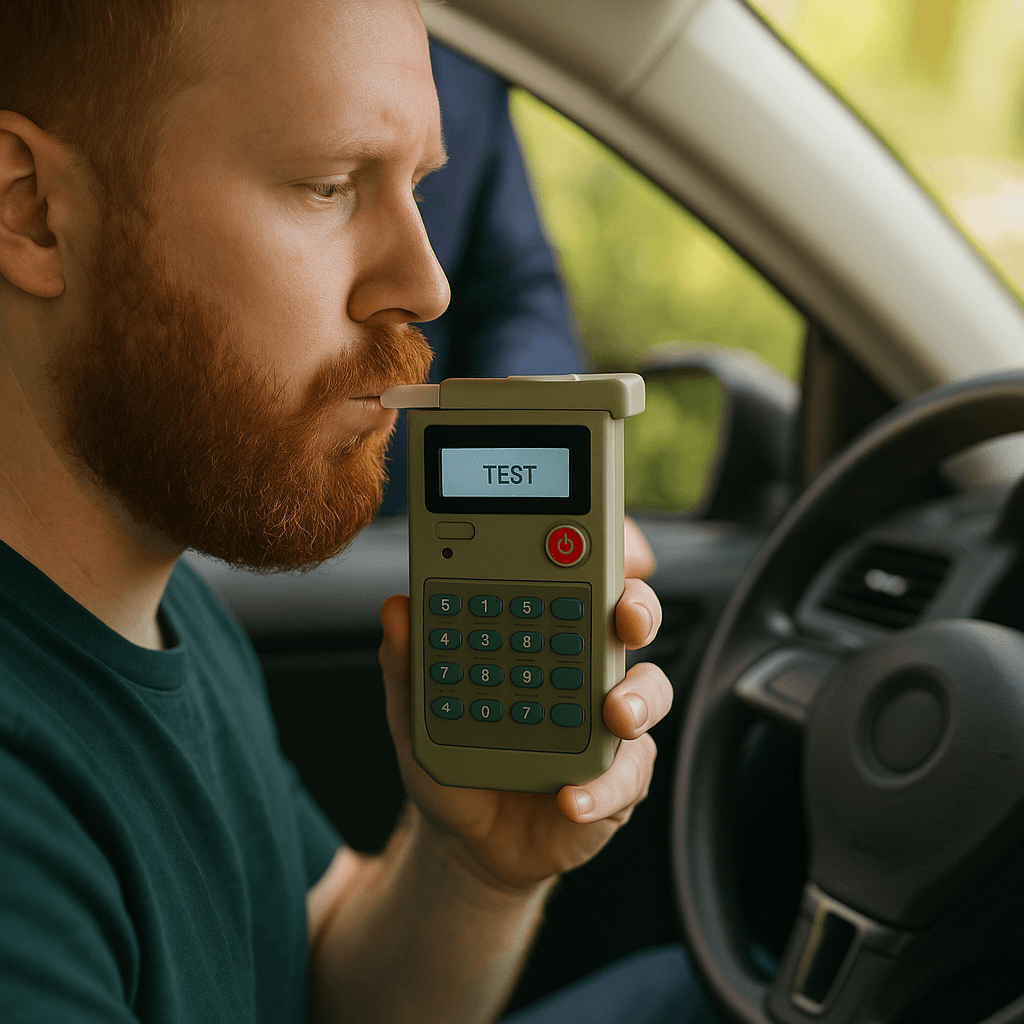
Indiana mandates ignition interlock device (IID) installation before the Bureau of Motor Vehicles will accept your SR-22 certificate, even for first-offense DUI convictions. The reinstatement sequence is legally fixed: complete your suspension period, install the IID with a state-certified provider, then file SR-22. Drivers who purchase SR-22 insurance and file before IID installation receive a BMV rejection notice, which means the filing date doesn't count and the 3-year SR-22 clock never starts.
The IID requirement applies to all OWI convictions in Indiana with BAC at or above 0.08%, plus refusal cases and repeat offenses. First-offense standard OWI with BAC 0.08–0.14% requires IID for 180 days minimum. Aggravated OWI (BAC 0.15% or higher, minor passenger, or injury) extends the IID period to 1 year. Repeat offenses trigger 2 years minimum. Your court order specifies your exact IID duration, and that clock starts only after proper installation by an approved vendor.
Carriers will sell you an SR-22 policy before IID installation, but the BMV filing is void until the device is active. You pay premiums on a policy that generates no compliance credit. The financially correct sequence: install IID, obtain the IID compliance certificate from your provider, then purchase SR-22 insurance and file. Most non-standard carriers in Indiana (The General, Direct Auto, Bristol West) understand this sequence and can coordinate filing timing if you disclose your IID installation date upfront.
Court Program Completion Must Precede BMV Reinstatement
Indiana courts impose DUI education, victim impact panels, and substance abuse assessments as sentencing conditions separate from BMV license actions. The BMV requires proof of court compliance before processing any reinstatement application, which means your SR-22 filing is premature if court-ordered programs remain incomplete. The compliance verification form (State Form 55892) must show completed status for every court mandate before the BMV accepts your SR-22 and reinstatement fee.
Standard first-offense OWI sentencing in Indiana includes a court-approved alcohol and drug services program (typically 12–16 hours), a victim impact panel session, and a substance abuse assessment. Aggravated or repeat offenses add longer treatment programs or probation supervision requirements. Each program issues a completion certificate, and you must submit all certificates to the court for the consolidated compliance form. Missing even one certificate delays your entire reinstatement timeline, regardless of SR-22 filing status.
The compliance bottleneck most drivers encounter: victim impact panel availability. Indiana counties schedule panels monthly or quarterly, and sessions fill weeks in advance. If your sentencing occurs mid-cycle, you may wait 6–8 weeks for the next available session, which pushes your entire reinstatement timeline regardless of suspension length. Schedule the victim impact panel immediately after sentencing, before addressing IID or SR-22. The program completion date becomes your earliest possible reinstatement date.
Find out exactly how long SR-22 is required in your state
How Indiana's 3-Year SR-22 Clock Actually Starts
Indiana's 3-year SR-22 filing requirement begins on your license reinstatement date, not your conviction date or SR-22 purchase date. Drivers commonly miscalculate their SR-22 end date by measuring from the wrong event, which leads to early cancellation and immediate re-suspension. The legal trigger is the date the BMV processes your reinstatement application and issues your new credential — that date starts the 3-year continuous filing obligation.
Your reinstatement date depends on completing the full sequence: suspension period served, IID installed, court programs completed, SR-22 filed, and reinstatement fee paid ($250 for standard OWI, $500 for refusal or repeat offense). The BMV processes reinstatements in order received, typically 5–10 business days after submission if all documents are complete. Your SR-22 start date is the reinstatement processing date on your BMV notice, not the earlier date you purchased the policy or submitted the application.
Carriers cannot tell you when your 3-year obligation ends because they don't control or track your reinstatement date. You must record the reinstatement date from your BMV correspondence and add exactly 3 years. Canceling SR-22 coverage even one day early triggers automatic re-suspension under Indiana Code 9-25-4-5, which requires a new reinstatement application, new fees, and a new 3-year SR-22 period starting from the second reinstatement date. The financial consequence: you pay reinstatement fees twice and extend high-risk insurance rates by the full suspension gap.
Which Indiana Carriers File SR-22 After DUI
Most standard-market carriers in Indiana — State Farm, Geico, Allstate, Progressive, Nationwide — will file SR-22 for existing policyholders but typically non-renew at the end of the current term. If your DUI occurred mid-policy, your carrier files SR-22 on request and maintains coverage until renewal, then declines to renew. New SR-22 policies after DUI conviction generally require the non-standard insurance market, where acceptance and pricing vary significantly by conviction class and driving history.
Non-standard carriers operating in Indiana include The General, Direct Auto, Dairyland, Bristol West, GAINSCO, Safe Auto, and Acceptance Insurance. These carriers specialize in high-risk drivers and file SR-22 as standard practice. Monthly premiums for SR-22 liability coverage after first-offense OWI in Indiana range from $140–$240/mo for state-minimum liability (25/50/25 limits). Aggravated OWI, refusal, or repeat offenses push premiums to $180–$320/mo. Estimates based on available industry data; individual rates vary by age, location, prior insurance history, and coverage selections.
Carrier availability varies by Indiana county. Marion, Lake, and Allen counties have the widest non-standard market access. Rural counties may have fewer direct writers, which forces you into independent agent appointments or online aggregators. Start shopping 30–45 days before your anticipated reinstatement date to compare rates across multiple non-standard carriers. The SR-22 filing fee itself is typically $25–$50, charged once at policy inception, separate from premium.
What Happens If You File SR-22 Out of Sequence
Filing SR-22 before completing IID installation or court programs results in BMV rejection of your SR-22 certificate, which means the filing generates zero compliance credit and your 3-year clock never starts. The BMV issues a deficiency notice identifying the missing prerequisite, but your carrier has already processed the SR-22 filing and charged the filing fee. You pay for a non-compliant SR-22 that must be re-filed after correcting the sequence.
The re-filing process requires maintaining continuous coverage through the rejection and correction period. If you cancel the premature SR-22 policy thinking you'll restart after IID installation, you create a coverage lapse that adds a separate SR-22 requirement under Indiana's continuous insurance laws. The financially correct approach: maintain the SR-22 policy, complete the missing prerequisite (IID or court program), then request your carrier re-file the SR-22 certificate. Most carriers re-file at no additional charge if you maintain continuous coverage, but some assess a second filing fee.
The timeline cost of out-of-sequence filing: 3–6 weeks. IID installation from application to active device averages 10–14 days. Court program completion for a last remaining victim impact panel adds 4–8 weeks if the next session is far out. Your 3-year SR-22 obligation doesn't begin until the corrected filing is accepted, which extends your high-risk insurance period and total cost by the delay duration. Verify IID installation status and court compliance before purchasing SR-22 coverage to avoid paying twice.
Indiana Hardship License and SR-22 Timing
Indiana's Specialized Driving Privileges (SDP) program — commonly called hardship or work license — allows restricted driving during your suspension period for employment, education, medical appointments, and court-ordered programs. SDP approval requires SR-22 filing at the time of application, which creates a sequence conflict: you need SR-22 to apply for SDP, but the BMV won't process full reinstatement until IID and court compliance are complete.
The SDP workaround: file SR-22 for the hardship license application, maintain that SR-22 policy continuously through your suspension and hardship period, then use the same active SR-22 filing for full reinstatement once IID and court programs are complete. Your 3-year SR-22 clock still starts on full reinstatement date, not SDP approval date, but continuous coverage through both phases prevents lapses that would reset the clock.
SDP approval in Indiana requires petition filing in the county where your OWI occurred, a $200 filing fee, proof of SR-22 insurance, and a hearing before a judicial officer. The court may approve or deny based on your specific conviction facts, prior driving record, and demonstrated need. If approved, the SDP order specifies allowed driving hours, routes, and purposes. SR-22 must remain active for the entire SDP period plus the full 3-year period after reinstatement. Total SR-22 duration for drivers using SDP: typically 4–5 years from first filing to final release.