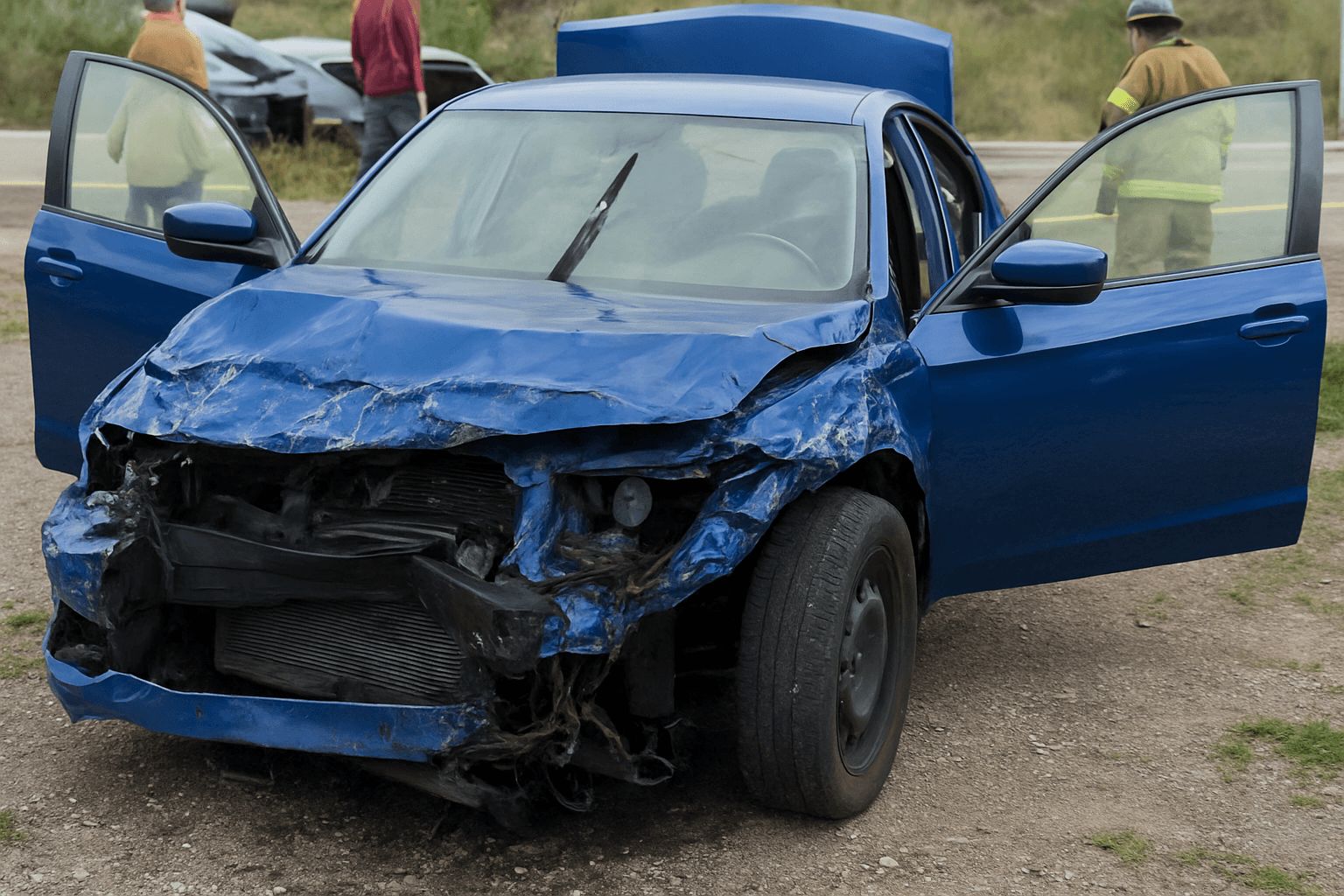
Wyoming requires SR-22 filing for three years after a DUI conviction, and any financed or leased vehicle triggers mandatory full coverage — which means you're layering collision and comprehensive onto an already-expensive non-standard policy.
Wyoming's SR-22 Filing Period Starts at Conviction, Not Reinstatement
Your three-year SR-22 requirement in Wyoming begins on your DUI conviction date, not the day your license is reinstated or the day you first file. This matters when buying a car because the filing obligation follows you regardless of vehicle ownership changes.
If you were convicted six months ago and suspended for 90 days, you've already completed six months of your SR-22 period before reinstatement. You have 2.5 years remaining, not three full years from today. Lenders and leasing companies don't care about your filing timeline — they only care that you maintain continuous full coverage for the entire loan or lease term.
Most drivers discover the timeline mismatch when they finance a vehicle 18 months post-conviction, assume they have 18 months of SR-22 left, and then receive a lapse notice because their actual end date was six months earlier. The conviction date is your anchor point.
Full Coverage Means Collision and Comprehensive on a Non-Standard Policy
Lenders require collision and comprehensive coverage on financed or leased vehicles to protect their collateral. In Wyoming, your DUI conviction pushes you into the non-standard insurance market, where collision coverage typically costs 40-60% more than identical coverage from a standard carrier.
A clean-record driver in Cheyenne might pay $95/mo for full coverage on a $22,000 financed sedan. After a DUI, that same coverage through a non-standard carrier runs $180–$260/mo, with SR-22 filing adding another $15–$25/mo. The collision and comprehensive portions account for most of the increase because non-standard carriers price physical damage coverage based on violation risk, not just vehicle value.
If you're buying outright with cash, Wyoming's minimum liability requirement is 25/50/20. You can skip collision and comprehensive entirely and save $80–$120/mo. The SR-22 filing itself only adds cost to your liability premium, not your total premium structure.
Find out exactly how long SR-22 is required in your state
Most Mainstream Carriers Won't Write New DUI Policies in Wyoming
State Farm, Geico, Allstate, and Progressive will file SR-22 for existing customers in Wyoming, but they typically non-renew at your policy term. If you're shopping for coverage after a DUI conviction with no current policy, you're entering the non-standard market immediately.
Non-standard carriers operating in Wyoming include The General, Direct Auto, Bristol West, and Acceptance Insurance. Not all write full coverage policies — some only offer liability. The General and Bristol West both write collision and comprehensive in Wyoming, but acceptance criteria vary by conviction class. A first-offense standard DUI with BAC below 0.15 has wider carrier availability than an aggravated DUI (BAC 0.15+, refusal, or injury).
You'll need at least three quotes to find a carrier willing to write full coverage at a rate that doesn't exceed your car payment. Some non-standard carriers decline collision coverage entirely for drivers with DUIs less than 12 months old.
Financing a Vehicle Locks You Into Three Years of Full Coverage Minimums
Your lender requires continuous full coverage for the entire loan term, regardless of your SR-22 end date. If you finance a vehicle with a 60-month term today and your SR-22 obligation ends in 30 months, you still owe full coverage for the remaining 30 months after your filing period expires.
Most drivers assume their rates will drop substantially once the SR-22 requirement ends. Rates do decrease — typically 15-25% — but you're still rated as a DUI driver for three to five years post-conviction by most carriers. The SR-22 filing fee disappears ($15–$25/mo), but your base premium remains elevated until the conviction ages off your record.
If you're 18 months into your SR-22 period and considering a car purchase, waiting until month 36 lets you shop the standard market again for full coverage. The rate difference on a $25,000 financed vehicle is $900–$1,400 annually between non-standard and standard-market full coverage in Wyoming.
Gap Insurance and Loan/Lease Payoff Coverage Aren't Legally Required But Close Coverage Gaps
Wyoming doesn't mandate gap insurance, but lenders and leasing companies often require it as a loan condition. Gap insurance covers the difference between your vehicle's actual cash value and your remaining loan balance if the car is totaled. Non-standard carriers in Wyoming offer gap coverage, but it typically costs $8–$15/mo compared to $5–$8/mo in the standard market.
If you total a financed vehicle with a $19,000 loan balance but the car's actual cash value is $15,000, your collision coverage pays the lender $15,000. Without gap insurance, you owe the lender the remaining $4,000 out of pocket while also needing to replace your vehicle. With a DUI on record, you're already paying elevated rates — adding gap coverage for $10/mo protects you from a $4,000–$7,000 loss exposure.
Some non-standard carriers bundle loan/lease payoff coverage into their full coverage policies automatically. Confirm whether gap is included or requires a separate endorsement before finalizing your policy.
Letting Your SR-22 Lapse While Financing a Vehicle Triggers Lender-Forced Coverage
If your SR-22 filing lapses for any reason — missed payment, cancelled policy, switching carriers without continuous filing — Wyoming DMV notifies your lender within 10 business days. Your lender will then force-place collision and comprehensive coverage on your vehicle at rates 2-3 times higher than voluntary market rates, and bill you for the premium.
Force-placed insurance only protects the lender's interest in the vehicle, not your liability exposure. You're still legally required to maintain SR-22 liability coverage separately, which means you'd be paying for two policies simultaneously: the lender's force-placed physical damage coverage and your own SR-22 liability policy.
A lapse resets your three-year SR-22 clock to zero in Wyoming. If you lapse 28 months into your filing period, you owe three additional years from the date you refile, not two months. The financial consequence of a lapse while financing a vehicle is $4,000–$8,000 in duplicated premiums and extended filing obligations.
Buying Used vs. New Changes Your Full Coverage Rate Structure
Collision and comprehensive premiums are calculated as a percentage of your vehicle's actual cash value, not purchase price. A $12,000 used sedan costs 30-40% less to insure for physical damage than a $28,000 new sedan, even if both require full coverage from the same non-standard carrier.
Most non-standard carriers in Wyoming apply higher percentage multipliers to physical damage coverage for DUI drivers. A clean-record driver might pay 4% of vehicle value annually for collision coverage; a DUI driver pays 6-8%. On a $25,000 vehicle, that's the difference between $83/mo and $125–$165/mo for collision alone.
If your SR-22 period has 24+ months remaining, financing a $10,000–$15,000 used vehicle instead of a $25,000 new vehicle saves $60–$95/mo in full coverage premiums. Over 24 months, that's $1,440–$2,280 in avoided premium cost — enough to cover most of the vehicle depreciation on a used purchase.