Pennsylvania's Occupational Limited License lets you drive to work during your suspension, but shift-time approval varies by county and requires employer documentation at your hearing.
Pennsylvania OLL permits cover night shift commutes if you submit employer schedule documentation at your hearing
Pennsylvania's Occupational Limited License (OLL) allows DUI offenders to drive to and from work during their suspension period, including night shifts. The OLL is available after serving the mandatory suspension period: 60 days for first-offense DUI with BAC 0.10–0.159%, and 12 months for high-tier BAC or refusal cases. Your employer must provide a signed letter on company letterhead documenting your exact shift times, work location address, and the direct route required. PennDOT district offices review these schedules during your OLL hearing, and approval for overnight hours is routine as long as the hours are verifiable and the route is direct.
The catch: you must bring this documentation to your OLL hearing, not submit it after approval. County-level PennDOT offices process OLL petitions, and judges evaluate whether your proposed driving pattern matches genuine employment need. A vague request for "evening work hours" gets denied. A letter stating "11:00 PM to 7:30 AM, Monday through Friday, 1423 Industrial Parkway, Allentown" with a direct route map gets approved. Most OLL denials stem from incomplete employer documentation, not from the shift time itself.
Once approved, your OLL specifies exact permitted hours and routes. Driving outside those windows or deviating from the approved route violates the OLL terms and can trigger a new suspension. Pennsylvania treats OLL violations as willful non-compliance with court orders, which extends your total suspension period and disqualifies you from future OLL eligibility. If your shift changes after OLL approval, you must file an amended petition with updated employer documentation before driving the new schedule.
SR-22 filing is required before PennDOT will schedule your OLL hearing
Pennsylvania requires SR-22 filing as a prerequisite for OLL eligibility, not as a post-approval step. You must obtain a non-owner SR-22 policy (if you don't own a vehicle) or a standard SR-22 auto policy (if you do) and have your insurer file the SR-22 certificate with PennDOT before your OLL petition will be processed. The SR-22 filing confirms continuous financial responsibility for the duration of your OLL period plus any remaining suspension time. Without an active SR-22 on file, PennDOT will not schedule your hearing.
Most mainstream carriers will file SR-22 for existing customers but typically non-renew at policy term after a DUI conviction. New SR-22 policies for DUI offenders generally require the non-standard market: Direct Auto, Dairyland, The General, GAINSCO, and National General all write Pennsylvania SR-22 policies for DUI drivers. Monthly premiums for SR-22 non-owner policies in Pennsylvania typically range from $45 to $85 per month for first-offense DUI. Standard SR-22 auto policies for vehicle owners range from $180 to $320 per month depending on county, age, vehicle, and conviction details.
Pennsylvania requires 3 years of continuous SR-22 filing after DUI reinstatement. The filing period starts on your reinstatement date, not your conviction date or suspension start date. If your SR-22 lapses for any reason during the 3-year period, PennDOT suspends your license immediately and resets the 3-year clock to zero. Your OLL becomes invalid the moment your SR-22 lapses, which means any driving after the lapse is operating under suspension, a summary offense carrying up to 90 days in jail and $500 to $1,000 in fines for first violation.
Find out exactly how long SR-22 is required in your state
OLL route restrictions prohibit stops for errands, gas, or food during work commutes
Pennsylvania OLL terms specify direct routes between your residence and workplace with no intermediate stops permitted. This means no detours for gas station fill-ups, convenience store stops, or drive-through food runs before or after your shift. The OLL is not a restricted general-use license — it is a point-to-point work permit. Police officers who stop OLL holders during permitted hours routinely verify that the current location matches the approved route. Deviation from the approved route by more than a few blocks can be charged as driving under suspension.
If your night shift requires travel between multiple work sites, you must document every location and the required route sequence in your OLL petition. For example, if you work as a home health aide with four client visits per shift, your employer letter must list each client address and the sequence of visits. PennDOT judges evaluate whether the proposed route pattern is reasonable and work-related. Vague multi-location requests get denied unless the employer provides a documented rotation schedule.
Gas and vehicle maintenance present a logistical problem for night-shift OLL holders. Pennsylvania law does not allow detours for fuel or repairs during OLL hours. The practical workaround: refuel and maintain your vehicle during non-OLL hours, either before your suspension begins or during weekends if your OLL does not include weekend driving. Some drivers petition for Saturday morning OLL hours specifically for vehicle maintenance and errands, listing "vehicle upkeep necessary for work commute" as the justification. Approval varies by county.
Pennsylvania OLL eligibility excludes commercial driver's license holders and interstate routes
If your employment requires a commercial driver's license, Pennsylvania will not grant an OLL. CDL holders convicted of DUI face federal disqualification under 49 CFR 383.51, which supersedes state OLL provisions. This means truck drivers, bus operators, and anyone whose job requires a CDL cannot use an OLL to continue working in that role during their suspension. The only exception: if you hold a CDL but your OLL petition is for non-commercial employment using a personal vehicle with a standard Class C license. In that case, you surrender your CDL during the suspension and the OLL covers the non-commercial work commute only.
Interstate work routes are not eligible for OLL coverage. Pennsylvania's OLL jurisdiction ends at the state border, and neighboring states do not recognize Pennsylvania OLLs as valid driving privileges. If your night shift requires crossing into New Jersey, Delaware, Ohio, or New York, your OLL does not authorize that travel. Some drivers attempt to structure their petitions with an in-state parking location near the border and claim they walk or rideshare across state lines, but PennDOT judges scrutinize these arrangements closely and often deny them as impractical.
Repeat-offense DUI convictions carry longer mandatory suspension periods before OLL eligibility begins. Second-offense DUI requires 12 months of suspension before you can petition for an OLL, and third-offense or felony DUI carries 18 months. High-BAC first offenses (0.16% or higher) require 12 months before OLL eligibility. During these mandatory periods, no driving is permitted for any reason, including employment. Hardship does not shorten the mandatory period.
OLL petitions cost $175 in filing and hearing fees, and processing takes 4 to 8 weeks
Pennsylvania charges a $175 Occupational Limited License petition fee, paid at the time you file your petition with your county PennDOT Driver License Center. This fee is non-refundable even if your petition is denied. After filing, PennDOT schedules a hearing before a departmental hearing officer, typically 4 to 6 weeks after your petition is submitted. During high-volume periods, particularly in Philadelphia and Allegheny counties, hearing delays can extend to 8 weeks. You cannot legally drive under OLL terms until the hearing officer approves your petition and PennDOT issues the physical OLL card.
At the hearing, you must present your employer's signed schedule letter, proof of active SR-22 filing, a detailed route map showing the direct path between home and work, and documentation of your current residence address. If you live with family or in a rental situation, bring a utility bill or lease agreement proving your address. Hearing officers deny petitions when residence documentation does not match the proposed route. If you recently moved and your driver's license address is outdated, update it with PennDOT before filing your OLL petition.
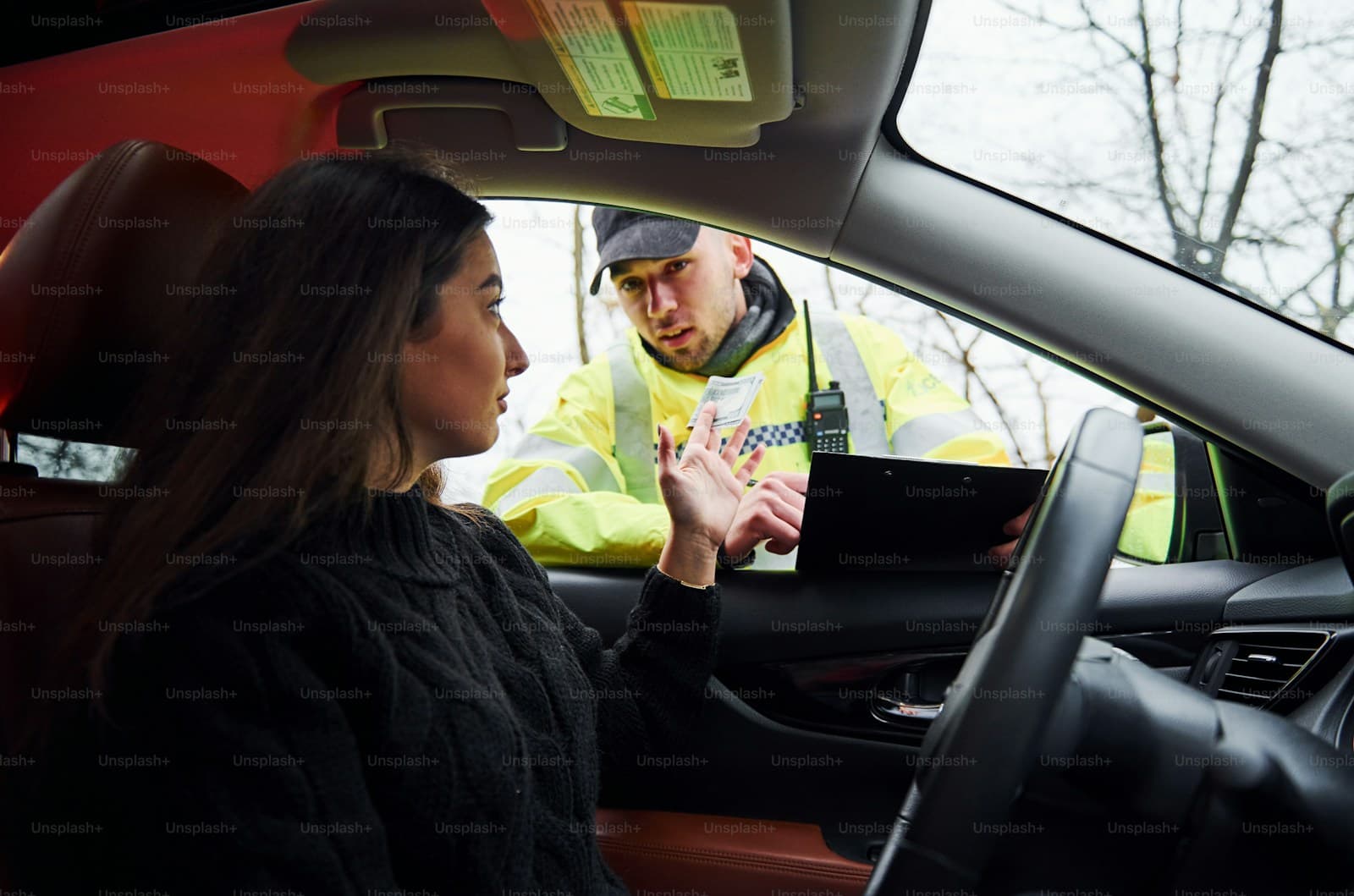
Once approved, the OLL is valid for the remainder of your suspension period and must be carried whenever you drive. Police officers can request to see your OLL during any traffic stop, and failure to produce it during permitted driving hours results in a driving under suspension charge even if you are on your approved route during approved hours. The OLL card lists your permitted hours, routes, and restrictions in plain text. If any detail changes — new job, new shift time, new address — you must file an amended OLL petition and pay an additional $50 amendment fee before driving under the new terms.
Pennsylvania ignition interlock requirements apply during OLL periods for high-BAC and repeat offenses
Pennsylvania requires ignition interlock devices for all OLL holders convicted of high-BAC DUI (0.10% or higher for first offense, any measurable BAC for repeat offenses) or refusal cases. The interlock must be installed in the vehicle you will drive under OLL terms before PennDOT will approve your petition. Installation costs range from $75 to $150, and monthly lease and monitoring fees run $75 to $100. Total interlock expense during a typical 12-month OLL period: $1,000 to $1,350.
If you are petitioning for a non-owner SR-22 because you don't own a vehicle, you must identify a specific vehicle you will drive under the OLL and have the interlock installed in that vehicle. This creates a logistical problem for drivers who plan to borrow a family member's car: the interlock must be installed in that family member's vehicle, and the family member cannot use the vehicle without providing breath samples. Many families refuse this arrangement, which forces the OLL petitioner to purchase or lease a vehicle solely to satisfy the interlock requirement.
Interlock violation reports — failed breath tests, missed rolling retests, or tampering events — are transmitted to PennDOT monthly. Three violations in a 12-month period triggers automatic OLL revocation and extends your total suspension period by 12 months. PennDOT does not provide warnings or grace periods for interlock violations. The most common violation: failing a rolling retest because the driver did not hear the alert tone during highway driving. Interlock devices require a rolling retest 5 to 15 minutes after the vehicle starts, and failure to provide a passing sample within the alert window logs a violation even if the initial startup test was clean.
OLL approval does not reduce your total suspension period or SR-22 filing requirement
The Occupational Limited License allows you to drive for work purposes during your suspension, but it does not shorten the suspension itself. If you received a 12-month suspension for high-BAC DUI and are approved for an OLL after the mandatory 60-day no-driving period, you will hold the OLL for 10 months while serving the remainder of your suspension. At the end of the 12-month suspension, you must apply for full license reinstatement, pay the $175 restoration fee, and maintain SR-22 filing for 3 years from that reinstatement date.
Some drivers assume that holding an OLL satisfies their SR-22 filing obligation early or gives them credit toward the 3-year requirement. It does not. The 3-year SR-22 clock begins on your full reinstatement date, not on the date your OLL was approved or the date your suspension began. This means a driver with a 12-month suspension who holds an OLL for 10 months will still owe 3 full years of SR-22 filing after reinstatement, for a total financial responsibility period of nearly 4 years from conviction.
Pennsylvania does not offer early reinstatement or suspension reduction for DUI offenders who complete alcohol treatment, install interlock devices voluntarily, or maintain clean driving records during their OLL period. The suspension period is fixed by statute based on your BAC level, refusal status, and prior offense count. The only way to shorten your suspension is to successfully appeal your DUI conviction or negotiate a plea reduction before sentencing, neither of which is possible after your conviction is final.