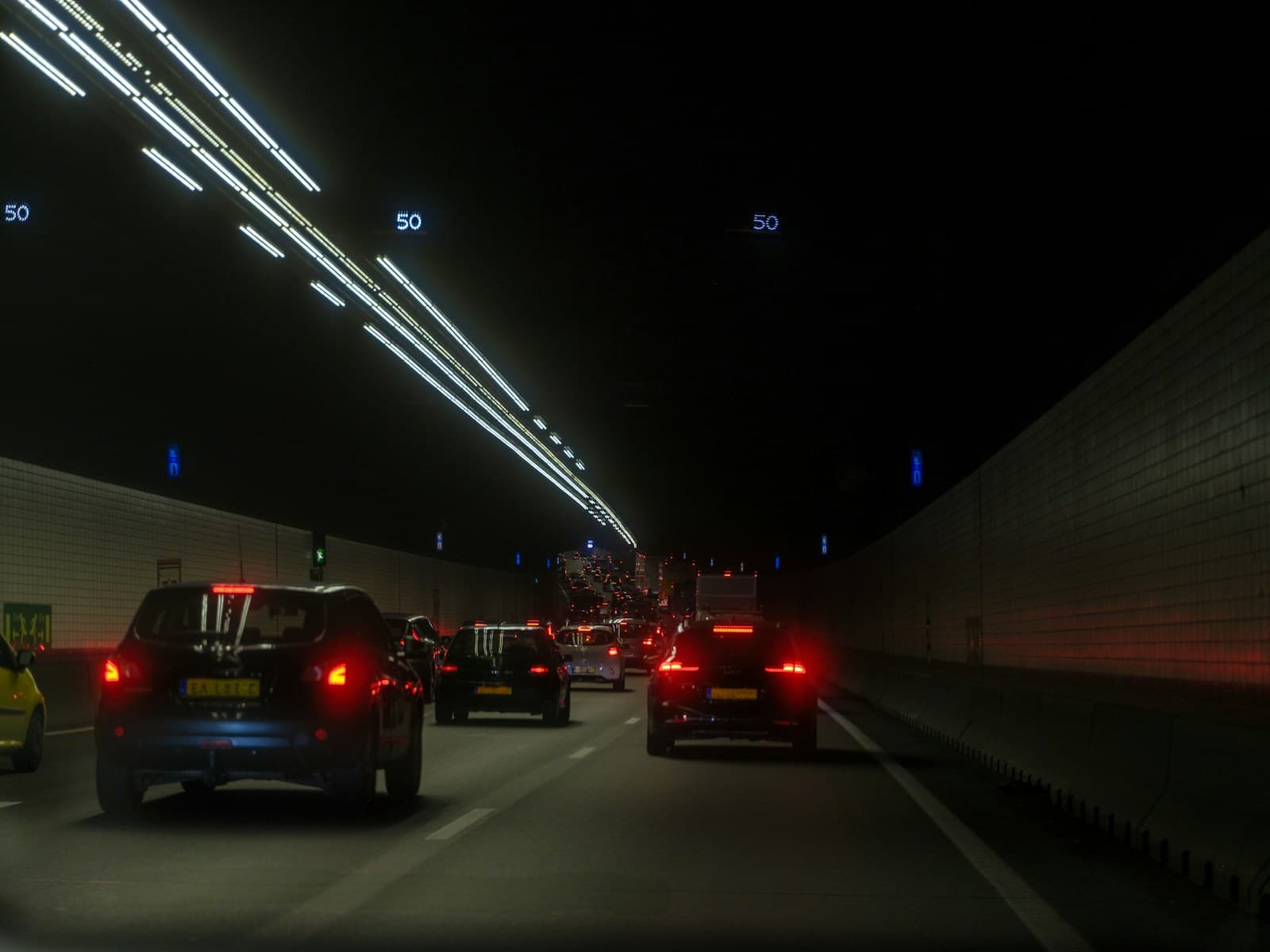
Mississippi restricted licenses allow commuting to work during your suspension period—but night shift schedules create unique documentation and enforcement challenges that most DUI defendants aren't warned about.
Mississippi Restricted Licenses Allow Night Shift Commuting—With Court-Specified Hours
Mississippi grants restricted driving privileges during your suspension period through circuit court petition, not through the DMV. Your work hours—including overnight shifts—are written directly into the court order as a specific time window. If you work 11 PM to 7 AM, your restricted license authorizes driving only during those hours plus reasonable travel time to and from your residence.
The court order becomes your legal authorization to drive. You must carry the physical court order, your expired or suspended license, and proof of SR-22 filing every time you drive. Mississippi law enforcement has discretion to verify that your current trip falls within your authorized window—and night driving draws more scrutiny than day shifts.
Your employer will need to provide a letter on company letterhead stating your exact shift schedule, work address, and supervisor contact information as part of your restricted license petition. The court uses this to set your authorized driving hours. If your shift changes after the order is granted, you must petition the court again for amended hours.
SR-22 Filing Is Required Before the Court Will Grant Restricted Privileges
Mississippi circuit courts will not issue a restricted work license until you file SR-22 with the Department of Public Safety. The SR-22 proves you carry liability coverage at or above Mississippi's minimum limits of 25/50/25. Most DUI convictions trigger a 3-year SR-22 filing requirement in Mississippi, starting from your conviction date or reinstatement date depending on your specific court order.
Carriers writing SR-22 policies for DUI offenders in Mississippi include Bristol West, Dairyland, The General, GAINSCO, and Safe Auto. Most mainstream carriers—State Farm, Geico, Allstate—will file SR-22 for existing customers but typically non-renew at your next policy term. Expect monthly premiums of $180–$320/mo for minimum liability coverage with SR-22 after a first-offense DUI.
The SR-22 certificate is filed electronically by your carrier to the Mississippi DPS. You receive a copy for your records, but you do not submit it to the court yourself. The court verifies filing status directly with DPS when reviewing your restricted license petition.
Find out exactly how long SR-22 is required in your state
Night Shift Workers Face Higher Stop Risk During DUI Checkpoint Hours
Mississippi law enforcement conducts DUI checkpoints most frequently between 10 PM and 3 AM on weekends, but also operates them on weeknights in areas with high DUI arrest history. If you work a night shift and your route home passes through checkpoint zones, you will be stopped more often than day workers.
When stopped, you must produce your restricted license court order, proof of SR-22, and your suspended driver's license. Officers will verify your current time falls within your authorized driving window. If you are stopped at 2 AM and your court order authorizes driving until 7:30 AM for a shift ending at 7 AM, you are legal. If you are stopped at 9 PM and your shift does not start until 11 PM, you are driving outside your window and face a driving under suspension charge.
Carry a printed copy of your work schedule in your vehicle. If your employer uses rotating shifts or asks you to come in early, that variation is not automatically covered by your court order. Driving outside your authorized hours—even for work—violates the terms of your restricted license and can result in immediate arrest and revocation of your driving privileges.
Rotating Shifts and Overtime Create Compliance Gaps
Mississippi restricted licenses are written with fixed time windows. If your employer rotates you between day and night shifts, or if you regularly work overtime that extends your commute window, your court order may not cover your actual driving. You cannot assume flexibility—the order is the limit.
If your schedule changes, you must file an amended petition with the circuit court that granted your original restricted license. This requires a new employer letter with updated hours and another court hearing. Most circuit courts schedule hearings 2–4 weeks out, so last-minute shift changes leave you with a choice: do not drive, or drive illegally and risk suspension revocation.
Some employers in healthcare, logistics, and manufacturing operate 24-hour schedules with unpredictable shift assignments. If this describes your job, request the widest possible time window in your original petition—for example, authorization to drive between 10 PM and 8 AM rather than a narrow 11 PM to 7:30 AM window. Courts have discretion to grant broader windows if your employer letter documents schedule variability.
Insurance Costs Increase Further If You Drive Commercially or for Rideshare
If your night shift job requires you to drive as part of your duties—delivery, security patrol, patient transport—you need commercial or hired/non-owned auto coverage in addition to your personal SR-22 policy. Mississippi restricted licenses for DUI typically prohibit commercial driving entirely, but some circuit courts grant exceptions if your livelihood depends on it.
Rideshare and delivery gig work (Uber, Lyft, DoorDash, Instacart) are almost never approved under a restricted license. These platforms require clean driving records and will deactivate your account after a DUI conviction regardless of your restricted license status. Even if the court authorized it, your SR-22 carrier will not cover commercial activity under a personal auto policy, leaving you uninsured during gig trips.
If your job requires you to drive a company vehicle, verify that your employer's commercial policy covers drivers with DUI convictions and active SR-22 requirements. Many commercial fleet insurers exclude DUI drivers entirely or require you to be listed as a high-risk driver with a surcharge passed to you.
Your Filing Period Does Not Pause During Your Suspension
Mississippi's SR-22 filing requirement runs concurrently with your suspension, not after it. If you receive a first-offense DUI with a 90-day suspension and a 3-year SR-22 requirement, your SR-22 period starts on your conviction date or the date your carrier files, depending on your court order. You must maintain continuous SR-22 coverage for the full 3 years even while your license is suspended and during your restricted license period.
If your SR-22 lapses for any reason—you miss a payment, you cancel your policy, your carrier non-renews you and you do not replace coverage within the grace period—your filing clock resets to zero in Mississippi. A lapse also triggers immediate suspension of your restricted driving privileges and requires a new reinstatement process once you refile.
Set up automatic payments with your carrier and monitor your policy status monthly. If you receive a non-renewal notice, start shopping for a replacement policy immediately. Most SR-22 carriers require 10–15 days to process and file a new certificate, and Mississippi DPS does not grant grace periods for lapses.
Reinstatement After Your Suspension Period Requires Fee Payment and Proof of Continuous SR-22
Once you complete your suspension period and any restricted license term, you must apply for full license reinstatement through the Mississippi Department of Public Safety. Reinstatement requires payment of a $125 reinstatement fee, proof of continuous SR-22 filing from your conviction date forward, and completion of any court-ordered DUI education or treatment programs.
Mississippi DPS will verify your SR-22 filing history electronically. If your carrier shows any lapse period, even one day, your reinstatement will be denied until you refile SR-22 and restart the required filing period. This is the most common reinstatement denial reason for DUI offenders in Mississippi.
After reinstatement, you must continue your SR-22 filing for the remainder of your 3-year requirement. Reinstatement does not end your SR-22 obligation—only the passage of the full filing period from your original conviction or filing date does. Mark your SR-22 end date on your calendar and confirm with your carrier before canceling coverage.