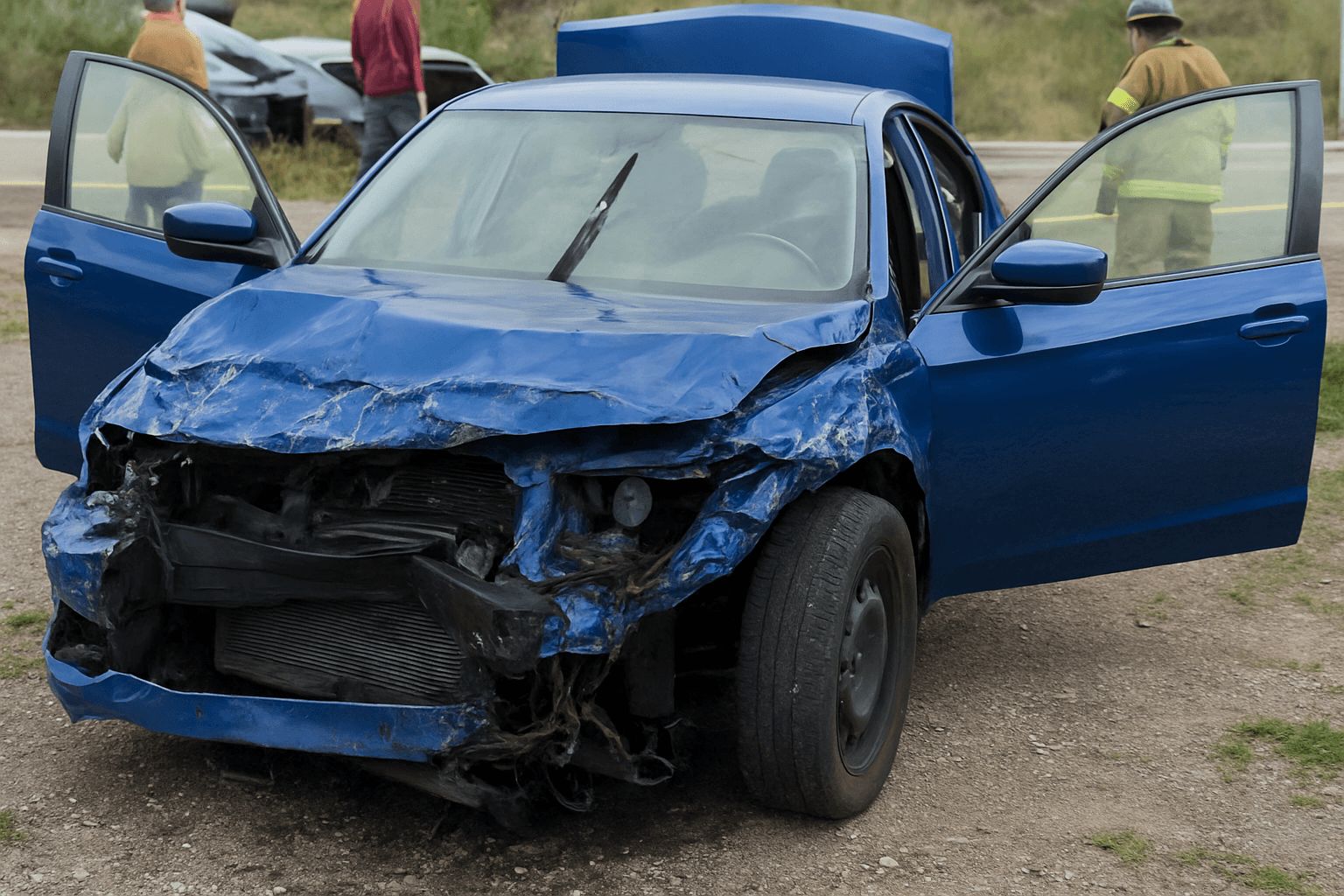
Colorado lenders demand continuous full coverage with SR-22 during your loan term. Missing even one day of coverage triggers repossession rights and lender-placed insurance at triple your normal cost.
Your Loan Contract Requires SR-22 Plus Collision and Comprehensive
Colorado lenders add SR-22 filing to your existing loan coverage requirements the moment your DUI conviction posts to your driving record. You already agreed to maintain full coverage when you signed your loan contract — that obligation continues through your entire filing period, typically 3 years from conviction date in Colorado.
Full coverage means liability at Colorado minimums (25/50/15), plus collision and comprehensive with the lender listed as loss payee. Your SR-22 certificate proves you're carrying liability coverage, but it doesn't prove collision or comprehensive. Lenders verify both through direct contact with your insurer or by demanding proof of coverage documents every 6-12 months.
Most mainstream carriers non-renew financed vehicles after DUI. If State Farm or Geico drops you at renewal, you have 30 days to secure replacement coverage before your lender receives a lapse notice from the Colorado DMV. The lender doesn't care why coverage lapsed — their contract allows immediate repossession and forced-place insurance the day after notification.
Lender-Placed Insurance Costs Triple What You'd Pay in the Non-Standard Market
Lenders purchase collateral protection insurance on your behalf if you cannot prove continuous coverage. This policy protects the lender's financial interest only — it covers the vehicle, not you as the driver, and it doesn't include your SR-22 filing. Your loan contract requires you to reimburse the premium, which appears as a line item on your monthly payment.
Lender-placed premiums run $2,400-$4,200 annually in Colorado for financed vehicles post-DUI, compared to $800-$1,400 monthly for a non-standard SR-22 policy you secure yourself. The lender's policy also doesn't satisfy your SR-22 requirement, which means you're paying for lender-placed coverage while still needing a separate liability policy with SR-22 just to drive legally.
You can remove lender-placed insurance by providing proof of a compliant policy, but the lender keeps premiums already charged. Some lenders prorate refunds; most don't. Call your lender's insurance compliance department within 48 hours of any coverage change to avoid automatic forced-place enrollment.
Find out exactly how long SR-22 is required in your state
Colorado Lenders Verify SR-22 Status Through DMV Electronic Monitoring
Colorado operates an electronic SR-22 monitoring system connecting insurers, the DMV, and registered lienholders. When your insurer files SR-22, the DMV notifies your lender that compliant coverage is active. If your policy cancels or lapses, the DMV sends an automatic termination notice to the lender within 24-48 hours.
Lenders don't wait for you to explain the lapse. Most loan contracts allow immediate vehicle repossession once the DMV termination notice posts, though enforcement varies by lender. Toyota Financial and GM Financial typically send a 10-day cure notice before repossession; Wells Dealer Services and Santander Consumer often move to repo within 72 hours of lapse notification.
You cannot hide a lapse from your lender in Colorado. The DMV SR-22 database updates in real time, and lenders check status monthly or quarterly even without a lapse notice. Pay your premium before the due date, not on it — processing delays can trigger a lapse notice even if payment clears the same day.
Non-Standard Carriers That Write Financed Vehicles With SR-22 in Colorado
Most non-standard carriers write SR-22 for financed vehicles in Colorado, but acceptance varies by conviction class and loan-to-value ratio. Bristol West, Dairyland, and The General accept first-offense standard DUI with LTV under 125%. GAINSCO and Direct Auto write first-offense aggravated DUI (BAC over 0.15) but require 20% or lower LTV in most Colorado counties.
Repeat-offense DUI with an active loan requires assigned risk in Colorado if your LTV exceeds 110%. The Colorado Automobile Insurance Plan places you with a participating carrier, but premiums run 40-60% higher than voluntary non-standard market rates. Expect $180-$240/month for state minimum liability SR-22; full coverage on a financed vehicle runs $320-$480/month.
Your lender receives loss payee status regardless of carrier. Non-standard insurers file lender information directly during policy setup, and the SR-22 certificate lists both you and the lienholder. Confirm your lender appears on your declarations page before your first payment posts — incorrect lender details trigger lapse notices even when coverage is active.
What Happens When You Pay Off Your Loan During Your SR-22 Period
Paying off your Colorado auto loan during your 3-year SR-22 period removes the lender's full coverage requirement, but your SR-22 liability obligation continues through the full filing period. You can drop collision and comprehensive the day your lien releases, reducing your premium by 50-65% in most cases.
Switch from a standard auto policy with SR-22 to a non-owner SR-22 policy if you sell your financed vehicle and don't replace it immediately. Non-owner SR-22 costs $35-$65/month in Colorado and satisfies your filing requirement without insuring a specific vehicle. This prevents the SR-22 lapse that resets your 3-year clock to zero.
Colorado counts your filing period from conviction date, not from the date you first file SR-22. If your DUI conviction posted June 1, 2023, your SR-22 requirement ends June 1, 2026 — even if you didn't file until August 2023 after your license suspension. Verify your exact end date with the Colorado DMV Driver Control Unit before canceling coverage.
How to Prevent Lapse Notices When Switching Carriers Mid-Loan
Colorado requires continuous SR-22 coverage with zero-day gaps when switching carriers. Your new insurer must file SR-22 before your old policy cancels, or the DMV sends a lapse notice to you, the state, and your lender. Most non-standard carriers in Colorado file SR-22 within 24 hours of binding coverage, but processing delays happen.
Bind your new policy with an effective date 3-5 days before your current policy expires. Confirm your new carrier filed SR-22 by calling the Colorado DMV SR-22 verification line at 303-205-5613. Once the new SR-22 posts to the state database, call your old carrier and request cancellation effective the day before your new policy starts. This creates a one-day overlap, which prevents lapse notices and costs $3-$8 in duplicate premium.
Your lender receives lapse notices even if you reinstate coverage the same day. A lapse notice stays on your loan file permanently and can trigger higher interest rates at refinance or prevent early payoff incentives. Pay the overlap premium — it's cheaper than explaining a lapse notation to your lender's underwriting team.