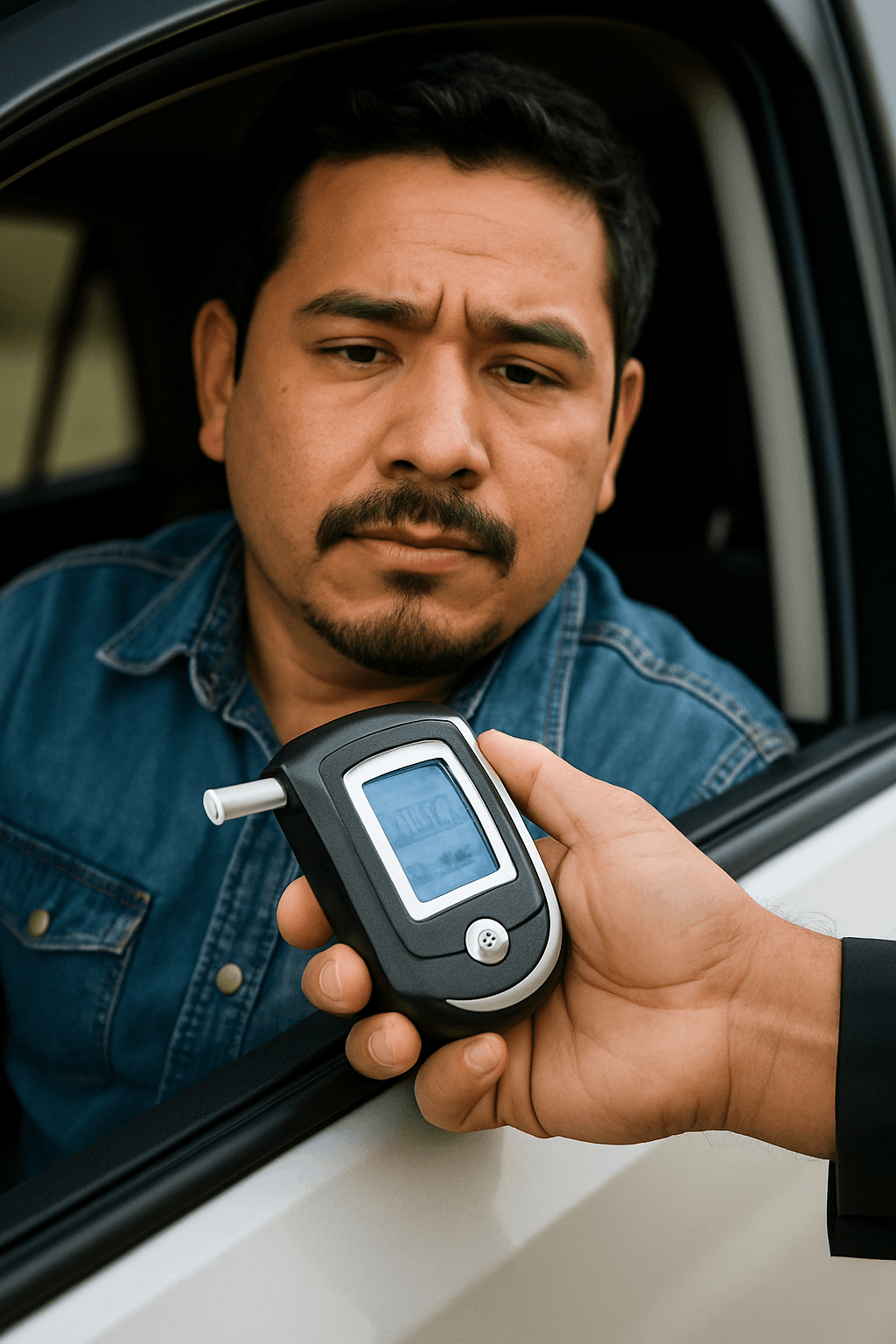
You have 10 days to request a DMV hearing or your license suspends automatically — separate from your court case and often before your arraignment. Here's what happens in the first week and what you control.
Day 1: Request Your DMV Administrative Per Se Hearing
You have 10 calendar days from your arrest date to request an Administrative Per Se (APS) hearing with the California DMV. Miss this window and your license suspends automatically 30 days after arrest, regardless of whether you've been convicted in court.
The APS hearing is separate from your criminal DUI case. It addresses only whether the arresting officer had cause to stop you, whether you were lawfully arrested, and whether your BAC was .08% or higher (or if you refused testing). Request the hearing by calling the DMV Driver Safety Office listed on your suspension order or by mailing Form DS 367. The hearing itself typically occurs 30–60 days after your request.
If you request the hearing within 10 days, the DMV will stay your suspension until the hearing concludes. This keeps you legal to drive during that window. If you don't request it, the 30-day suspension begins automatically and no stay is issued. Most first-offense DUI drivers who lose the APS hearing face a 4-month suspension; refusal cases face 12 months.
Days 2–3: Notify Your Current Auto Insurance Carrier
Your arrest does not trigger an automatic policy cancellation, but your carrier will find out. California law requires the DMV to report all DUI convictions and administrative suspensions to the state, and carriers monitor those filings. Waiting for them to discover it themselves almost always produces a worse outcome than disclosing it proactively.
Call your agent or carrier underwriting department and report the DUI arrest. Ask three specific questions: Will you cancel my policy mid-term? Will you non-renew at my next term? Do you file SR-22 for DUI policyholders? Most major carriers (State Farm, Allstate, Geico, Progressive) will maintain your existing policy through the current term but non-renew when it expires. A few will cancel immediately if your license suspends.
If your carrier states they will not renew you, ask when your non-renewal notice will arrive and when your coverage ends. You need that date to prevent a lapse. A lapse during your SR-22 filing period resets your filing clock to zero and adds another suspension.
Find out exactly how long SR-22 is required in your state
Days 4–5: Consult a DUI Attorney About Your APS Hearing and Court Case
California DUI cases run on two parallel tracks: the DMV administrative suspension and the criminal court case. An attorney can represent you at both. The APS hearing is often winnable even if your court case isn't, because the DMV hearing uses a lower burden of proof and narrows the scope to arrest procedure and BAC evidence.
An attorney can subpoena the arresting officer, challenge breathalyzer calibration records, and cross-examine on probable cause. If you win the APS hearing, your license does not suspend administratively — though a criminal conviction can still trigger a court-ordered suspension later. If you lose, the suspension begins immediately after the hearing concludes.
Attorneys typically charge $2,500–$7,500 for first-offense DUI representation in California, with higher fees in metro areas and for cases involving injury, high BAC (.15% or higher), or refusal. Most offer free consultations. Bring your suspension order, arrest report if available, and a timeline of what happened.
Day 6: Understand What SR-22 Is and When You'll Need to File It
SR-22 is not insurance. It is a DMV filing your insurance carrier submits on your behalf to prove you carry at least California's minimum liability coverage: $15,000 per person for injury, $30,000 per accident for injury, and $5,000 for property damage. California requires SR-22 for three years after a DUI conviction or after your license is reinstated following an administrative suspension.
The three-year SR-22 period starts on your reinstatement date, not your arrest date or conviction date. If your license suspends for four months and you reinstate on month five, your SR-22 clock starts that day — meaning you'll carry SR-22 until three years from reinstatement. This is the single most misunderstood timeline in California DUI-SR-22 compliance.
You cannot file SR-22 until the DMV requires it, which happens after your suspension period ends or after a court conviction if no administrative suspension occurred. You will receive a reinstatement requirements notice listing SR-22 as a condition. Do not pay for SR-22 filing before you receive that notice — you're filing too early and wasting money.
Day 7: Start Shopping for SR-22-Authorized Non-Standard Carriers
Once your current carrier confirms they will non-renew you, begin shopping for a replacement policy with an SR-22-authorized carrier. In California, most DUI drivers move into the non-standard insurance market. Carriers that consistently write DUI-SR-22 policies include The General, Dairyland, Bristol West, GAINSCO, Direct Auto, and Acceptance Insurance.
Expect rates between $180 and $320 per month for minimum liability coverage with SR-22 after a first-offense DUI in California. Rates vary by county, age, vehicle, and conviction class. Aggravated DUI (BAC .15% or higher, injury, minor in vehicle) pushes rates toward the higher end. Repeat offenses or refusal cases often exceed $400 per month.
Do not let your current policy lapse before your new SR-22 policy starts. A lapse of even one day during your SR-22 filing period triggers an automatic DMV suspension and restarts your SR-22 clock. Overlap coverage by at least 24 hours when switching carriers. Your new carrier will file SR-22 electronically with the DMV within 24–48 hours of binding your policy.
What Happens After the First Week
Your APS hearing will be scheduled 30–60 days out if you requested it within the 10-day window. Your arraignment for the criminal DUI case typically occurs 4–8 weeks after arrest. These are separate proceedings with separate consequences. Winning the APS hearing does not dismiss your criminal case; losing it does not guarantee a criminal conviction.
If you lose the APS hearing or do not request one, your suspension begins 30 days after arrest. You may be eligible for a restricted license during that suspension if you enroll in a DUI education program and your carrier files SR-22. First-offense suspensions in California last four months, but you can apply for a restricted license after 30 days of hard suspension if you meet program and filing requirements.
Once your suspension ends or you're convicted in court (whichever comes first), you'll receive a reinstatement requirements packet from the DMV. That packet will list SR-22, completion of a DUI program, reinstatement fees (typically $125), and proof of enrollment. Your SR-22 filing must remain active and continuous for three years from the date you satisfy those requirements and reinstate your license. Any lapse restarts the clock.