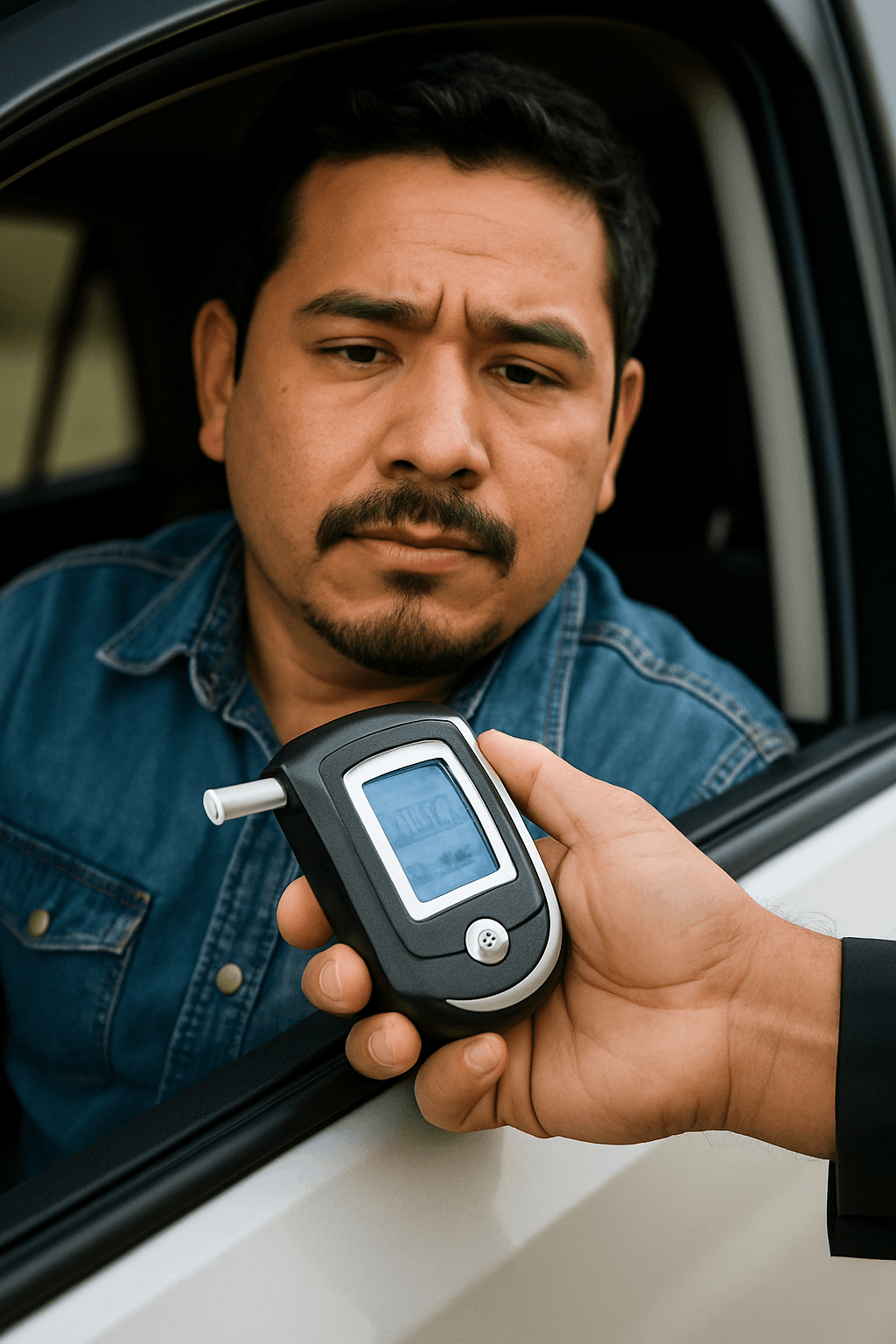
Arizona triggers two separate processes the moment you're arrested: criminal court and MVD administrative suspension. Missing early deadlines — especially the 15-day Admin Per Se hearing request — forecloses options you can't get back later.
Request Your Admin Per Se Hearing Within 15 Days of Arrest
Arizona Motor Vehicle Division (MVD) begins administrative license suspension (ALS) the moment you're arrested for DUI, separate from any criminal charge. You have exactly 15 calendar days from your arrest date to request an Admin Per Se hearing to challenge this suspension. Miss this deadline and the suspension becomes automatic — no hearing, no challenge, no extension.
The Admin Per Se suspension is not your criminal case. It's a civil administrative action triggered by breath or blood test results at or above 0.08% BAC, or by refusal to submit to testing under Arizona's implied consent law. If you refuse testing, the suspension period is 12 months for a first offense. If you submit and register 0.08% or higher, it's 90 days for a first offense, 12 months for a second offense within 84 months.
Request the hearing in writing to MVD within the 15-day window. The hearing examines only whether the officer had reasonable grounds for the stop, whether you were lawfully arrested, and whether the test was properly administered. It does not address guilt or innocence in the criminal case. Requesting the hearing also stays the suspension until the hearing officer issues a decision, which buys you time to arrange SR-22 filing and explore restricted license options if the suspension is upheld.
Secure Your Vehicle and Retrieve Personal Property Immediately
Arizona law enforcement impounds your vehicle at the DUI arrest scene in most cases. You typically have 10 business days to retrieve it before daily storage fees compound and the impound lot initiates a lien sale process. Contact the impound facility listed on your impound notice within 24–48 hours of release.
You'll need the registered owner's ID, proof of vehicle ownership, proof of current insurance, and impound release authorization from the arresting agency. If the vehicle is registered in someone else's name, that person must be present or provide notarized authorization. Impound fees in Arizona range from $150–$400 for the tow plus $25–$75 per day storage. Some facilities accept credit cards; many require cash or cashier's check.
If you cannot afford immediate retrieval, prioritize removing personal items of value during the grace period most lots allow for personal property access. Wallets, medications, work tools, and electronics left in impounded vehicles are not the facility's liability after the lien sale cutoff.
Find out exactly how long SR-22 is required in your state
Arrange SR-22 Filing Before Your Suspension Start Date
Arizona requires SR-22 certificate of financial responsibility filing for all DUI convictions, all Admin Per Se suspensions, and all license reinstatements following DUI-related actions. The SR-22 filing period is 3 years from the conviction date or reinstatement date, whichever is later. If your Admin Per Se suspension is upheld and you apply for a restricted license, you must have SR-22 on file before MVD will issue the restriction.
Most major carriers — State Farm, Geico, Allstate, Progressive — will file SR-22 for existing customers but typically non-renew the policy at the next term. If you need new coverage, expect to shop the non-standard market: Direct Auto, Dairyland, Bristol West, GAINSCO, The General. Arizona SR-22 filing fees range from $15–$50 depending on carrier. Your insurance premium will increase 70–150% after a DUI, with higher increases for drivers under 25 or those with prior violations.
Do not wait for the criminal case to resolve. Arizona MVD requires proof of SR-22 before reinstating any suspended license or issuing a restricted license, and most carriers need 24–72 hours to process and electronically file the certificate with MVD. Arrange coverage and filing as soon as you know the Admin Per Se suspension will proceed or immediately after conviction if you waive the hearing.
Consult a DUI Attorney Within 72 Hours of Arrest
Arizona DUI law distinguishes between standard DUI (0.08–0.149% BAC), Extreme DUI (0.15–0.199% BAC), and Super Extreme DUI (0.20% or higher), each carrying different mandatory jail minimums, fines, and ignition interlock device (IID) installation periods. An attorney evaluates your arrest report, breathalyzer calibration records, and blood draw chain-of-custody to identify procedural defects that may reduce or dismiss charges.
First consultation appointments with DUI-focused attorneys are typically free or flat-fee ($100–$200). Retain an attorney before your arraignment, which usually occurs 5–10 business days after arrest for out-of-custody defendants. Arizona does not allow continuances of arraignment without counsel of record in most jurisdictions, so waiting to hire representation delays your ability to negotiate plea terms or challenge evidence.
Attorneys can also coordinate Admin Per Se hearing representation. While you can request the hearing yourself, the hearing officer applies strict evidentiary rules, and most unrepresented drivers lose. Attorney fees for Admin Per Se hearing representation range from $500–$1,500 separate from criminal defense fees, but prevailing at the hearing avoids the automatic suspension and preserves your full driving privileges during the criminal case.
Understand the Ignition Interlock Device Requirement Timeline
Arizona mandates ignition interlock device (IID) installation for all DUI convictions, even first-offense standard DUI. The required installation period is 12 months for a first-offense standard DUI, 18 months for Extreme DUI, 24 months for Super Extreme DUI, and 24 months minimum for any second or subsequent DUI within 84 months. You cannot drive any vehicle without an installed and functioning IID during this period — operating a non-IID vehicle is a separate class 1 misdemeanor.
IID installation costs $75–$150, with monthly monitoring and calibration fees of $60–$100. Arizona-certified IID providers include Intoxalock, LifeSafer, Smart Start, and Guardian Interlock. You must use a state-certified provider or the device does not satisfy the court-ordered requirement. Schedule installation within 10 days of sentencing or restricted license issuance to avoid additional suspension for non-compliance.
The IID requirement runs concurrently with your SR-22 filing period but may extend beyond it depending on conviction class. Track both deadlines separately. Removing the IID before the court-ordered period expires violates probation terms and triggers license re-suspension and additional criminal penalties.
Notify Your Employer Within 5 Business Days If You Drive for Work
Arizona does not require you to report a DUI arrest or conviction to your employer unless your job involves commercial driving or you operate a company vehicle as a primary job duty. If you hold a Commercial Driver's License (CDL), federal law requires you to notify your employer within 30 days of any DUI conviction, regardless of whether the offense occurred in a personal or commercial vehicle. Failure to notify is a federal violation that can result in CDL disqualification separate from state penalties.
If your job requires regular driving but you do not hold a CDL, check your employment agreement or company policy manual for self-reporting requirements. Many employers with company vehicle fleets require immediate reporting of any arrest that could affect insurability. Non-disclosure discovered later — often when your carrier non-renews the employer's fleet policy — is typically grounds for termination.
If you need to drive for work during a suspension period, Arizona offers a special ignition interlock restricted license that permits driving to and from work, during work hours, for medical appointments, DUI classes, and court-ordered obligations. Apply through MVD after completing alcohol screening and installing the IID. The restricted license does not permit personal or recreational driving.
Complete Alcohol Screening and Enroll in DUI Classes Before Sentencing
Arizona courts require completion of an MVD-approved alcohol and drug screening within 10 days of arraignment or first appearance for all DUI cases. The screening determines your assignment to one of three education or treatment tracks: 16-hour DUI education, 36-hour DUI education with counseling component, or inpatient/intensive outpatient treatment. Completing screening early and voluntarily enrolling in classes before sentencing demonstrates accountability and often results in more favorable plea offers.
Screening costs $30–$75 and is conducted by MVD-licensed providers. Bring your court case number and arrest report to the screening appointment. The screening includes a written questionnaire and interview covering drinking history, prior arrests, and substance use patterns. Results are reported directly to the court and MVD. Do not minimize or misrepresent your responses — Arizona uses standardized assessment tools that flag inconsistent answers, and dishonesty during screening can escalate your assigned education tier.
DUI education costs range from $300 for 16-hour classes to $1,500+ for 36-hour programs. Classes meet weekly over 8–16 weeks depending on program structure. Completion certificates are required before MVD will reinstate your license or issue a restricted license, so front-loading this requirement keeps you on the fastest reinstatement timeline possible.