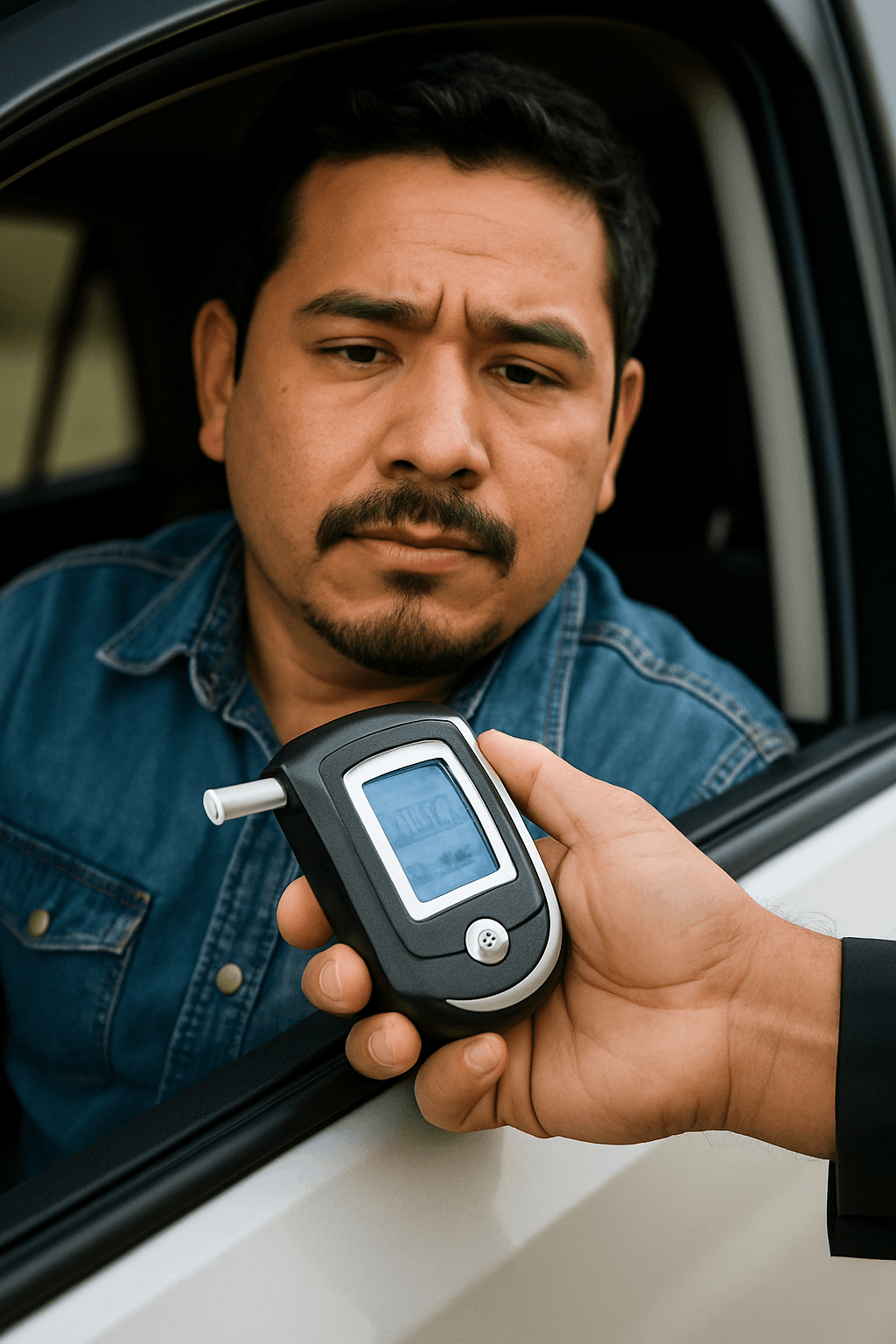
New Mexico requires ignition interlock installation before license reinstatement, but SR-22 filing can happen before or after IID setup. Most drivers filing early avoid policy gaps and compliance delays.
New Mexico Requires IID Before Reinstatement, Not Before SR-22 Filing
New Mexico's Motor Vehicle Division requires ignition interlock device installation before they will reinstate your license after a DUI conviction, but SR-22 filing has no mandatory sequencing with IID setup. You can file SR-22 before IID installation, after installation, or simultaneously — the state does not prohibit any order.
Most carriers will issue an SR-22 policy whether or not you have installed IID yet, because SR-22 is proof of insurance coverage, not proof of IID compliance. The IID requirement is separate and enforced at reinstatement, not at the insurance step. Carriers verify your license status and DUI conviction, not your IID installation timeline.
Filing SR-22 before IID installation gives you insurance coverage during the suspension period and starts your 3-year SR-22 clock immediately. Filing after IID installation delays your SR-22 start date and creates a compliance gap if your IID approval takes longer than expected. The strategic question is whether early filing protects you or whether waiting for IID saves you money on bundled discounts.
Why Filing SR-22 Before IID Installation Protects Most Drivers
Filing SR-22 before IID installation starts your 3-year SR-22 requirement clock on the earliest possible date, which means your SR-22 obligation ends sooner. New Mexico calculates the 3-year SR-22 period from the date your carrier first files SR-22 with the MVD, not from your reinstatement date or IID installation date. If you delay SR-22 filing by 90 days while arranging IID installation, your SR-22 requirement extends 90 days further into the future.
Early SR-22 filing also protects you from policy lapse consequences. If you file SR-22 today and your IID installation is delayed by court scheduling, equipment availability, or installer wait times, your insurance remains active and your SR-22 filing is unaffected. If you wait to file SR-22 until after IID installation and your installation is delayed by 60 days, you remain uninsured and non-compliant for 60 additional days.
Carriers in New Mexico's non-standard market — Bristol West, Dairyland, GAINSCO, Direct Auto — will issue SR-22 policies to suspended drivers before IID installation. They verify your DUI conviction and SR-22 requirement through MVD records, not through IID proof. Your policy becomes active the day you pay your first premium, and your carrier files SR-22 with the state within 24 to 48 hours.
Find out exactly how long SR-22 is required in your state
When Filing SR-22 After IID Installation Makes Sense
Filing SR-22 after IID installation can reduce your monthly premium if your carrier offers proof-of-IID discounts that apply retroactively to policy inception. Some non-standard carriers in New Mexico reduce rates by 8% to 15% for drivers who provide IID installation proof at the time of SR-22 policy purchase, because IID compliance lowers the carrier's DUI recidivism risk exposure.
This strategy only works if your IID installation happens within 30 days of your reinstatement eligibility date. If IID installation takes 60 to 90 days due to court scheduling or installer availability, waiting to file SR-22 extends your SR-22 obligation period by the same 60 to 90 days and increases total program cost even with the discount applied.
Carriers do not universally offer IID discounts in New Mexico, and those that do typically require proof of installation at policy inception — adding IID after SR-22 filing does not retroactively reduce your premium. Ask your carrier whether they offer an IID discount, whether it applies if IID is installed after SR-22 filing, and whether the discount offsets the cost of delaying your SR-22 start date by the installation wait period.
How New Mexico's 3-Year SR-22 Clock Works With IID Timing
New Mexico requires SR-22 filing for 3 years after a DUI conviction, measured from the date your carrier first files SR-22 with the Motor Vehicle Division. Your IID installation date, reinstatement date, and conviction date do not reset or extend your SR-22 clock — only the SR-22 filing date matters.
If you file SR-22 on January 1 and install IID on March 1, your SR-22 requirement ends January 1 three years later. If you install IID on March 1 and file SR-22 on May 1, your SR-22 requirement ends May 1 three years later — you have extended your SR-22 obligation by 4 months. Most drivers underestimate this timeline extension and assume SR-22 starts when their license is reinstated, not when their carrier files.
New Mexico does not require IID and SR-22 to end on the same date. IID duration is set by your sentencing order — typically 1 year for first-offense standard DUI, 2 years for aggravated DUI or refusal, and 3 years for repeat-offense DUI. SR-22 duration is always 3 years from first filing. If your IID requirement is shorter than 3 years, your SR-22 continues after IID removal. If your IID requirement is longer than 3 years (rare but possible for felony DUI), your IID continues after SR-22 ends.
What Happens If You File SR-22 Then Delay IID Installation
Filing SR-22 before IID installation does not create a compliance violation in New Mexico. The state treats SR-22 and IID as independent compliance obligations — SR-22 satisfies your proof-of-insurance requirement, and IID satisfies your court-ordered restricted driving requirement. You can hold an active SR-22 policy during your entire suspension period without penalty.
Your carrier does not cancel your SR-22 policy if you delay IID installation, because carriers are not responsible for monitoring your IID compliance. The Motor Vehicle Division monitors IID compliance separately and will not reinstate your license until you provide proof of IID installation, but your SR-22 filing remains valid and your 3-year SR-22 clock continues running.
Delaying IID installation after SR-22 filing extends your suspension period but does not extend your SR-22 requirement period. If you file SR-22 in January and do not install IID until June, you remain suspended until June but your SR-22 requirement still ends 3 years from January. This strategy makes sense only if you need insurance coverage during suspension for a vehicle you do not drive, such as maintaining coverage on a household vehicle titled in your name.
Carrier Acceptance and Rate Impact for Pre-IID SR-22 Filing
Non-standard carriers in New Mexico — Bristol West, Dairyland, GAINSCO, Direct Auto, Safe Auto — accept SR-22 applications before IID installation and do not require proof of IID to issue a policy. Mainstream carriers that file SR-22 for existing customers (State Farm, Geico, Allstate) typically non-renew at policy term after a DUI and refer you to the non-standard market for renewal.
Monthly SR-22 premiums in New Mexico after a DUI range from $95 to $180 for state minimum liability coverage, with most drivers paying $120 to $150. Rates vary by conviction class — first-offense standard DUI falls at the lower end, aggravated DUI or refusal falls at the higher end, and repeat-offense DUI can exceed $200 monthly. These estimates reflect SR-22 filing without IID discount applied.
Carriers that offer IID discounts reduce premiums by approximately $10 to $20 monthly when you provide proof of installation at policy inception. Over a 3-year SR-22 period, this discount saves $360 to $720 total. If waiting for IID installation delays your SR-22 filing by 90 days, you extend your SR-22 obligation by 90 days, adding approximately $300 to $450 in premium cost. The IID discount offsets the delay cost only if installation happens within 30 to 45 days of SR-22 filing.
The Correct Filing Sequence for Most New Mexico DUI Drivers
File SR-22 as soon as your carrier quotes and binds your policy, regardless of IID installation status. This starts your 3-year SR-22 clock immediately, protects you from policy gaps if IID installation is delayed, and gives you continuous coverage during suspension. Schedule IID installation within 30 days of SR-22 filing to minimize the gap between insurance activation and reinstatement eligibility.
Once IID is installed, request a compliance letter from your IID provider and submit it to the Motor Vehicle Division along with your reinstatement fee (currently $100 for first-offense DUI in New Mexico) and proof of SR-22 filing. The MVD reinstates your license once all compliance documents are received, typically within 5 to 10 business days.
If your carrier offers an IID discount and your IID installation will happen within 30 days of SR-22 policy inception, ask whether the discount applies retroactively to your effective date. Some carriers apply the discount from policy start if you provide IID proof within the first policy month. If your carrier does not offer retroactive discounts, file SR-22 immediately and accept the non-discounted rate — the cost of delaying your SR-22 start date exceeds the discount value in nearly all cases.