A second DUI conviction in Washington DC within five years triggers mandatory IID installation, a 1-year revocation minimum, and SR-22 filing that runs 3 years from reinstatement—not conviction. Here's what happens next and how to get coverage.
What a Second DUI in DC Within 5 Years Actually Triggers
A second DUI conviction in Washington DC within five years of your first is charged as a misdemeanor with mandatory minimums: 10 days to 1 year in jail, $2,500 to $5,000 in fines, and a minimum 1-year license revocation. DC law also requires ignition interlock device (IID) installation for the entire restricted license period and 6 months after full reinstatement.
The DC DMV treats second-offense DUI as a high-risk event requiring SR-22 filing. Your SR-22 period is 3 years, but it starts on your reinstatement date, not your conviction date. If your license is revoked for 1 year and you wait 3 months before starting the reinstatement process, your SR-22 filing requirement effectively runs 4 years and 3 months from conviction.
Most DC drivers assume SR-22 and revocation run concurrently. They don't. Your revocation is a loss of driving privilege. Your SR-22 is proof-of-insurance compliance that begins after you regain that privilege. Understanding this timing gap changes how you budget and plan your reinstatement timeline.
License Revocation Timeline and Reinstatement Requirements
DC suspends your license immediately upon second DUI arrest through an administrative action separate from your criminal case. The administrative revocation runs a minimum of 1 year from the effective date, which is typically 15 days after your arrest unless you request a hearing within 10 days.
Reinstatement after a second-offense DUI requires completing all court-ordered sentencing (jail time, fines, probation), finishing a court-approved alcohol treatment program, installing an IID in any vehicle you operate, paying a $98 reinstatement fee, and filing SR-22 proof of insurance with the DC DMV. You cannot skip any step—the DMV runs a compliance checklist and will deny reinstatement if any item is incomplete.
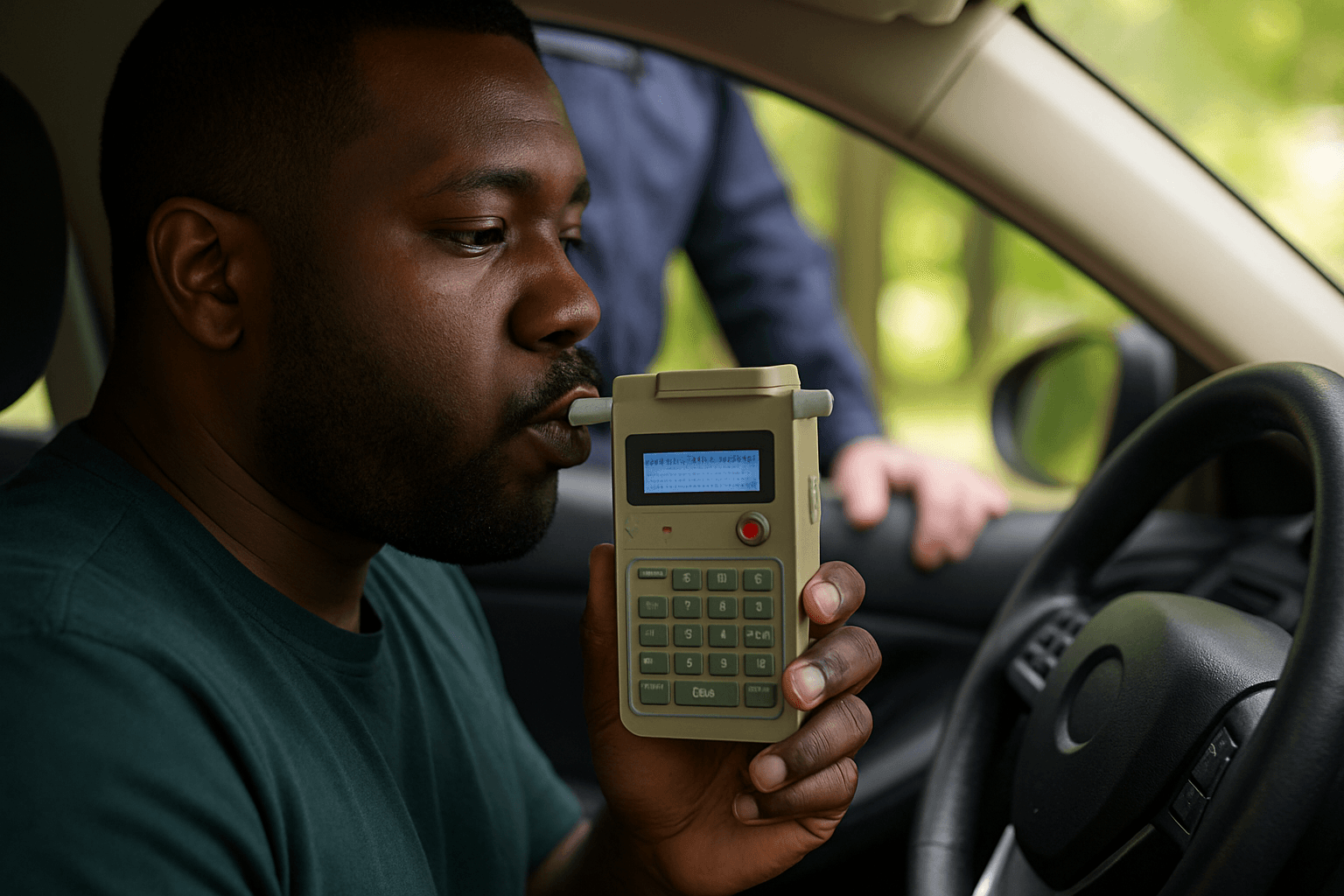
The IID requirement runs through your entire restricted license period and for 6 months after full license reinstatement. Most DC drivers are on IID for 18 to 24 months total when accounting for revocation, restricted license, and post-reinstatement monitoring. Budget $75 to $120 per month for IID lease, calibration, and monitoring fees on top of your SR-22 insurance cost.
Find out exactly how long SR-22 is required in your state
SR-22 Filing Cost and Carrier Availability in DC After a Second DUI
SR-22 filing itself costs $25 to $50 as a one-time fee, but your insurance premium is where the real cost hits. A second DUI within five years typically increases your rate by 90% to 150% compared to your pre-conviction premium. DC drivers with two DUIs on record pay $220 to $380 per month for minimum liability coverage with SR-22 filing, depending on age, vehicle, and neighborhood.
Most major carriers—State Farm, Geico, Allstate, Progressive—will file SR-22 for existing customers but non-renew your policy at the end of your current term. A second DUI moves you into the non-standard insurance market almost immediately. Carriers writing second-offense DUI policies in DC include Direct Auto, The General, Acceptance, and GAINSCO, though availability varies by ZIP code and underwriting appetite.
You need an SR-22 policy active on your reinstatement date. Most non-standard carriers require 30 days to process an SR-22 application and file proof with the DMV, so start shopping 45 to 60 days before your revocation period ends. Missing your reinstatement window because your SR-22 wasn't filed on time extends your revocation and resets the clock on associated fees.
How DC's 3-Year SR-22 Requirement Actually Works
DC requires SR-22 filing for 3 years after a second DUI conviction, but the clock starts on your license reinstatement date, not your conviction or arrest date. If you were convicted on January 1, 2024, revoked for 1 year, and reinstated on January 15, 2025, your SR-22 requirement runs until January 15, 2028.
Your carrier files SR-22 electronically with the DC DMV when you purchase a policy. The DMV receives confirmation within 24 to 48 hours in most cases. Your SR-22 stays active as long as your policy stays active and your premiums are paid. If you cancel your policy, switch carriers without overlapping coverage, or let your policy lapse even one day, your carrier is required to file an SR-26 cancellation notice with the DMV.
An SR-26 filing suspends your license immediately and resets your 3-year SR-22 clock to zero in most cases. DC does not prorate your SR-22 requirement—if you lapse after 2 years and 11 months of compliance, you owe another full 3 years from the date you refile. Set up autopay on your SR-22 policy and confirm with your carrier that lapses trigger automatic notification before they file SR-26.
IID and SR-22 Overlap: Budgeting the Full Compliance Cost
DC mandates IID installation for second-offense DUI, and the device stays in your vehicle through your restricted license period and 6 months beyond full reinstatement. Your SR-22 insurance requirement runs 3 years from reinstatement. For most drivers, this means 18 to 30 months where you're paying for both IID monitoring and SR-22 insurance simultaneously.
IID costs run $75 to $120 per month including device lease, monthly calibration, and data reporting fees. SR-22 insurance for a second DUI in DC runs $220 to $380 per month for minimum coverage. Combined, you're budgeting $300 to $500 per month in compliance costs alone, not counting court fines, reinstatement fees, or alcohol treatment program costs.
Some non-standard carriers offer payment plans or reduced down payments for high-risk drivers, but expect to pay first month premium plus SR-22 filing fee upfront. If your policy lapses mid-IID period, you lose both your SR-22 compliance and potentially your restricted license, which means restarting the IID monitoring period from zero. Track both timelines separately and confirm your SR-22 end date in writing from your carrier and the DMV.
What Happens If You Move Out of DC During Your SR-22 Period
If you move to another state while your DC SR-22 requirement is active, your obligation follows you. You'll need to notify the DC DMV of your address change, surrender your DC license, obtain a license in your new state, and refile SR-22 in that state with proof sent back to DC. Not all states use SR-22—Florida and Virginia use FR-44 instead, which has higher liability limits and is not interchangeable.
Most states accept out-of-state SR-22 filings for compliance purposes, but DC requires confirmation that your new state has equivalent proof-of-insurance monitoring. If your new state does not track SR-22 or equivalent filings, DC may require you to maintain a non-owner SR-22 policy in DC while holding your new state's license. Confirm the transfer process with both DMVs before canceling your DC policy.
Your 3-year SR-22 clock does not reset when you move—it continues from your original DC reinstatement date. If you've completed 18 months of SR-22 in DC and move to Maryland, you owe 18 more months of filing in Maryland with proof sent to DC. Missing this coordination can result in license suspension in both states and extend your SR-22 requirement by the length of any lapse.
Rate Reduction Strategy: When Your SR-22 Premium Drops
Your SR-22 insurance rate after a second DUI peaks in the first year and begins declining after 3 years if you maintain a clean record. DC insurers re-rate high-risk drivers annually, and a second DUI typically moves off your primary rating tier 5 years after conviction. Your SR-22 filing requirement ends after 3 years, but the conviction itself remains on your driving record for 15 years in DC.
Once your SR-22 period ends, you're eligible to move back into standard insurance markets, though your rate will still reflect the conviction history. Expect your premium to drop 20% to 30% once SR-22 filing is no longer required, and another 15% to 25% at the 5-year conviction mark. Drivers who complete their SR-22 period without additional violations or lapses see the steepest rate improvements.
Shop your policy every 6 months during your SR-22 period. Non-standard carrier pricing varies widely, and loyalty discounts don't exist in the high-risk market. Some drivers save $40 to $80 per month by switching carriers mid-SR-22 period, as long as the new policy starts before the old one cancels to avoid an SR-26 lapse filing.