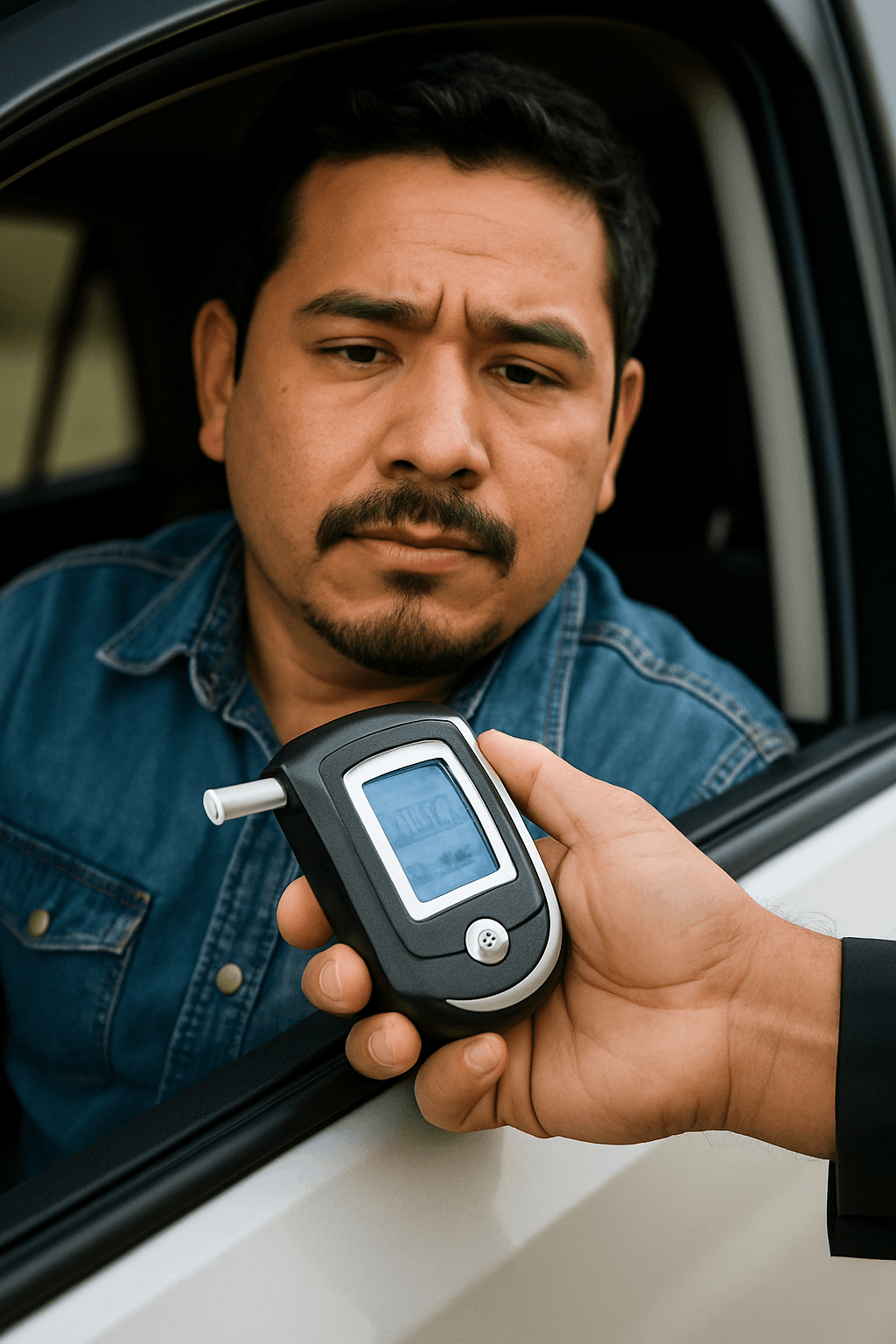
Arizona's 84-month lookback period counts from arrest date, not conviction. If your first DUI arrest was over 7 years ago, your new charge may qualify for first-offense treatment — avoiding the 12-month ignition interlock and cutting your SR-22 filing period in half.
Arizona's 84-Month Lookback Period Starts at Arrest, Not Conviction
Arizona counts DUI convictions backward from your arrest date, not your conviction date or your SR-22 filing date. If your first DUI arrest occurred more than 84 months before your second arrest, Arizona statute treats the new charge as a first offense — regardless of how long your first case took to resolve or when you completed your SR-22 filing.
This timing gap matters because first-offense and repeat-offense DUIs carry different SR-22 filing periods and different ignition interlock requirements. A first-offense standard DUI in Arizona requires 12 months of SR-22 filing. A second-offense DUI within 84 months requires 12 months of SR-22 plus a mandatory 12-month ignition interlock device on all vehicles you own or operate.
Most drivers miscalculate this window because they count from conviction date or from the date their SR-22 filing ended. Arizona Revised Statutes 28-1383 and 28-1387 explicitly tie the lookback period to arrest dates, not conviction dates. If your first DUI arrest was in January 2014 and your second arrest is in February 2024, you fall outside the 84-month window even though your first conviction may have occurred in mid-2015.
What First-Offense Treatment Means for SR-22 and Insurance Costs
First-offense treatment avoids the 12-month ignition interlock requirement, which saves you $1,200–$1,800 in device installation, monthly monitoring fees, and calibration visits. It also reduces your SR-22 filing period from potentially 24 months down to 12 months, cutting your non-standard insurance exposure in half.
Arizona requires SR-22 filing for all DUI convictions, but the filing period length depends on conviction class. A first-offense standard DUI carries a 12-month SR-22 requirement measured from the date the Arizona MVD reinstates your license. A second-offense DUI within the 84-month window typically extends SR-22 filing to 24 months and adds ignition interlock compliance as a condition of reinstatement.
Your insurance rate will still increase after a DUI conviction — typically 80–140% over your pre-conviction rate — but avoiding repeat-offense classification means you re-enter the standard market sooner. Most mainstream carriers non-renew DUI policies at term, pushing you into the non-standard market with carriers like Bristol West, Dairyland, or GAINSCO for the duration of your SR-22 filing period.
Find out exactly how long SR-22 is required in your state
How Arizona Courts and the MVD Apply the Lookback Rule
Arizona's lookback period applies at two decision points: the criminal court during sentencing and the Arizona MVD during license reinstatement. The court uses the 84-month rule to determine criminal penalties, jail time, fines, and ignition interlock orders. The MVD uses the same rule to determine SR-22 filing period length and whether you qualify for a restricted license during suspension.
Both agencies count backward from your arrest date, but they do not always communicate conviction class accurately to insurers. Your SR-22 filing form reflects your conviction, but it does not distinguish between first-offense and repeat-offense on the form itself. Carriers determine your risk tier based on the conviction date, BAC if disclosed, and whether ignition interlock was ordered.
If your second arrest falls outside the 84-month window, confirm with your attorney that the court classified it as a first offense before completing your SR-22 filing. Misclassification happens when courts rely on incomplete records or when drivers have out-of-state priors that Arizona did not initially count.
Out-of-State Priors and How Arizona Counts Them
Arizona counts out-of-state DUI convictions within the 84-month lookback period if the offense would have been a DUI under Arizona law. This means a DWI in Texas, an OWI in Michigan, or a DUI in California all count as priors if the arrest date falls within 84 months of your Arizona arrest.
The Arizona MVD receives conviction records through the Driver License Compact and the National Driver Register, but record sharing is inconsistent. Some states report convictions immediately; others delay reporting for months or do not report at all. If your first DUI occurred in a state with delayed reporting and Arizona did not count it during your second case, the MVD may later reclassify your conviction when the out-of-state record arrives — triggering a longer SR-22 filing period retroactively.
If you have an out-of-state DUI from more than 84 months ago, disclose it to your attorney but confirm that Arizona applies the lookback rule from the out-of-state arrest date, not the date Arizona received the record. Most defense attorneys request a full driving abstract from your prior state to establish the arrest timeline before plea negotiations.
SR-22 Filing Timeline and Carrier Availability After a Second DUI
You must file SR-22 with the Arizona MVD before your license reinstatement date. Arizona suspends your license for 90 days after a first-offense DUI and 12 months after a second-offense DUI within the lookback period. The SR-22 filing period begins on the first day your license is eligible for reinstatement, not the day you file.
Most mainstream carriers — State Farm, Geico, Allstate, Progressive — will file SR-22 for existing customers but typically non-renew your policy at the end of the current term. New policies after a DUI generally require the non-standard market. Arizona non-standard carriers include Bristol West, Dairyland, GAINSCO, The General, Safe Auto, and Acceptance. Availability varies by ZIP code, conviction class, and whether ignition interlock is required.
SR-22 filing itself costs $25–$50 as a one-time MVD fee, but your insurance premium will increase 80–140% for the duration of your filing period. Shop SR-22 quotes 30–45 days before your reinstatement date to avoid lapses. A single-day lapse in SR-22 coverage resets your filing period to zero in Arizona and requires you to restart the clock from the lapse date.
What Happens If Your First DUI Was Dismissed or Reduced
Arizona's lookback rule applies only to convictions, not arrests. If your first DUI was dismissed, reduced to reckless driving, or otherwise resolved without a DUI conviction, it does not count toward the 84-month lookback period. Arizona courts and the MVD count only convictions for DUI, extreme DUI, aggravated DUI, or substantially similar out-of-state offenses.
Reckless driving convictions do not count as DUI priors in Arizona, even if the original charge was DUI. If your first case was reduced during plea negotiations, confirm with your attorney that the final conviction was not DUI before assuming you qualify for first-offense treatment on your second charge.
Some drivers discover this distinction only after receiving their MVD reinstatement letter, which lists prior convictions used to calculate suspension length and SR-22 filing period. If your first case does not appear on that list, your new charge is legally your first DUI conviction regardless of how many DUI arrests appear on your record.