The Coverage Decision After Your Illinois DUI
You just got the SR-22 requirement from the Illinois Secretary of State. Your current carrier either non-renewed you or quoted a rate that made you start shopping. Every non-standard carrier you call asks the same question: liability-only or full coverage? The SR-22 filing itself does not answer this. The filing is a certificate proving you carry at least Illinois minimum liability limits. What you buy beyond that floor is your call.
The confusion comes from conflating the SR-22 with the policy. The SR-22 is a form your carrier files with the state certifying you hold continuous liability coverage. The policy is what you actually buy: liability-only, or liability plus collision and comprehensive. Illinois law requires the SR-22 filing for 3 years after a DUI conviction. The law does not require full coverage. Your lender might.
Find out exactly how long SR-22 is required in your state
Illinois SR-22 Filing Period
3 years
Illinois requires SR-22 filing for 3 years after a DUI conviction, measured from the conviction date per 625 ILCS 5/7-702. The filing period does not shorten if you reinstate early, and a lapse restarts the clock from zero.
625 ILCS 5/7-702
What Liability-Only Actually Covers
Liability-only means you carry bodily injury and property damage coverage that pays the other party when you cause an accident. Illinois minimum liability limits are $25,000 per person for bodily injury, $50,000 per accident, and $20,000 for property damage. These are the floor. Most non-standard carriers writing post-DUI SR-22 policies will quote you these minimums by default because they produce the lowest premium.
Liability-only does not cover your own vehicle. If you total your car in a single-vehicle accident, liability coverage pays nothing toward your vehicle repair or replacement. If someone hits you and they carry no insurance or insufficient limits, your liability-only policy does not cover your vehicle damage unless you add uninsured motorist property damage coverage. Illinois requires uninsured motorist bodily injury coverage but not property damage coverage.
The SR-22 filing works the same whether you buy liability-only or full coverage. The state sees only the certificate confirming you hold continuous liability at or above minimums. The carrier files the SR-22 form electronically to the Illinois Secretary of State within 24 hours of policy binding. The filing fee ranges from $25 to $50 depending on carrier.
Your lender can legally require full coverage even when the state does not. Most auto loan and lease agreements include a continuous full-coverage clause that survives a DUI conviction.
When Full Coverage Makes Financial Sense
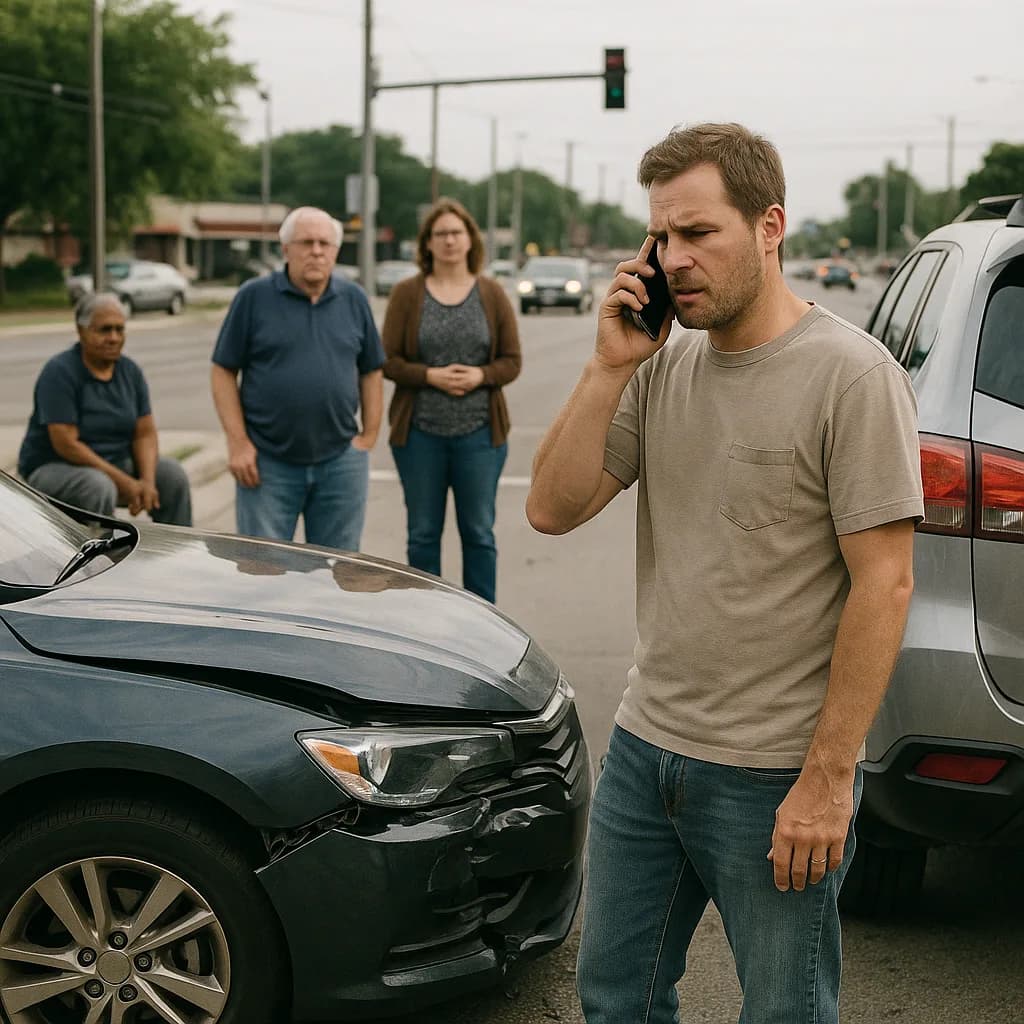
If you own your vehicle outright and its current market value sits below $4,000, liability-only usually makes more sense. Collision and comprehensive premiums in the non-standard market after a DUI often run $80 to $150 per month on top of your liability base. A $3,000 vehicle totaled in an accident nets you $3,000 minus your deductible, often $500 to $1,000. If you pay $100 per month for full coverage and total the car in month six, you spent $600 in premiums to recover $2,000 to $2,500. The math tightens fast as vehicle value drops.
If you financed or leased your vehicle, your lender almost certainly requires collision and comprehensive coverage with a maximum deductible, usually $500 or $1,000. The loan agreement includes a continuous insurance clause. A DUI conviction does not void that clause. If you drop to liability-only, the lender will force-place coverage at a rate two to three times higher than a non-standard market quote and add it to your loan balance. You cannot avoid full coverage while a lien sits on the title.
Related Articles






The Non-Standard Market Premium Reality
Post-DUI drivers move into the non-standard insurance market because most mainstream carriers non-renew at policy term after a DUI conviction. State Farm, Geico, Allstate, and Progressive will file SR-22 for existing customers but typically decline to renew when the term ends. The non-standard market includes carriers like Bristol West, Dairyland, The General, GAINSCO, Acceptance, and Kemper. These carriers specialize in high-risk drivers and price accordingly.
Liability-only SR-22 policies in Illinois typically run $277 to $337 per month in the non-standard market after a DUI. Full coverage with collision and comprehensive adds another 40 to 70 percent to that base, pushing monthly premiums into the $400 to $550 range depending on vehicle value, deductible, and conviction class. First-offense standard DUI convictions price lower than aggravated DUI or repeat-offense convictions. Carriers segment risk tightly.
The premium gap between liability-only and full coverage narrows as your SR-22 filing period progresses. Non-standard carriers compete hardest for stable filers in year two and three. If you start with liability-only and your vehicle value justifies adding coverage later, you can add collision and comprehensive mid-term or at renewal. The SR-22 filing transfers automatically; the carrier just amends the certificate on file with the state.
Illinois SR-22 Carrier Count
25
Twenty-five carriers write SR-22 filings in Illinois across standard, non-standard, and preferred tiers. Most post-DUI drivers qualify only for non-standard carriers. Comparing quotes across at least three non-standard carriers typically surfaces a 15 to 25 percent rate spread for identical coverage.
Illinois Department of Insurance carrier filings
Lapse Consequences Reset the Filing Clock
Illinois treats any lapse in SR-22 coverage as a compliance failure. If your policy cancels for non-payment or you let it lapse intentionally, your carrier must file an SR-22 termination notice with the Secretary of State within 10 days. The state suspends your license immediately upon receiving the termination notice. Reinstatement requires paying a $70 base reinstatement fee, obtaining a new SR-22 policy, and restarting the 3-year filing period from zero.
Switching from full coverage to liability-only mid-term does not trigger a lapse as long as continuous liability coverage remains in force. The SR-22 filing certifies liability limits, not collision or comprehensive. You can drop physical damage coverage without affecting your SR-22 status. The risk is accidental cancellation: if you cancel your full-coverage policy intending to bind a new liability-only policy the same day but the new policy does not bind until the next day, you created a one-day lapse. That one day restarts your filing clock.
Compare Carriers That Write Your Filing
Not every carrier writing auto insurance in Illinois writes SR-22 filings. Amica, Auto-Owners, Erie, Hartford, Nationwide, Shelter, and Travelers do not write SR-22 in Illinois or write it only for existing customers renewing after a violation. Quoting with a carrier that does not write SR-22 wastes time. Start with carriers confirmed to write post-DUI SR-22 policies for new customers: Bristol West, Dairyland, The General, GAINSCO, Acceptance, Kemper, Progressive, Geico, and Mercury General.
Request quotes for both liability-only and full coverage from at least three carriers. Provide your vehicle year, make, model, current mileage, and conviction date. Ask for the monthly premium, the filing fee, and the policy term length. Non-standard carriers often quote six-month terms; some quote monthly. Compare the total six-month cost, not just the monthly payment. A $300 monthly premium on a six-month term costs $1,800. A $280 monthly premium on a monthly term with a $50 reinstatement fee every month costs more.
Bind the Policy That Keeps You Legal
The right coverage level is the one you can afford to keep in force for 3 years without lapsing. Liability-only costs less per month but leaves your vehicle unprotected. Full coverage protects your vehicle but costs 40 to 70 percent more. If the full-coverage premium stretches your budget to the point where a missed paycheck causes a lapse, liability-only is the safer choice. A lapse restarts your filing period and costs you months of progress.
Verify your lender's requirements before you bind. Call the lienholder directly and ask whether your loan agreement requires collision and comprehensive coverage. If it does, ask for the maximum allowable deductible. A $1,000 deductible costs less per month than a $500 deductible. If your loan is nearly paid off, calculate the payoff amount and compare it to the cost of 12 months of full-coverage premiums. Paying off the loan early eliminates the lender's coverage requirement and lets you drop to liability-only immediately.
Bind your policy at least two business days before your current coverage ends. The carrier files the SR-22 electronically within 24 hours, but processing delays happen. A gap between your old policy end date and your new policy start date creates a lapse. Illinois does not offer a grace period for SR-22 filers. Get your new policy bound, confirm the carrier filed the SR-22, then cancel your old policy effective the same day your new policy starts.