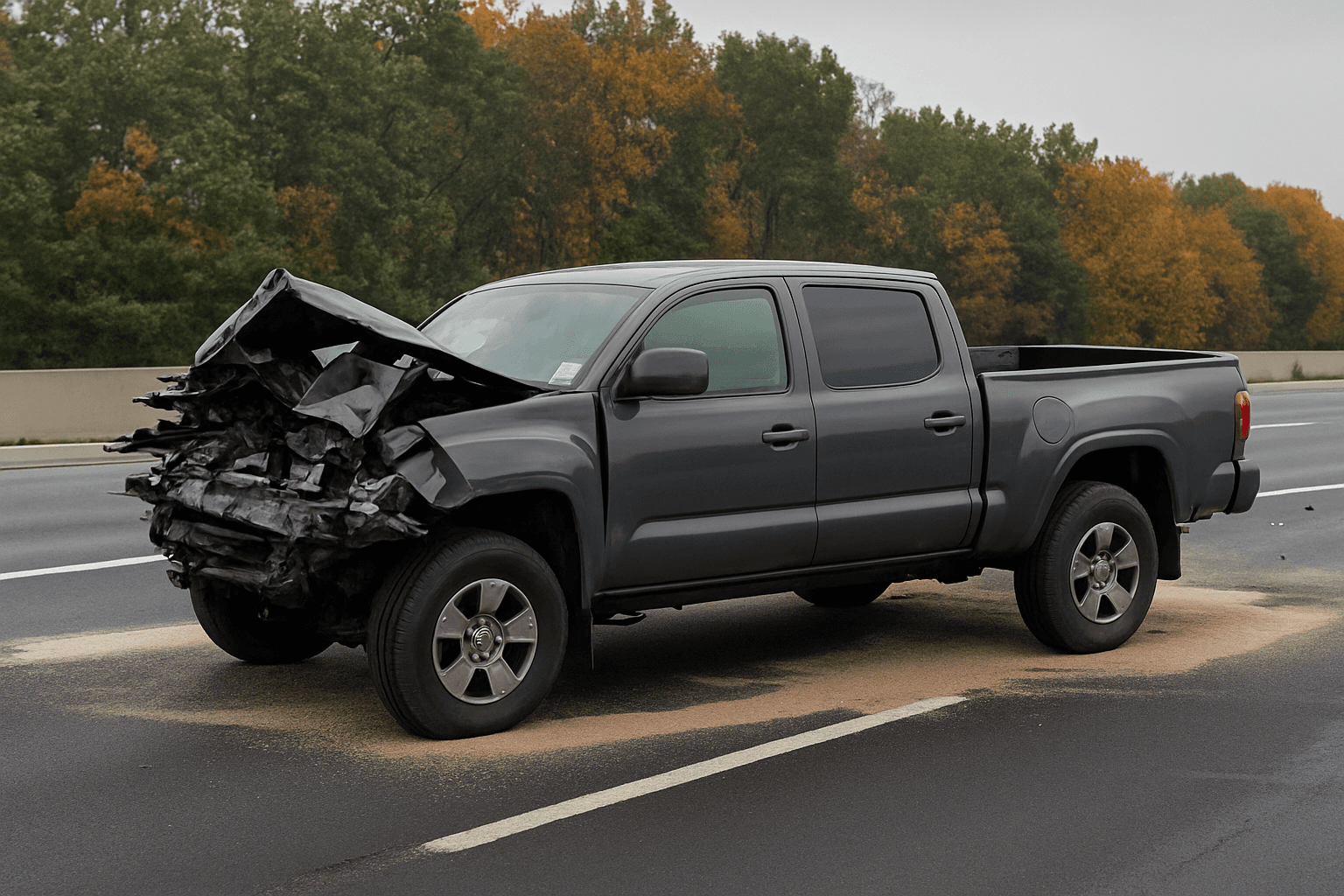
Arizona SR-22 law requires minimum liability limits, not collision or comprehensive. If you own your car outright after a DUI, dropping to liability-only cuts premiums 40-60% — but exposes your vehicle. Here's how to decide which coverage level protects you without overpaying.
What Arizona SR-22 Law Requires vs. What Carriers Recommend
Arizona requires SR-22 filers to carry minimum liability coverage: $25,000 bodily injury per person, $50,000 per accident, and $15,000 property damage. Collision and comprehensive are not part of the SR-22 filing requirement — the state does not mandate physical damage coverage on your own vehicle, even after a DUI conviction. Your SR-22 certificate confirms only that you carry continuous liability insurance meeting state minimums.
Most non-standard carriers writing DUI-SR-22 policies will quote you full coverage by default, especially if you financed your vehicle or list a lienholder. This is partly risk management — drivers with loans are legally required to carry comprehensive and collision until the loan is paid off — and partly revenue optimization. Full coverage premiums for DUI drivers run $180–$320/mo in Arizona, compared to $85–$150/mo for liability-only on the same driver profile.
If you own your vehicle outright with no lien, you control the coverage decision. Dropping collision and comprehensive during your SR-22 period is legal, will not cause an SR-22 lapse, and cuts your premium by roughly 40–60%. The tradeoff: if you total your car in an at-fault accident or it's stolen, you receive nothing for the vehicle itself. That asset risk is why carriers recommend full coverage — but the recommendation is not a legal requirement.
When Liability-Only Makes Sense After a DUI in Arizona
Liability-only works for DUI-SR-22 filers who own an older vehicle outright and can absorb the loss if it's damaged or stolen. If your car is worth $4,000 or less and you have access to another vehicle or public transit for work, paying $2,400–$3,800/year for full coverage to protect a $4,000 asset produces negative expected value within two years.
Arizona DUI convictions carry a minimum 3-year SR-22 filing requirement for standard first-offense DUI, and 5 years for aggravated DUI involving high BAC, injury, or a minor passenger. Over that period, full coverage costs $6,480–$11,520 more than liability-only on a typical non-standard policy. If your vehicle's actual cash value sits below $8,000 and you're managing a 3-year filing period, the premium savings from liability-only often exceed the vehicle's replacement cost by year two.
Liability-only also makes sense if you're driving a beater temporarily while saving for a newer car post-conviction. Many DUI drivers downgrade vehicles intentionally during the SR-22 period to reduce insurance costs and eliminate the collision/comprehensive decision entirely. A $2,500 vehicle with liability-only SR-22 coverage runs $85–$130/mo with non-standard carriers like The General, Dairyland, or GAINSCO in Arizona — manageable on a restricted budget while you're also paying court fees, DUI education, and ignition interlock device lease costs.
Find out exactly how long SR-22 is required in your state
When Full Coverage Is Worth Paying For During SR-22 Filing
Full coverage remains necessary if you're financing or leasing your vehicle. Lienholders require comprehensive and collision as a condition of the loan, and dropping coverage triggers a lender-placed insurance policy at inflated rates or loan default. Your SR-22 filing does not override your loan contract — both obligations run simultaneously.
Full coverage also makes financial sense if your vehicle is worth more than two years of premium difference. If you're driving a $15,000 car and the gap between liability-only and full coverage is $110/mo, you'll pay $3,960 over three years for collision and comprehensive. If you total the car in year one or two, full coverage pays out the actual cash value minus your deductible — typically $13,000–$14,000 after depreciation and a $1,000 deductible. That's a positive-return scenario.
Drivers with repeat-offense DUI convictions or aggravated DUI face 5-year SR-22 filing periods in Arizona. Over five years, the cost difference between liability-only and full coverage reaches $6,600–$9,000 with most non-standard carriers. If your vehicle is worth $12,000 or more and you cannot replace it out-of-pocket, full coverage remains the safer financial bet even at elevated DUI premiums. The breakeven calculation shifts as filing period length increases.
How Switching From Full Coverage to Liability-Only Affects Your SR-22
Dropping collision and comprehensive mid-policy does not cancel your SR-22 filing or interrupt your compliance clock. Arizona's SR-22 requirement attaches to liability coverage only — as long as your policy maintains the $25k/$50k/$15k minimum liability limits without a lapse, your SR-22 certificate remains active and your filing period continues to count down.
You must notify your carrier before making the change. Most non-standard insurers allow mid-term coverage reductions and will issue a revised SR-22 certificate reflecting the new liability-only policy. Your premium drops immediately on a pro-rata basis, and the state receives the updated filing showing continuous compliance. The reduction does not reset your filing start date or extend your required filing period.
Never let your policy lapse while switching coverage levels. If you cancel your current policy to shop for a cheaper liability-only policy elsewhere, you have a 30-day window to refile SR-22 with the new carrier before Arizona MVD suspends your license again. Any lapse — even one day — resets your 3-year or 5-year SR-22 filing clock to zero in Arizona, meaning you start the entire period over from the new filing date. If you're switching carriers, secure the new policy with an SR-22 filing date that overlaps your current policy's end date by at least one day.
What Liability-Only SR-22 Policies Actually Cost in Arizona After DUI
Liability-only SR-22 insurance after a DUI in Arizona runs $85–$150/mo with non-standard carriers for a standard first-offense conviction and clean record aside from the DUI. Rates increase to $120–$180/mo if you have additional violations, a license suspension longer than 90 days, or an aggravated DUI involving injury or high BAC.
The SR-22 filing fee itself is $25–$50, paid once at policy inception and again if you switch carriers. Some carriers charge the fee annually; others charge it only at initial filing. The filing fee is separate from your premium and non-refundable. Estimates based on available industry data; individual rates vary by conviction class, age, ZIP code, and prior insurance history.
Carriers writing liability-only DUI-SR-22 policies in Arizona include The General, Dairyland, Bristol West, Direct Auto, GAINSCO, and Acceptance Insurance. Availability varies by county — Maricopa and Pima counties have the widest carrier selection, while rural counties may have fewer non-standard options. Progressive and Geico will file SR-22 for existing customers after a DUI but typically non-renew the policy at the end of the term, forcing you into the non-standard market for your second and third filing years.
How to Decide Which Coverage Level Fits Your Arizona SR-22 Situation
Start with your vehicle's actual cash value. Pull the Kelley Blue Book or NADA trade-in value for your car's current mileage and condition — not the retail or private-party value. This is roughly what an insurer would pay out if you totaled the vehicle. If that figure is under $5,000 and you own the car outright, liability-only is almost always the lower-cost path over a 3-year filing period.
Next, calculate the premium difference. Get quotes for both liability-only and full coverage with the same liability limits, then multiply the monthly difference by 36 months (or 60 months for aggravated DUI). If the total premium difference exceeds 75% of your vehicle's value, you're better off self-insuring the collision and comprehensive risk and pocketing the savings. If it's under 50% of vehicle value, full coverage provides better financial protection.
Finally, assess your replacement risk. If losing this vehicle would prevent you from getting to work, fulfilling probation requirements, or attending mandated DUI education classes, full coverage is worth paying for regardless of breakeven math. Arizona DUI convictions often come with restricted licenses requiring proof of employment or educational travel — losing your only vehicle mid-filing period creates a compliance risk that exceeds the insurance cost difference. Balance the financial calculation against the operational risk of going without transportation during a period when you cannot afford any additional license complications.