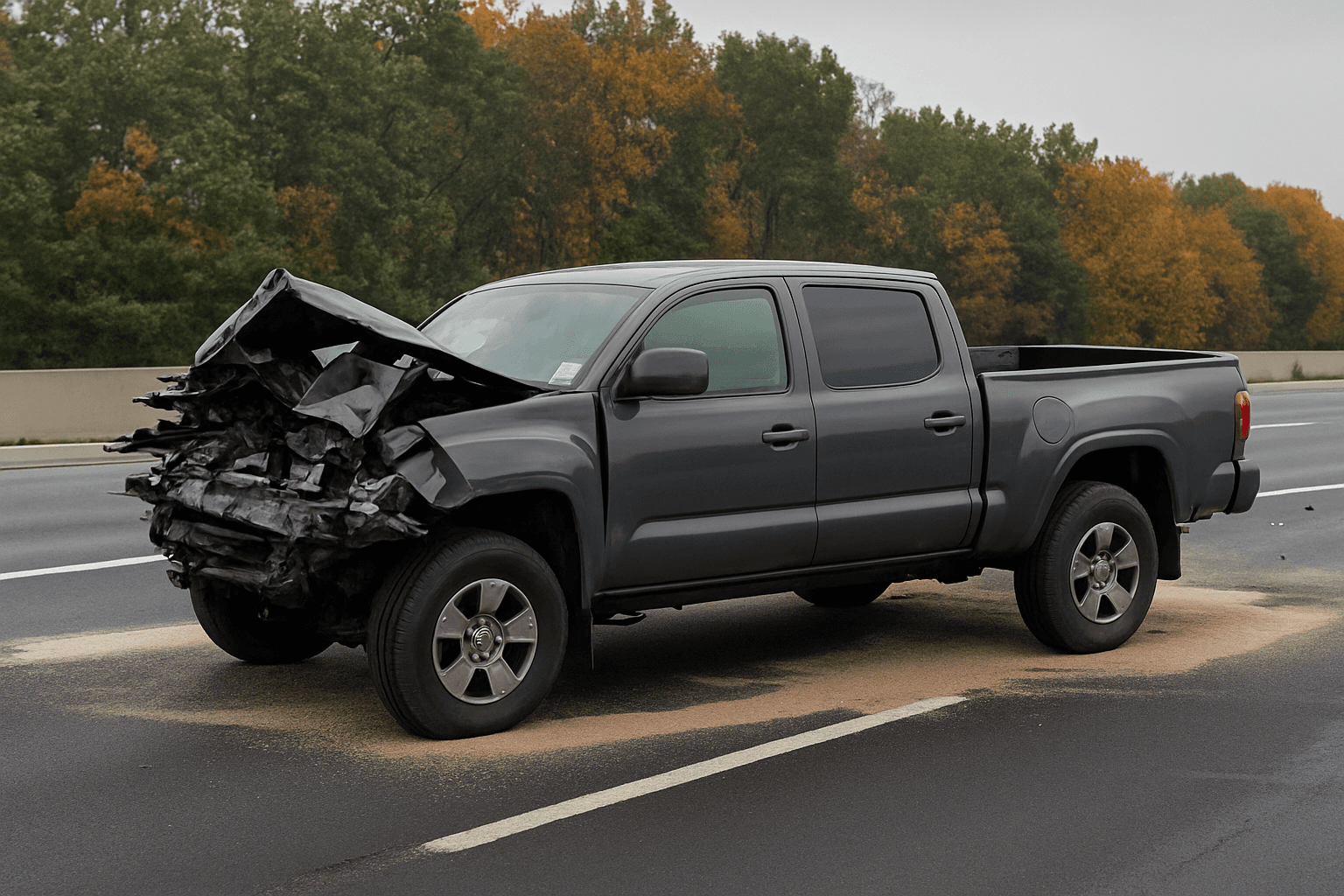
Minnesota non-standard carriers use conviction-class multipliers that most aggregators hide. Your first-offense standard DUI rate differs by 40–80% from an aggravated or refusal case—here's how carriers actually calculate your premium.
Minnesota Non-Standard Carriers Use Conviction-Class Multipliers, Not Flat DUI Rates
Non-standard auto carriers in Minnesota price DUI policies using risk-weighted multipliers tied directly to your conviction class, not a single "DUI rate" applied universally. A first-offense standard DUI (BAC 0.08–0.15, no aggravating factors) typically triggers a 1.7x to 2.2x base rate multiplier. An aggravated DUI (BAC 0.16+, minor in vehicle, or property damage) pushes that to 2.5x to 3.0x. A test refusal under Minnesota's implied consent law often prices closer to aggravated DUI because carriers view refusal as evidence of higher BAC avoidance behavior.
This conviction-class pricing structure creates rate gaps of $60–$140/mo between a first-offense standard DUI and an aggravated or refusal case for the same driver profile, vehicle, and coverage limits. Aggregator sites collapse all DUI convictions into one risk tier because they feed carrier APIs that don't expose conviction-class detail at the quote stage. You won't see the multiplier difference until underwriting pulls your full driving record after application.
Carriers writing DUI-SR-22 policies in Minnesota include Direct Auto, Dairyland, Bristol West, The General, GAINSCO, and Acceptance. Not all write aggravated or repeat-offense DUI—Direct Auto and Dairyland have the widest conviction-class acceptance in the state. Most mainstream carriers (State Farm, Geico, Progressive) will file SR-22 for existing customers but non-renew at policy term after DUI conviction.
Base Rate Calculation Starts With Your Pre-DUI Risk Profile, Then Applies the Multiplier
Your DUI multiplier applies to a base rate calculated from your age, vehicle, ZIP code, and prior coverage history before the conviction. A 28-year-old Minneapolis driver with a 2015 Honda Accord, clean record before DUI, and continuous prior coverage starts with a base rate around $95–$115/mo for state minimum liability. Apply the 1.9x first-offense standard DUI multiplier and the post-DUI rate lands at $180–$220/mo. The same driver with an aggravated DUI (2.8x multiplier) pays $265–$320/mo.
If you had a lapse in coverage before your DUI or carried state minimum limits for less than 12 months, your base rate starts 20–35% higher because non-standard carriers treat prior coverage gaps as compounding risk. That higher base amplifies the DUI multiplier effect. A driver with a six-month lapse before DUI might start at $125/mo base, then hit $240–$275/mo after the standard DUI multiplier—$60/mo more than the continuously-covered driver with the same conviction class.
Vehicle value matters less in DUI pricing than in standard-market policies because most DUI-SR-22 buyers carry liability-only coverage. Collision and comprehensive premiums still apply the DUI multiplier if you elect them, but the largest rate driver is the liability multiplier applied to bodily injury and property damage limits.
Find out exactly how long SR-22 is required in your state
Aggravating Factors Push You Into Higher Multiplier Tiers Immediately
Minnesota statute defines aggravated DUI factors that carriers use to assign higher multipliers: BAC 0.16 or above, a minor under 16 in the vehicle at the time of arrest, property damage or bodily injury resulting from the incident, or driving without valid insurance at the time of the stop. Any one aggravating factor moves you from the standard DUI multiplier tier (1.7x–2.2x) to the aggravated tier (2.5x–3.0x). Two or more aggravating factors can push some carriers to decline coverage entirely or route you to a surplus lines carrier at even higher rates.
Test refusal under Minnesota's implied consent law prices similarly to aggravated DUI because carriers interpret refusal as probable cause avoidance behavior correlated with higher crash risk. You'll see multipliers in the 2.4x–2.9x range for refusal cases even without other aggravating factors. If your refusal case also includes property damage or a minor passenger, expect underwriting to treat it as a repeat-offense risk tier regardless of prior record.
Carriers assess aggravating factors at the underwriting stage after you submit an application. The initial online quote may show a standard DUI multiplier, then adjust upward once the underwriter reviews your court records and MVR. This is why phone-quoted rates for aggravated DUI cases are often more accurate than online quotes—you disclose the aggravating factors up front and get the correct multiplier immediately.
Repeat-Offense DUI and Multiple Violations Stack Multipliers Beyond Standard Tiers
A second DUI conviction within ten years in Minnesota triggers 3.5x–4.5x multipliers at non-standard carriers willing to write repeat-offense policies. Dairyland and Direct Auto write second-offense DUI in Minnesota; Bristol West and The General typically decline. A third DUI within ten years moves most drivers into surplus lines territory (non-admitted carriers operating outside standard state filing requirements) where rates can reach 5.0x–6.0x base and policy terms include six-month maximum terms with full-pay-upfront requirements.
If you have a DUI plus additional moving violations (speeding 20+ over, careless driving, or at-fault accidents) within the same three-year window, carriers apply stacked multipliers rather than selecting the highest single violation. A DUI at 2.0x plus a careless driving citation at 1.4x doesn't average to 1.7x—it compounds closer to 2.4x–2.6x depending on carrier formula. This stacking effect is why cleaning up secondary violations before your SR-22 period ends matters: each violation removed reduces the compounded multiplier.
Minnesota requires SR-22 filing for one year after DUI license reinstatement for first-offense standard DUI, two years for aggravated DUI, and three to six years for repeat-offense DUI depending on court-ordered conditions. Your multiplier doesn't automatically drop when SR-22 ends—it declines gradually as the conviction ages beyond three years from conviction date. Most carriers reduce the DUI multiplier by 20–30% at the three-year mark, another 20–30% at five years, and remove it entirely at seven to ten years if no additional violations occur.
Filing SR-22 Adds a Flat Processing Fee, Not a Rate Multiplier
The SR-22 certificate itself costs $25–$50 to file in Minnesota depending on carrier, paid once at policy inception and again at each renewal if your filing period hasn't ended. This is a processing fee, not a rate multiplier—it doesn't increase your premium percentage. Your SR-22 filing period starts the day your license is reinstated by the Minnesota DVS, not your conviction date or sentencing date. If you were suspended for 90 days post-conviction and reinstated on March 15, your one-year SR-22 filing period runs through March 15 the following year.
Letting your SR-22 lapse even one day before your filing period ends resets your suspension and restarts your SR-22 clock from zero in Minnesota. Carriers are required to notify the DVS within 15 days if your policy cancels or lapses. The DVS suspends your license immediately upon receiving the lapse notice. Most drivers don't realize the filing-period start date is reinstatement-based, not conviction-based, and miscalculate when they can drop SR-22—leading to accidental lapses that cost months of additional filing time.
You can switch carriers during your SR-22 period without restarting the clock as long as there is no coverage gap. The new carrier files an SR-22 certificate on the effective date of the new policy, and the old carrier files an SR-26 (termination notice) on the cancellation date. Minnesota DVS tracks the continuous filing status, not the carrier identity. Switching mid-period to a lower-rate carrier can save $40–$80/mo without affecting your filing obligation.
Rate Differences Between Carriers Reflect Underwriting Appetite, Not Risk Assessment Quality
Rate variation between non-standard carriers writing Minnesota DUI-SR-22 policies ranges from 15–40% for identical driver profiles and conviction classes. Dairyland consistently quotes 10–20% below Direct Auto for first-offense standard DUI in Minnesota metro ZIP codes. Bristol West quotes competitively for aggravated DUI cases in rural Minnesota counties but prices 25–35% higher than Dairyland in Minneapolis and St. Paul. The General targets repeat-offense DUI and stacked-violation drivers other carriers decline, pricing 20–30% above Dairyland but offering coverage where alternatives don't exist.
These rate differences reflect each carrier's underwriting appetite and book composition strategy, not superior or inferior risk assessment. Dairyland writes high volume in Minnesota and prices aggressively to maintain market share. Bristol West writes lower volume and prices for profit margin per policy. Both assess your risk using similar multiplier frameworks—the difference is target loss ratio and expense load.
Aggregator sites show rate spreads between carriers but rarely surface conviction-class multiplier details because the APIs return quotes based on self-reported violation codes that don't distinguish standard from aggravated DUI until underwriting. A quote showing $210/mo from one carrier and $195/mo from another may flip after underwriting if the lower quote didn't account for an aggravating factor disclosed during application. Phone quoting with conviction-class details up front produces more stable rate comparisons than online forms.
Payment Plan Structure Affects Total Annual Cost More Than Quoted Monthly Premium
Non-standard carriers charge installment fees of $5–$12 per monthly payment if you don't pay the six-month term in full up front. Over a six-month term that adds $30–$72 to your total cost. A policy quoted at $215/mo with a $10/mo installment fee costs $1,350 per six-month term ($225/mo effective rate). The same policy paid in full costs $1,290 ($215/mo true rate). Across your one-year SR-22 filing period the installment fees add $60–$144 to your total spend.
Some carriers offer annual terms for DUI-SR-22 policies after the first six-month term if you maintain continuous payment and no additional violations. Annual terms reduce installment fee frequency and lock your rate for 12 months, protecting against mid-term rate increases that can occur at six-month renewal if your conviction class is re-underwritten. Dairyland and Direct Auto both offer annual terms for first-offense standard DUI after the first renewal; aggravated and repeat-offense cases typically remain on six-month terms indefinitely.
Down payment requirements range from one month plus fees ($225–$275 for a $215/mo policy) to two months plus fees ($450–$550) depending on conviction class and prior payment history. Repeat-offense DUI and stacked violations trigger higher down payment requirements because lapse risk is statistically higher. If down payment is a barrier, ask the carrier about payment plan start date flexibility—some allow you to delay the first installment by 10–15 days to align with your paycheck cycle without affecting coverage effective date.