Maine allows employment commutes on a restricted license after DUI suspension, including night shifts. Most drivers submit incomplete employer documentation and get denied — here's what the BMV actually requires.
What Qualifies as Employment Under Maine's Restricted License Rules
Maine's Bureau of Motor Vehicles approves restricted licenses for employment purposes regardless of shift time — night, swing, and overnight schedules qualify equally to standard daytime shifts. The statute uses "employment" without time restrictions, which means your 11 PM to 7 AM warehouse shift carries the same weight as a 9-to-5 office job when the BMV reviews your application.
The critical distinction is employment versus self-employment. W-2 wage earners with verifiable employer documentation receive approval at significantly higher rates than 1099 contractors or self-employed applicants. The BMV wants a letter on company letterhead stating your shift schedule, work address, and confirmation that driving is necessary to reach the worksite.
Shift workers in manufacturing, healthcare, logistics, and hospitality typically qualify without additional scrutiny. The BMV evaluates whether public transportation or rideshare could reasonably serve the route — in most Maine communities outside Portland, the answer is no for night shifts, which strengthens your restricted license justification.
Documentation the Maine BMV Requires From Night Shift Workers
Your employer letter must include five specific elements: your full legal name as it appears on your license, your exact work address, your shift start and end times, your scheduled workdays, and a statement that your job requires personal vehicle transportation. Missing any single element triggers an automatic denial, forcing you to resubmit and extending your timeline by 10–14 days.
The letter must be dated within 30 days of your restricted license application. Older letters — even if employment is continuous — get rejected. The BMV does not publish this 30-day rule prominently, but it appears in denial letters for roughly 40% of first-time night shift applicants based on patterns reported by Maine SR-22 filers.
If your shift schedule varies week to week, your employer letter should state the broadest possible window you might work — for example, "Monday through Saturday, shifts between 10 PM and 8 AM as assigned." The BMV grants restricted driving privileges for the entire stated window. You're not required to submit a new letter each time your specific schedule changes within that approved range.
Find out exactly how long SR-22 is required in your state
How Route and Timing Restrictions Apply to Night Commutes
Maine's restricted license permits direct travel between your residence and workplace only — no stops for errands, fuel, or food unless the stop is on the direct route and the detour is minimal. The statute language is "most direct route," interpreted by law enforcement and BMV hearing officers as the shortest distance or fastest time, whichever you can justify if stopped.
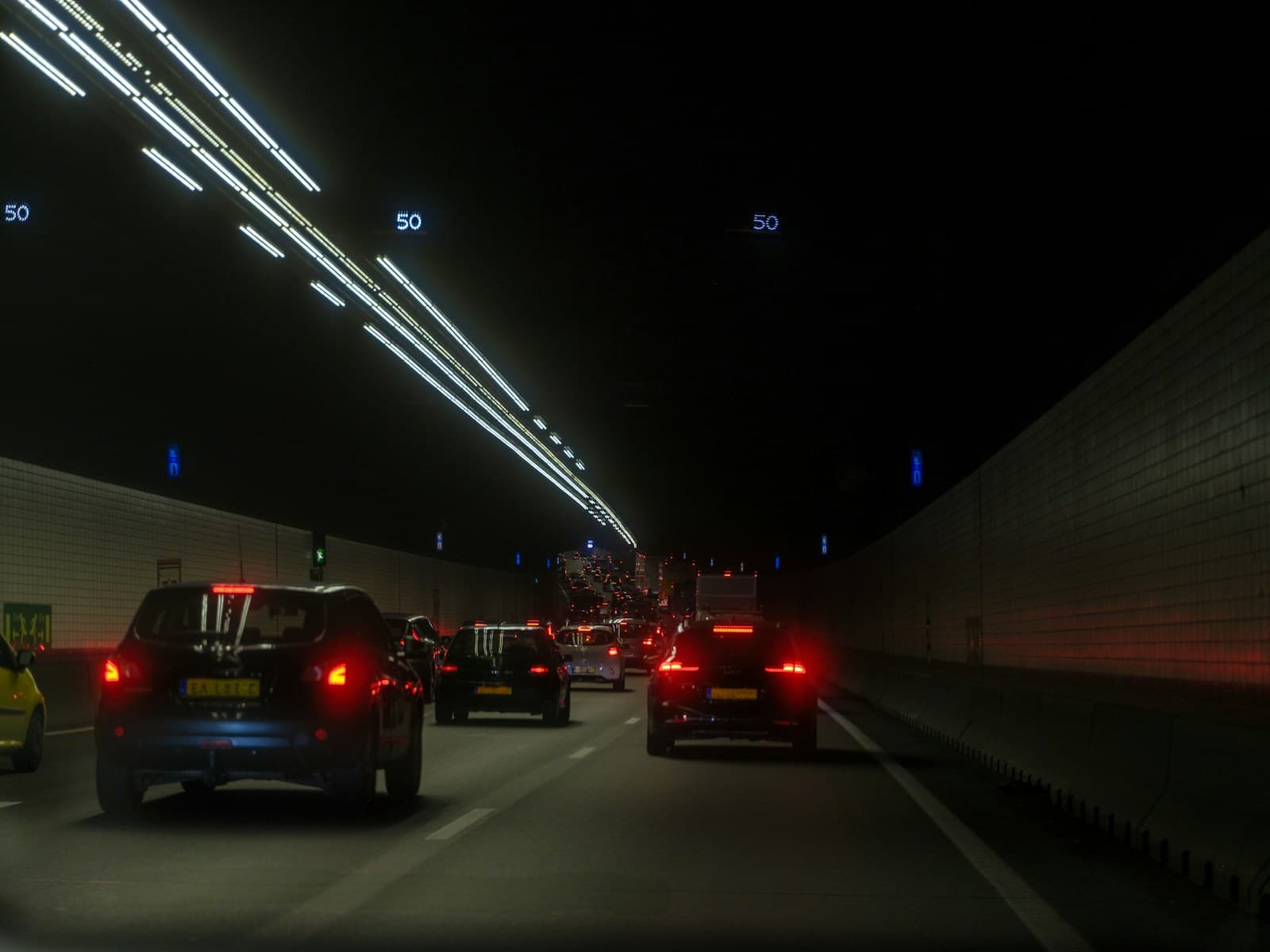
Night shift workers face higher enforcement scrutiny than day shift drivers. A restricted license holder driving at 2 AM will be questioned more closely than the same driver at 2 PM, even if both are legitimately commuting. Carry your employer letter, restricted license documentation, and a written note of your route in your vehicle at all times. If stopped, immediately state that you are traveling to or from work under restricted license authority.
Your approved hours must bracket your shift plus reasonable travel time. If your shift starts at 11 PM and your commute is 25 minutes, request restricted hours starting at 10 PM. The BMV typically grants a 30-minute buffer on each end without question. Requests for buffers longer than one hour receive additional scrutiny and may require written justification of traffic conditions or winter weather delays common to your route.
SR-22 Filing Requirements During Your Restricted License Period
Maine requires continuous SR-22 filing throughout your restricted license period and for the full duration of your post-DUI filing mandate — typically 3 years from conviction date for a first offense. Your SR-22 must be active before the BMV will issue your restricted license. If your SR-22 lapses at any point, your restricted license is automatically suspended and your 3-year filing clock resets to day zero.
Not all carriers write policies for restricted license holders. Most major insurers — State Farm, Geico, Allstate, Progressive — will file SR-22 for existing customers but typically non-renew at the end of your policy term after a DUI conviction. Drivers seeking new coverage with an active DUI and restricted license typically need the non-standard market: Bristol West, Dairyland, GAINSCO, The General, National General, or Foremost.
Monthly SR-22 liability premiums for Maine drivers on restricted licenses after DUI range from $145/mo to $280/mo depending on age, county, and conviction class. Aggravated DUI (BAC above 0.15, minor in vehicle, refusal) pushes rates toward the higher end of that range. Expect quotes 85–140% higher than your pre-DUI rate. The restricted license itself doesn't increase your premium — the underlying DUI conviction does.
What Happens If You're Stopped Driving Outside Approved Hours
Driving outside your restricted license hours or route is treated as operating after suspension in Maine — a Class E crime carrying up to 6 months in jail and a mandatory additional 30-day license suspension stacked onto your existing DUI suspension. The violation also restarts your SR-22 filing period from zero, adding thousands of dollars in extended high-risk insurance costs over the new 3-year requirement.
Law enforcement has access to your restricted license conditions during traffic stops. The officer will verify whether your current location, direction of travel, and time match your approved employment route and hours. If you're stopped on a road that's not on a reasonable route between your home and workplace, or you're driving on a day you stated you don't work, expect an arrest and vehicle impoundment.
Some Maine counties allow restricted license holders to add medical appointments and substance abuse treatment to their driving privileges. If your DUI sentence included required counseling or IID monitoring appointments, request those additional approved purposes when you apply for your restricted license. The BMV evaluates medical and treatment requests separately from employment — both can be approved simultaneously, giving you multiple qualifying purposes on a single restricted license.
Timeline From DUI Conviction to Restricted License Approval
Maine imposes a mandatory minimum suspension period before you're eligible to apply for a restricted license. First-offense DUI carries a 150-day suspension, but you can apply for a restricted license after serving 30 days. Aggravated DUI or refusal extends the minimum wait to 90 days of hard suspension before restricted privileges become available.
Once eligible, the restricted license application process takes 14–21 business days if your paperwork is complete. Incomplete applications — missing employer letters, unsigned forms, no SR-22 proof — add 10–14 days per resubmission cycle. Drivers applying without SR-22 already on file are automatically denied and must reapply after filing, which adds another full review cycle.
Your restricted license remains valid until your full driving privileges are reinstated or your suspension period ends, whichever comes first. If you're sentenced to a 1-year suspension and approved for a restricted license after 30 days, you'll hold that restricted license for the remaining 335 days unless you commit a new violation. Maintaining your restricted license requires continuous SR-22 coverage, no new traffic violations, and strict adherence to your approved routes and hours.