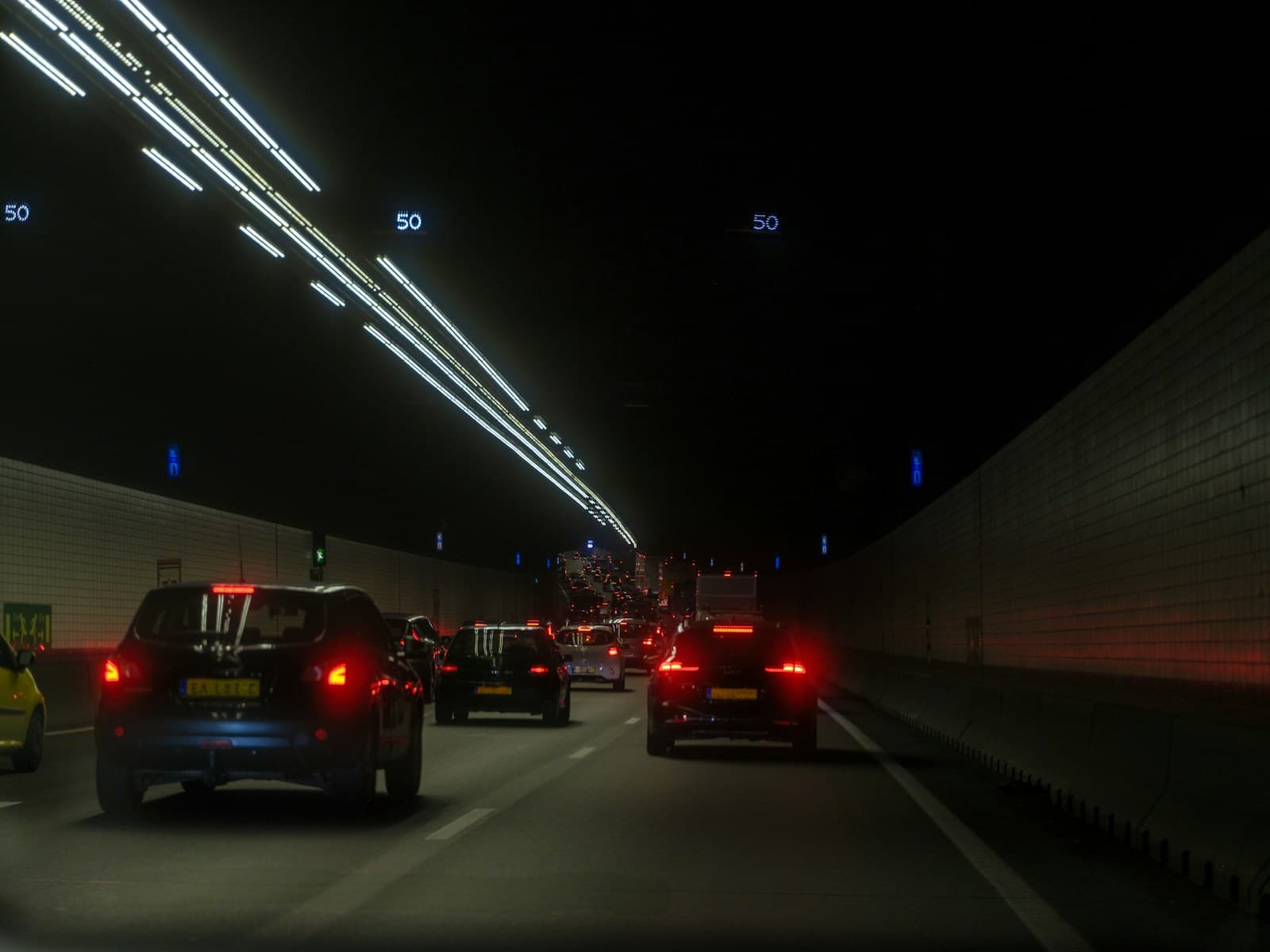
Georgia's Class D restricted license covers employer-verified work hours only. If your job requires overnight shifts, your employer must submit those specific hours to DDS before your permit is issued — or you're driving outside your restriction.
Georgia DDS Issues Work Permits With Employer-Verified Hour Restrictions
Georgia's Class D restricted license allows you to drive to and from work, but only during the specific hours your employer submits to the Department of Driver Services on Form DDS-16. If you work overnight shifts — 11 PM to 7 AM, rotating graveyard schedules, or any variation outside standard business hours — those exact hours must appear on your approved permit before you can legally drive them.
Most drivers assume a work permit covers any job-related driving. It doesn't. Georgia DDS reviews your employer's certification and restricts your driving window to the hours listed. If your schedule changes after your permit is issued, you need a new DDS-16 filed and approved before driving the new hours.
This creates a compliance gap for shift workers. Your employer submits a Monday-Friday 9 AM to 5 PM schedule because that's what you worked at the time of filing. Three weeks later, you're assigned overnight shifts. Your permit still says 9-5. Driving at midnight — even to the same job — is now a violation of your restricted license terms, which triggers a new suspension and extends your SR-22 filing period.
What Georgia Law Allows on a Class D Restricted License After DUI
Georgia Code 40-5-64 permits DDS to issue a Class D restricted license (often called a work permit or hardship license) after a DUI suspension if you can prove employment necessity. The permit allows driving for work purposes only, with no personal errands, no grocery stops, no detours. The restriction is location-based and time-based: your approved route from home to work, during your approved hours.
Night shift driving is allowed if your employer's DDS-16 form documents those hours and DDS approves them. There's no legal prohibition on overnight work driving. The issue is procedural: if your form lists daytime hours and you drive at night, you're operating outside your restriction even if you're heading to work.
Georgia also requires SR-22 filing for the duration of your restricted license period and typically 3 years from your DUI conviction date, whichever is longer. Your SR-22 must stay active while you hold the Class D permit. A lapse cancels your permit immediately and resets your filing requirement to zero.
Find out exactly how long SR-22 is required in your state
How to Get Night Shift Hours Approved Before Your Permit Is Issued
Your employer completes Georgia Form DDS-16, certifying your job title, work address, and required work hours. If you work overnight shifts, your employer must list those specific hours: "10 PM to 6 AM Monday through Friday" or "rotating shifts including overnight hours as documented in attached schedule." Generic language like "varies" or "as needed" will not pass DDS review.
Submit the DDS-16 with your restricted license application at least 30 days before you need the permit active. DDS processing timelines vary by county, but most take 2-4 weeks. If your application is denied or your hours are flagged as unclear, you'll receive a notice and have to refile with corrected information, adding another 2-3 weeks.
If your shift schedule changes after approval, your employer must submit a new DDS-16 and you must wait for DDS to issue an updated permit reflecting the new hours. Driving the new schedule before the updated permit is in your possession violates the restriction and can trigger a suspension extension of 6 months or more.
What Happens If You're Stopped Driving Outside Your Approved Hours
If a Georgia officer stops you at 2 AM and your Class D permit lists work hours of 8 AM to 5 PM, you are operating outside the terms of your restricted license. This is treated as driving on a suspended license under Georgia Code 40-5-121, which carries a minimum $500 fine, up to 12 months in jail, and an additional suspension period of at least 6 months.
Your SR-22 filing requirement also extends. Georgia DDS adds the new suspension period to your existing SR-22 timeline, meaning a 6-month violation suspension adds 6 months to your SR-22 end date. Most DUI offenders already face 3 years of SR-22 from conviction date — this violation pushes it to 3.5 years or longer.
Some officers issue a citation and allow you to continue if you can prove you're en route to work with documentation (pay stub, employer letter, shift schedule printout). Others do not. The violation is a matter of public record either way, and your insurance carrier will see it at your next policy term. Most non-standard carriers will non-renew after a restricted license violation, forcing you into a higher-cost carrier tier.
SR-22 Coverage Requirements While Holding a Georgia Work Permit
Georgia requires SR-22 insurance at state minimum liability limits: $25,000 per person, $50,000 per accident for bodily injury, and $25,000 for property damage. Your carrier files the SR-22 certificate electronically with DDS. If your policy lapses or cancels for any reason, DDS receives automatic notice within 24 hours and your Class D permit is suspended immediately.
Night shift workers face higher SR-22 premiums in Georgia's non-standard market because overnight driving is classified as higher-risk exposure. Expect monthly premiums between $110 and $190 for minimum liability SR-22 coverage if you're employed and driving overnight shifts. Daytime-only work permits typically run $85 to $140 monthly for the same driver profile.
Carriers that write Georgia SR-22 policies for DUI offenders with work permits include Direct Auto, Dairyland, National General, The General, and GAINSCO. State Farm and GEICO will file SR-22 for existing customers but typically non-renew at the end of your current policy term. New DUI-SR-22 policies almost always require the non-standard market.
Rotating Shift Schedules and How Georgia DDS Handles Variable Hours
If your employer assigns rotating shifts — alternating weeks of day and night, or a 2-2-3 schedule that includes overnight hours — your DDS-16 must document the full rotation. Your employer should attach a copy of your official work schedule showing all shift variations and certify that driving is required during all listed periods.
Georgia DDS will issue a permit covering the broadest range of hours documented, but some county offices require monthly or quarterly schedule updates if your rotation changes frequently. Failure to update creates the same violation risk: if your permit says "Monday-Friday 6 AM to 2 PM" and you're stopped driving at 11 PM on a week you're assigned night shifts, you're outside your restriction.
Some Georgia employers in healthcare, warehousing, and logistics are familiar with DDS-16 filings and will coordinate updates proactively. Others are not. If your employer resists filing updated schedules or doesn't understand the DDS process, that becomes your compliance risk. You are responsible for ensuring your permit matches your actual work hours, not your employer.
How Long You'll Need SR-22 After Your Georgia DUI Work Permit Ends
Georgia requires SR-22 filing for 3 years from your DUI conviction date, not from the date you get your restricted license or the date your full license is reinstated. If you were convicted on January 15, 2024, your SR-22 filing period ends January 15, 2027, regardless of when your work permit was issued or when your full driving privileges were restored.
Your Class D work permit period does not count toward reducing your SR-22 requirement. If you hold a restricted license for 12 months and then reinstate your full license, you still owe the full 3-year SR-22 period from conviction. Most Georgia DUI offenders miscalculate this and cancel SR-22 coverage when their license is reinstated, which triggers a new suspension and restarts the filing clock.
Once your SR-22 period ends, you can shop for standard insurance again if you've had no additional violations and your DUI conviction is at least 3 years old. Most carriers will still classify you as high-risk for 5 years post-conviction, but rates drop significantly after year 3 when SR-22 is no longer required.