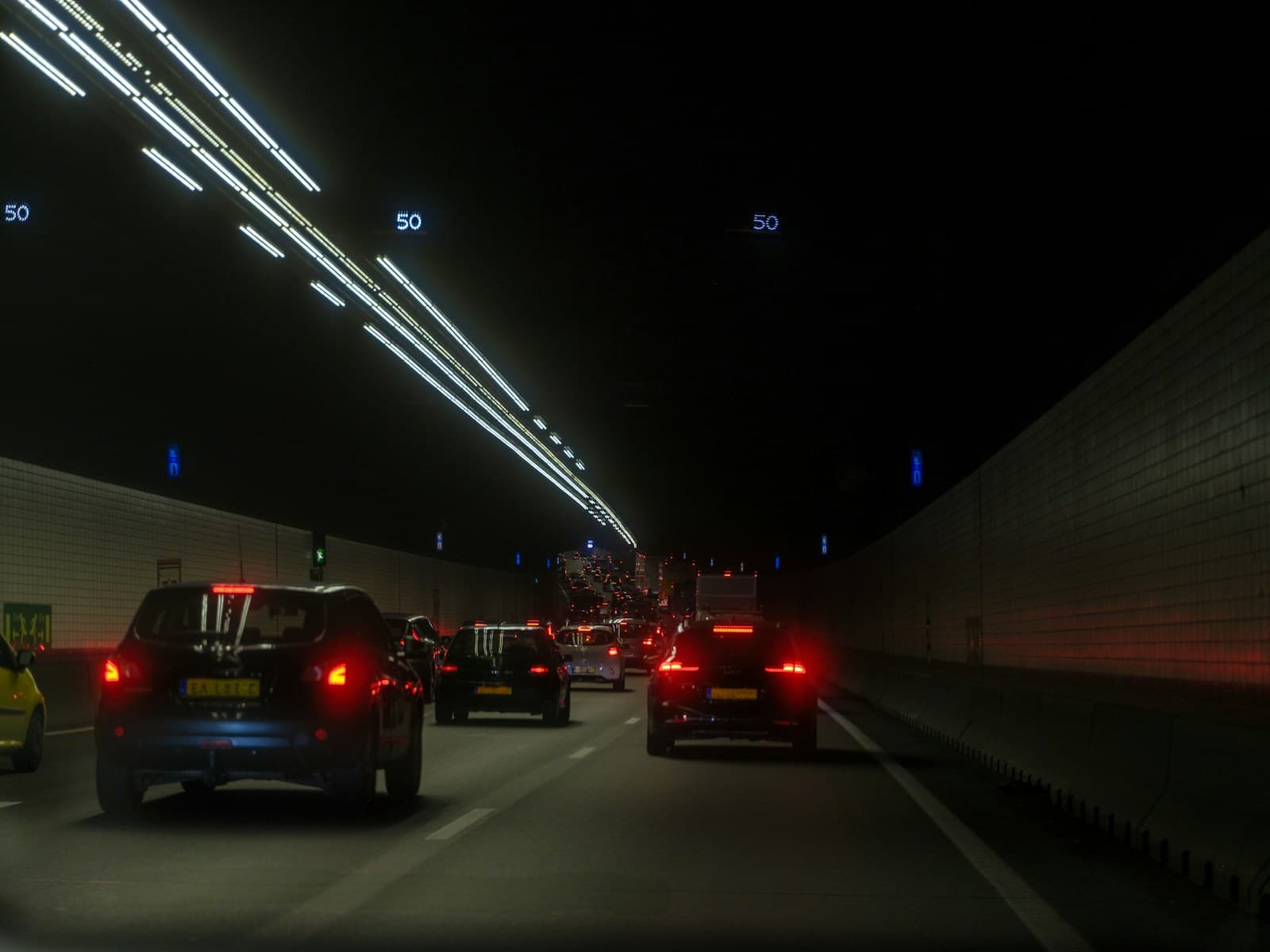
Connecticut work permits allow driving only during a 12-hour window tied to your employment schedule. Night shift workers face stricter documentation requirements and zero flexibility if shift times change.
Connecticut restricts work permit driving to a 12-hour daily window tied to your employer's documented schedule
Connecticut DMV grants restricted licenses for employment purposes under CGS Section 14-36l, but the approval includes a specific 12-hour driving window each day. That window must align with your employer's documented shift schedule, submitted as part of your reinstatement application. If you work an overnight shift from 10 PM to 6 AM, your restricted license permits driving only during those hours plus reasonable commute time — typically the 12-hour block from 9 PM to 9 AM.
The DMV does not issue open-ended "employment only" licenses. Your approval letter states the exact permitted hours. Driving outside that window, even for employment reasons, constitutes operating under suspension and triggers immediate revocation of your restricted license.
Night shift workers face a documentation problem most day-shift workers avoid: your employer must provide a letter on company letterhead stating your exact shift start time, end time, and days worked per week. Generic employment verification letters do not satisfy the requirement. The DMV cross-references this documentation against your driving window request and denies applications when shift details are vague or variable.
SR-22 filing must be active before the DMV processes your restricted license application
Connecticut requires continuous SR-22 filing for 3 years after a DUI conviction, measured from the conviction date. Your restricted license application will not be processed until the DMV receives electronic SR-22 confirmation from your insurer. This creates a sequencing problem for drivers who assume they can apply for the restricted license first and find coverage later.
Most major carriers — State Farm, Geico, Progressive, Allstate — will not write new policies for drivers with a pending or active DUI suspension. You will need a non-standard market carrier: Bristol West, Direct Auto, Dairyland, The General, or GAINSCO all write DUI-SR-22 policies in Connecticut. Expect monthly premiums between $180 and $320 depending on your conviction class, age, and county.
The SR-22 certificate must list the Connecticut DMV as the certificate holder and must remain active without a single day of lapse for the entire 3-year filing period. If your policy cancels for non-payment or you switch carriers without overlapping coverage, the DMV receives an SR-26 cancellation notice within 48 hours and your restricted license is immediately suspended.
Find out exactly how long SR-22 is required in your state
Your restricted license does not automatically update if your employer changes your shift schedule
Connecticut treats the approved driving window as a fixed condition of your restricted license. If your employer moves you from a 10 PM–6 AM shift to a 6 PM–2 AM shift, your existing restricted license does not cover the new hours. You must submit an amended application to the DMV, including updated employer documentation, and wait for approval before driving the new schedule.
Drivers who assume the restricted license covers "whatever hours I'm working" face operating under suspension charges when stopped during unapproved hours. Connecticut State Police and local departments have access to your restricted license conditions during traffic stops. Showing a current work schedule that differs from your approved hours does not provide a defense.
The amendment process takes 10 to 15 business days. Plan for this delay when accepting shift changes. Some drivers negotiate fixed schedules with their employers specifically to avoid this compliance gap.
Connecticut restricted licenses prohibit all non-work driving, including stops for food, gas, or errands during the commute
Your restricted license permits driving directly between your home and workplace during your approved hours. Connecticut courts interpret "directly" strictly. Stops for gas, coffee, food, or personal errands on the way to or from work are not protected under the restricted license and constitute violations if you are stopped.
This creates a practical problem for night shift workers. If your shift starts at 11 PM and you leave home at 10:30 PM to stop for gas, you are technically driving for a non-employment purpose during your approved window. Officers have discretion, but the statute provides no safe harbor for incidental stops.
Some employers allow early arrival and provide on-site break areas. Night shift workers use this to avoid mid-commute stops entirely. If your workplace is 35 minutes from home, leave 50 minutes early, arrive at the job site, and wait in your vehicle or the employee break room.
Restricted license approval requires proof of completed alcohol education and ignition interlock installation if court-ordered
Connecticut assigns restricted license eligibility based on your conviction class and prior offense history. First-offense standard DUI (BAC 0.08–0.149) qualifies for a restricted license after 45 days of suspension if you complete a state-approved alcohol education program and install an ignition interlock device for one year.
First-offense elevated BAC (0.15 or higher) extends the interlock requirement to 2 years. Second-offense DUI within 10 years requires interlock for 3 years and ineligibility for a restricted license until 45 days into the suspension. Third-offense or felony DUI convictions are ineligible for restricted licenses during the minimum suspension period.
The DMV will not process your restricted license application until you provide the certificate of completion from your alcohol education program and proof of IID installation from a state-approved vendor. This stacks three compliance deadlines: SR-22 filing, alcohol education completion, and IID installation, all before the restricted license is granted. Budget 4 to 6 weeks for the full process after your suspension begins.
Connecticut does not issue separate hardship licenses — the work permit is your only legal driving option during suspension
Some states distinguish between restricted licenses for employment and hardship licenses for medical appointments, childcare, or education. Connecticut does not. CGS Section 14-36l provides a single restricted license category, and employment is the only qualifying purpose.
If you need to drive your child to daycare before your night shift or attend required probation meetings during daytime hours, those trips are not covered under your restricted license. Drivers in this situation coordinate transportation with family members, use rideshare services, or request schedule adjustments from probation officers to align appointments with work commute hours.
The restricted license does not permit driving to DUI education classes, AA meetings, or court-ordered counseling sessions unless those occur at your workplace or fall within your approved commute route. Verify class locations before enrolling.
Restricted license violations reset your suspension period and disqualify you from future restricted privileges
Operating outside your approved hours, driving for non-employment purposes, or allowing your SR-22 to lapse all trigger immediate revocation of your restricted license under Connecticut law. The DMV does not issue warnings. Once revoked, you serve the remainder of your original suspension period without restricted privileges and become ineligible for another restricted license for at least 12 months.
Conviction for operating under suspension during a restricted license period adds 30 to 90 days to your total suspension and creates a separate criminal charge. Connecticut prosecutors treat restricted license violations as willful disregard of court orders, and judges rarely reduce charges in plea negotiations.
Night shift workers face higher enforcement visibility. Driving late at night increases your probability of traffic stops for minor violations — broken taillight, failure to signal, rolling stop. Officers run your license during every stop. If your restricted license shows a 9 PM to 9 AM window and you are stopped at 9:15 AM after your shift ran late, you are operating outside your approved hours.