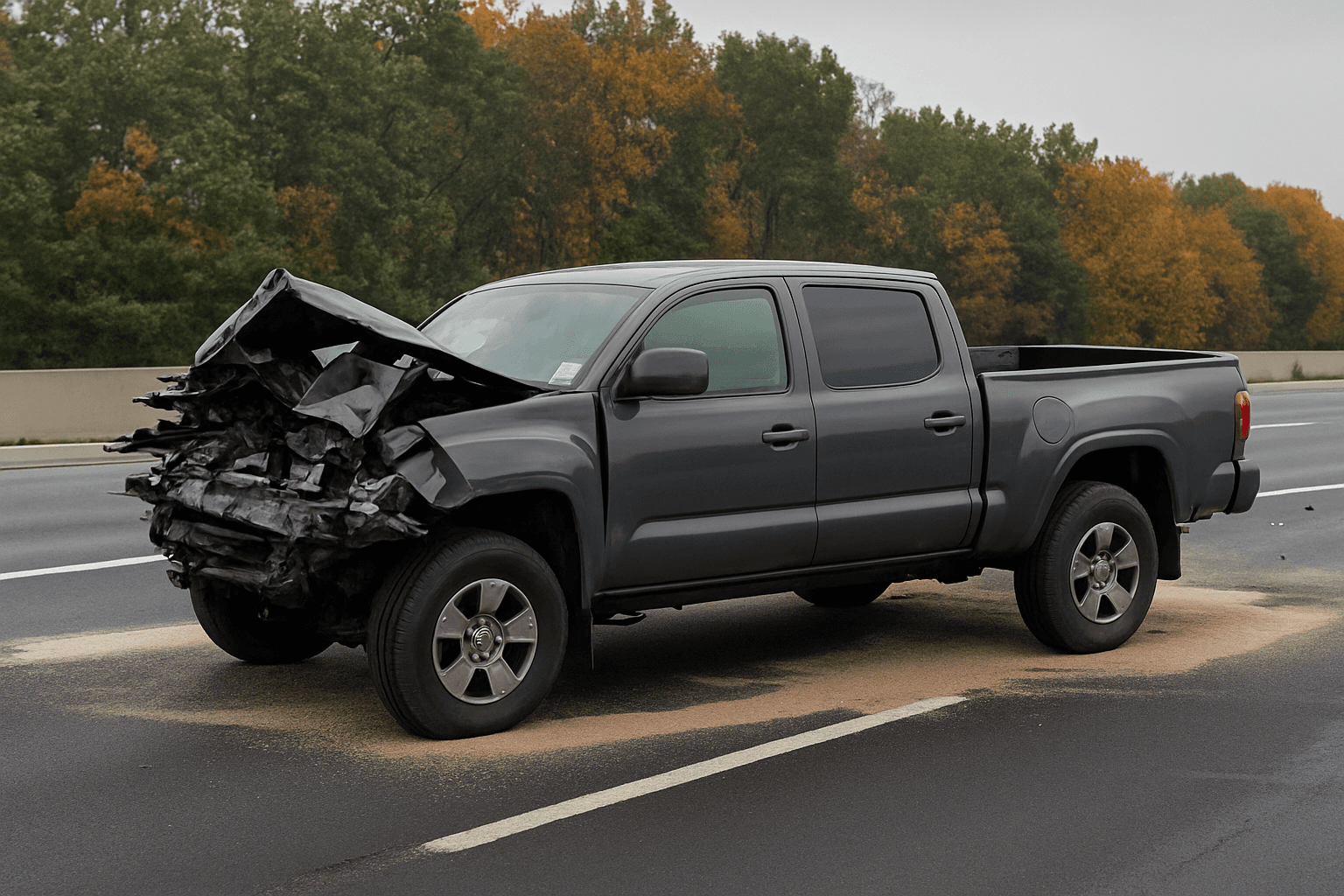
New York lenders don't demand SR-22 after a DUI — they require continuous FR-1 filing, meaning any coverage lapse triggers a new suspension and restarts your filing clock.
New York Uses FR-1 Filing, Not SR-22, for DUI Proof of Insurance
New York does not use SR-22 certificates for DUI convictions. Instead, the state requires FR-1 filing, a continuous proof-of-insurance system maintained electronically by your insurance carrier directly with the DMV. This distinction matters because FR-1 operates on a zero-tolerance lapse model — if your policy cancels or lapses for even one day, your carrier reports it to the DMV within 24 hours, your license suspends automatically, and your required filing period resets to day one.
Most drivers discover the FR-1 requirement when their DMV reinstatement letter arrives 30 to 90 days after conviction. The letter specifies a three-year FR-1 filing period starting from your reinstatement date, not your conviction date. If you were convicted in January but don't reinstate until April, your three years begins in April.
Your auto lender does not separately require SR-22 or FR-1. What they require is continuous full-coverage insurance on the financed vehicle for the life of the loan. The FR-1 filing ensures the DMV and your lender both receive automatic notification if your coverage lapses, which triggers both license suspension and potential loan default.
How FR-1 Filing Works With a Financed Vehicle
When you finance a vehicle in New York, your lender is listed as the lienholder on your insurance policy. This means your carrier must notify the lender if your policy cancels, lapses, or falls below the lender's required coverage levels — typically comprehensive and collision with a $500 or $1,000 deductible maximum.
Once you're required to maintain FR-1 filing after a DUI, your carrier also reports your insurance status electronically to the New York DMV every day. If your policy cancels for any reason — nonpayment, carrier non-renewal, voluntary cancellation — the DMV receives an automatic lapse notification and suspends your license within 24 to 48 hours. Your lender receives notification separately under the lienholder clause.
This creates a dual-compliance obligation. You must maintain coverage that satisfies both the DMV's FR-1 filing requirement and your lender's financed-vehicle requirements simultaneously. Dropping collision coverage to save money, for example, may satisfy the DMV but violates your loan agreement and can trigger forced-place insurance from the lender at rates 200% to 400% higher than voluntary market premiums.
Find out exactly how long SR-22 is required in your state
What Happens If Your Policy Lapses During FR-1 Filing
A single-day lapse in coverage during your FR-1 filing period triggers automatic license suspension in New York. The DMV does not send a warning letter. Your carrier files the lapse electronically, the DMV processes it, and your suspension becomes effective immediately.
To reinstate after a lapse-triggered suspension, you must obtain new insurance from a carrier willing to file FR-1, pay a $50 DMV suspension termination fee, and restart your three-year FR-1 filing period from the new reinstatement date. If you were two years into your original filing period and lapse, you now owe three more years starting over.
Your lender responds separately. Most auto loan agreements include a clause allowing the lender to purchase forced-place insurance if you fail to maintain required coverage. Forced-place policies protect the lender's interest in the vehicle but provide no liability coverage for you and typically cost $150 to $300 per month, added directly to your loan balance with interest.
Which Carriers Write FR-1 Policies for Financed Vehicles After DUI
Most major carriers — State Farm, Geico, Allstate, Progressive — will complete your current policy term after a DUI conviction and file FR-1 if required, but they typically non-renew at expiration. Securing a new FR-1 policy with full coverage on a financed vehicle after non-renewal requires the non-standard insurance market.
Carriers that commonly write FR-1 filing policies in New York for post-DUI drivers with financed vehicles include Bristol West, Dairyland, GAINSCO, Kemper, The General, and National General. Availability varies by county, driving history, and conviction class. First-offense standard DUI (BAC 0.08% to 0.15%) typically qualifies for more carrier options than aggravated DUI (BAC 0.18% or higher, refusal, child endangerment, or injury).
Monthly premiums for full-coverage FR-1 policies on financed vehicles after DUI in New York range from $210 to $420 per month depending on county, age, vehicle value, and conviction details. Downstate drivers in Nassau, Suffolk, and Westchester counties pay 25% to 40% more than upstate drivers in similar risk profiles due to higher base rates and fraud surcharges.
Lender Requirements vs. DMV Requirements: What You Actually Owe
Your lender requires continuous comprehensive and collision coverage with them listed as lienholder and loss payee. The New York DMV requires continuous liability coverage at state minimums — $25,000 per person, $50,000 per accident for bodily injury, and $10,000 for property damage — plus proof that coverage is active via FR-1 filing.
Because you have both a financed vehicle and an FR-1 requirement, you must carry the higher of the two coverage sets. In practice, this means full coverage meeting your lender's terms. You cannot drop to liability-only until the loan is paid off, even if that would satisfy the DMV's FR-1 filing requirement.
Some drivers attempt to satisfy the lender with a separate comprehensive/collision policy and the DMV with a cheaper liability-only FR-1 policy. This does not work. FR-1 filing attaches to a single policy, and splitting coverage across two policies creates a coordination gap that triggers lapse notifications to both the DMV and the lender when either policy cancels.
What to Do If Your Carrier Non-Renews You During FR-1 Filing
If your current carrier sends a non-renewal notice during your FR-1 filing period, you have until your policy expiration date to secure replacement coverage. Start shopping 45 to 60 days before expiration. Non-standard carriers require more documentation and underwriting time than standard-market carriers, and many will not bind coverage until they confirm your current policy is still active.
Contact a broker who works with non-standard carriers writing FR-1 policies in New York. Provide your DMV abstract, current policy declarations page, vehicle VIN, lienholder information, and loan payoff amount. The broker can quote multiple carriers simultaneously and identify which ones will file FR-1 and accept your lender as lienholder.
If you reach your expiration date without replacement coverage in place, your license suspends automatically the day after your policy expires. Your lender receives notification and can initiate forced-place insurance within 10 to 15 days. Once suspended, you cannot legally drive to work, and reinstatement requires paying the suspension fee, obtaining new FR-1 coverage, and restarting your three-year filing period from zero.
How Long You Must Maintain FR-1 Filing in New York
New York requires three years of continuous FR-1 filing after a DUI conviction, measured from your license reinstatement date. If you were convicted on March 1, 2024, but did not reinstate your license until June 15, 2024, your FR-1 filing period runs from June 15, 2024, through June 14, 2027.
Any lapse in coverage during those three years resets the clock to zero. If you lapse on day 1,050 of a 1,095-day filing period, you owe three more years starting from your new reinstatement date after the lapse suspension is cleared. This applies even if the lapse was caused by carrier non-renewal, payment processing errors, or confusion over renewal dates.
Your lender's insurance requirement continues until the loan is paid off, regardless of your FR-1 filing period. If you pay off your loan in year two of FR-1 filing, you can drop to liability-only coverage for the final year of your filing period. If your loan extends beyond three years, you must maintain full coverage for the lender even after FR-1 filing ends.