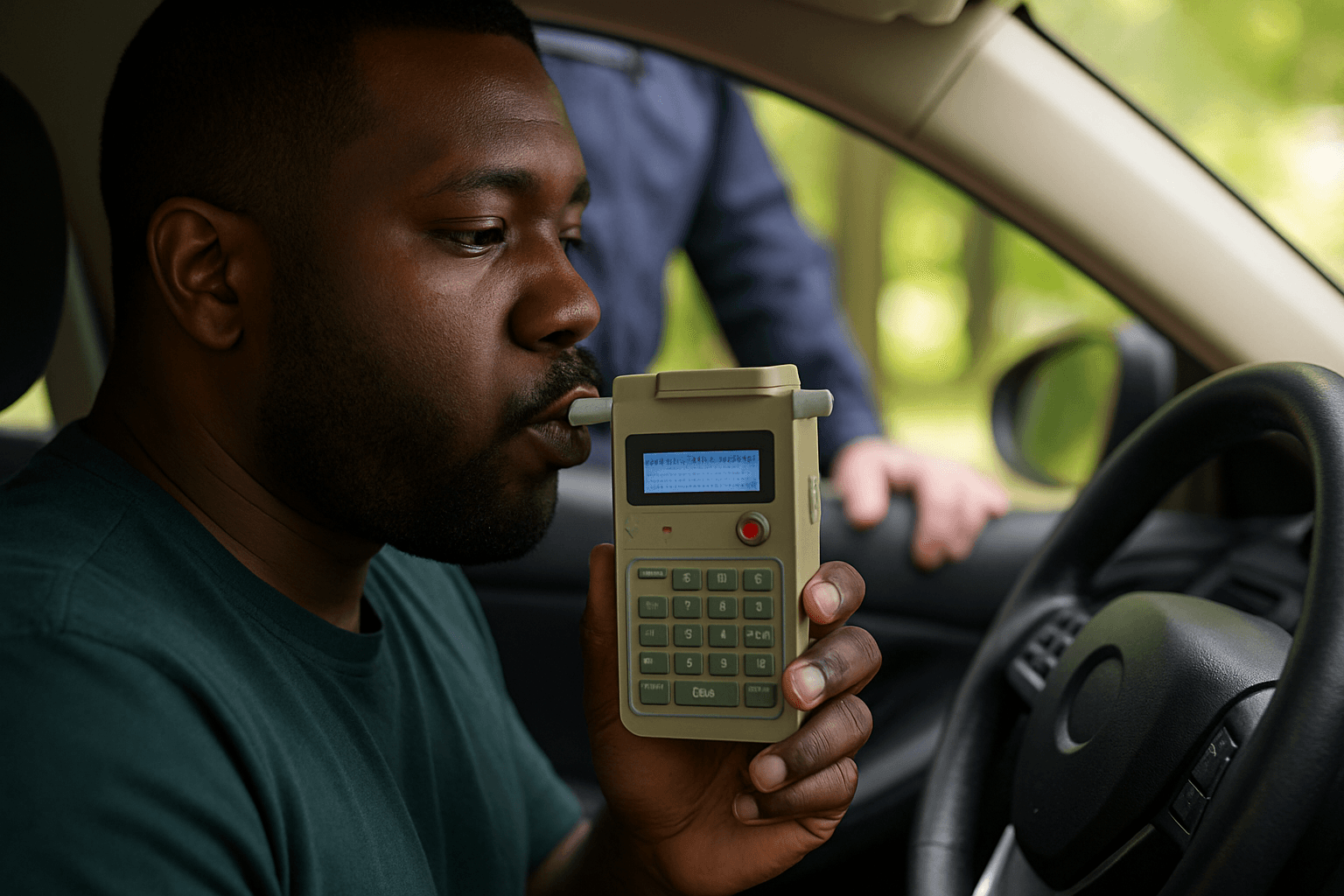
You've been charged with DWI in Mecklenburg County. Here's the exact timeline from arraignment to SR-22 filing, which ignition interlock providers work with Charlotte courts, and which carriers will write you after conviction.
What Happens Between Arrest and Your First Court Date in Charlotte
Your first court appearance—arraignment—is typically scheduled 30 to 60 days after your DWI arrest in Mecklenburg County. You'll appear at the Mecklenburg County Courthouse on East Fourth Street. At arraignment, the judge reads the charges, you enter a plea, and the court sets conditions for pretrial release.
If your blood alcohol concentration was 0.08% or higher, the DMV automatically suspends your license 30 days after arrest under North Carolina's civil revocation statute. This is separate from any criminal penalty. You can request a hearing to contest the civil suspension within 10 days of your arrest notice, but fewer than 15% of contested hearings result in reinstatement.
Between arraignment and trial, expect 90 to 180 days. Mecklenburg County's DWI docket moves faster than rural counties but slower than misdemeanor traffic cases. If you hire an attorney, they'll typically negotiate a plea or push for trial within four to six months of arrest.
Ignition Interlock Device Requirements and Charlotte-Area Providers
North Carolina requires an ignition interlock device for any DWI conviction with a BAC of 0.15% or higher, any repeat offense, or any conviction involving a child passenger. First-offense standard DWI (BAC 0.08%–0.14%) does not trigger mandatory IID unless the judge orders it as a condition of limited driving privilege.
If IID is required, you must install it before the DMV will issue a limited privilege or restore your full license. Installation takes 60 to 90 minutes and costs $75 to $150. Monthly monitoring fees run $60 to $90. Charlotte-area providers certified by the North Carolina DMV include LifeSafer (three locations in Charlotte and Concord), Intoxalock (Gastonia and Matthews), and Smart Start (locations in Charlotte, Concord, and Monroe).
You're responsible for scheduling installation within 10 days of receiving your court order. The provider uploads your compliance data directly to the DMV. Any failed start attempts, missed rolling retests, or tampering alerts extend your IID period by the number of days you were noncompliant.
Find out exactly how long SR-22 is required in your state
SR-22 Filing Timeline and When Your 3-Year Clock Actually Starts
North Carolina requires SR-22 filing for three years after a DWI conviction. The filing period starts the day your license is reinstated—not your conviction date, not your sentencing date, and not the day you buy insurance. This timing trap catches most drivers.
If you're convicted in March but delay reinstatement until June, your SR-22 clock starts in June. That means you've added three months to your total compliance burden. The DMV will not backdate your filing period. Once reinstated, your insurance carrier files the SR-22 electronically with the North Carolina DMV within 24 hours.
You must maintain continuous coverage for the full three years. If your policy lapses or is cancelled for any reason—even one day—the DMV suspends your license immediately and resets your SR-22 clock to zero. When you reinstate after a lapse, you start a new three-year period from that reinstatement date.
Which Carriers Write DWI-SR-22 Policies in Charlotte and What They Cost
Most major carriers—State Farm, Geico, Allstate, Progressive—will file SR-22 for existing customers after a DWI but typically non-renew the policy at the end of the current term. New DWI-SR-22 policies in Charlotte require the non-standard market: Dairyland, GAINSCO, Bristol West, The General, Safe Auto, and National General all write post-DWI coverage in North Carolina.
Monthly premiums for minimum liability SR-22 coverage after a first-offense DWI in Charlotte run $140 to $240 per month. That's 90% to 150% higher than standard-market rates for a clean-record driver. If you add comprehensive and collision, expect $220 to $380 per month depending on your vehicle and ZIP code within Mecklenburg County.
Carrier availability varies by conviction class. Aggravated DWI (BAC 0.15%+, injury, child endangerment) or repeat-offense DWI limits your options to GAINSCO, The General, and sometimes Dairyland. National General and Bristol West often decline repeat offenders or require six months of post-conviction history before quoting. Shop at least three non-standard carriers—rate spreads between the lowest and highest quote for the same driver routinely exceed $80 per month.
Court Costs, Fines, and Total Financial Impact of a Charlotte DWI
A first-offense DWI conviction in Mecklenburg County costs $4,000 to $10,000 in direct expenses over three years. Court fines range from $200 to $500 depending on your BAC and aggravating factors. The North Carolina DMV charges a $130 restoration fee after conviction, plus $100 annually for three years as a "driver improvement fee" unique to DWI convictions.
If IID is required, budget $1,200 to $1,500 per year for installation and monitoring. State-mandated DWI education classes cost $150 to $250. Your attorney fee for a contested DWI typically runs $2,500 to $7,500 in Charlotte, though some public defenders are assigned based on income eligibility.
Insurance is the largest ongoing cost. At $180 per month average for SR-22 coverage over three years, you'll pay $6,480 in premiums. Subtract what you would have paid with a clean record ($75/mo standard liability in Charlotte = $2,700), and the insurance penalty alone is $3,780 over the filing period.
How to Get a Limited Driving Privilege While Your License Is Suspended
North Carolina allows most first-offense DWI defendants to apply for a limited driving privilege 10 days after conviction if no aggravating factors exist. The privilege permits driving for work, school, court-ordered treatment, community service, and emergency medical care. You cannot use it for social, recreational, or convenience driving.
You must install an IID before the court will grant the privilege, even if IID isn't mandatory for your conviction class. You'll also need SR-22 insurance active before your hearing. The court charges a $100 filing fee for the privilege petition. Your attorney typically handles the filing.
Mecklenburg County judges grant limited privileges in 70% to 80% of first-offense cases where the defendant completes DWI education and installs the IID before the hearing. Repeat offenders face a mandatory 12-month hard suspension before any privilege can be considered, and aggravated first offenses may require 6 months before eligibility.