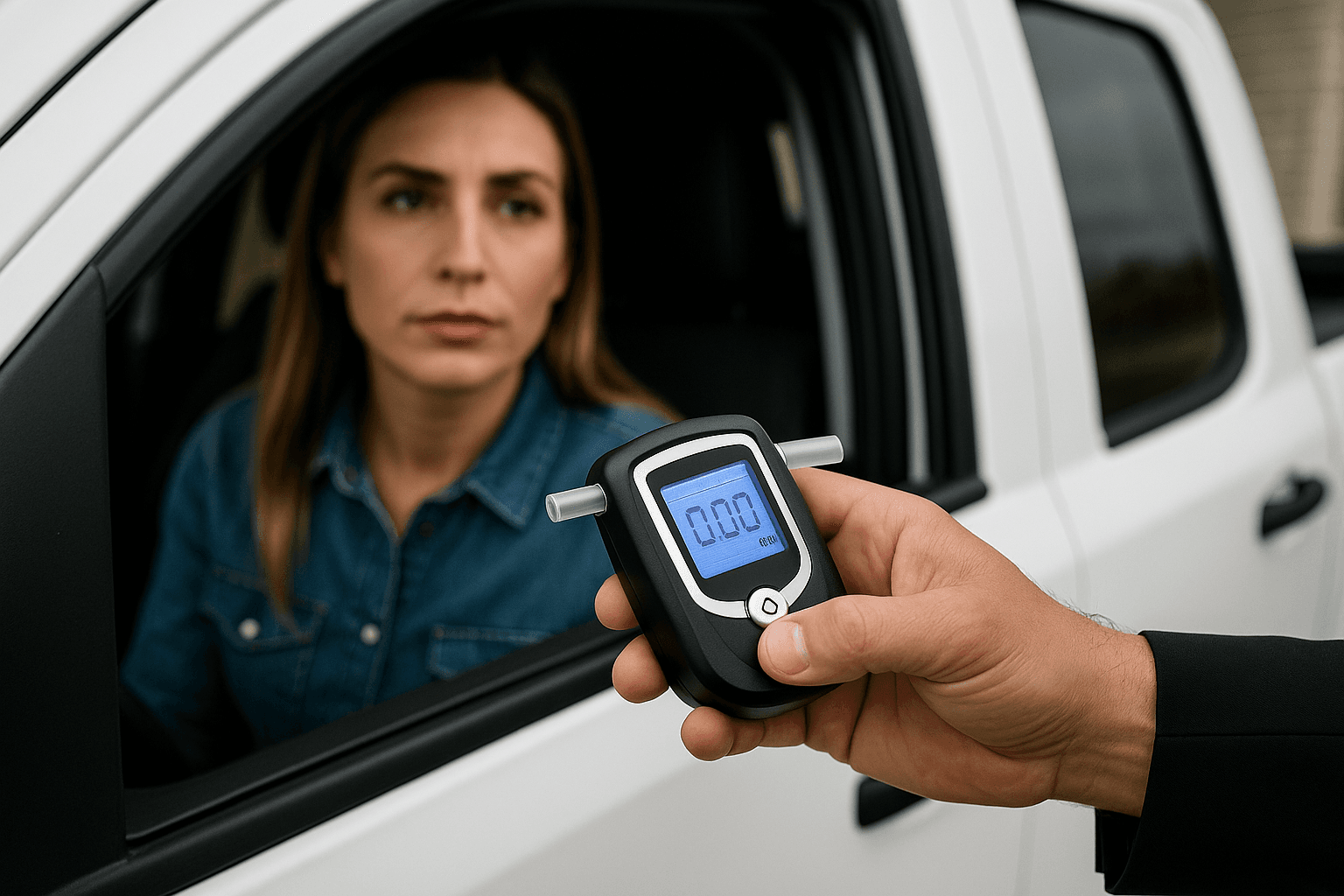
You have 30 days from your DUI conviction to arrange SR-22 filing in Oklahoma, or your license suspension extends. Here's the exact timeline, the carrier reality, and the three critical deadlines most drivers miss.
Your Three Critical Deadlines Start Now
Oklahoma gives you 30 days from your DUI conviction to file SR-22 with the Department of Public Safety, or your license suspension automatically extends. That 30-day window runs from the court conviction date, not the arrest date or the date you receive paperwork in the mail. Miss it, and you add months to your reinstatement timeline.
You're also facing a Modified Driver License suspension that runs 180 days for first-offense DUI or 1 year for aggravated DUI (BAC .15+ or minor in vehicle). During this period, you can apply for a Modified License after 30 days if you install an Ignition Interlock Device and file SR-22. That means your IID installation, SR-22 filing, and Modified License application must all happen within the same narrow window to avoid extended driving loss.
The third deadline: your SR-22 filing period itself. Oklahoma requires continuous SR-22 for 3 years from the conviction date for first-offense DUI. Most drivers incorrectly assume the 3 years starts when they reinstate their license. It doesn't. If you delay SR-22 filing by 6 months, you've already used 6 months of your required filing period before you even get back on the road.
Why Most Major Carriers Won't Write You a New Policy
State Farm, Geico, Allstate, and Progressive will file SR-22 for existing customers after a DUI, but they almost always non-renew the policy at the end of the current term. If your DUI conviction occurred within 60 days of your policy renewal, you might hold coverage through that renewal. If not, expect a non-renewal notice within 30–60 days of your conviction.
New DUI-SR-22 policies in Oklahoma route through the non-standard market: Bristol West, Direct Auto, Dairyland, GAINSCO, The General, and Safe Auto all write Oklahoma SR-22 policies for DUI drivers. Availability varies by county. Urban counties (Oklahoma, Tulsa, Cleveland) have broader carrier access than rural areas, where you may be limited to one or two non-standard carriers willing to file.
Expect monthly premiums of $180–$320 for liability-only SR-22 coverage after a first-offense DUI in Oklahoma. That's roughly double your pre-DUI rate. Aggravated DUI or repeat-offense DUI pushes premiums to $280–$450/mo. Full coverage with SR-22 after DUI typically runs $350–$550/mo, and many non-standard carriers cap coverage at liability-only or state-minimum comprehensive for the first year.
Find out exactly how long SR-22 is required in your state
The Modified License Application Process and IID Requirement
Oklahoma allows Modified Driver License eligibility after 30 days of your suspension for first-offense DUI. You must complete DUI School (ADSAC assessment and victim impact panel), install an IID from an Oklahoma-approved provider, and file SR-22 before the DPS will issue the Modified License. All three requirements must be satisfied simultaneously — partial completion doesn't move your application forward.
The IID installation must happen before you apply for the Modified License. Oklahoma requires IID for the full Modified License period: 18 months for first-offense DUI, 4 years for aggravated or repeat-offense DUI. Installation costs run $75–$150, with monthly monitoring fees of $70–$100. Your insurance carrier does not pay for IID — that's separate from your SR-22 premium.
Once your Modified License is issued, your SR-22 filing must remain active and continuous for 3 years from the original conviction date. If your SR-22 lapses at any point during those 3 years — even one day — Oklahoma DPS cancels your Modified License immediately and restarts your suspension. You then refile SR-22 and wait another 30 days to reapply for the Modified License.
What SR-22 Filing Actually Costs and How to Arrange It
SR-22 filing in Oklahoma is not a separate insurance policy. It's a form your carrier files electronically with the DPS proving you carry at least Oklahoma's minimum liability coverage: 25/50/25 ($25,000 bodily injury per person, $50,000 per accident, $25,000 property damage). The carrier charges a one-time filing fee of $25–$50 to submit the form, then files it again at each policy renewal for the duration of your 3-year requirement.
You cannot file SR-22 yourself. The insurance carrier files it on your behalf. If you own a vehicle, you need a standard SR-22 attached to an auto insurance policy covering that vehicle. If you don't own a vehicle but need SR-22 to reinstate your license, you need a non-owner SR-22 policy — a liability-only policy with no vehicle listed. Non-owner SR-22 premiums in Oklahoma after DUI typically run $50–$90/mo.
Once filed, the DPS receives electronic confirmation within 24–48 hours. You'll receive a paper SR-22 certificate from your carrier within 5–7 business days, but the DPS doesn't require you to carry the paper copy. Your carrier's electronic filing is the official proof. If you switch carriers during your 3-year filing period, your new carrier must file SR-22 on the same day your old policy cancels, or the DPS registers a lapse and suspends your license again.
Court Compliance Requirements That Run Parallel to SR-22
Oklahoma DUI convictions trigger court-ordered compliance separate from your DPS license suspension. First-offense DUI typically requires completion of an ADSAC assessment, a victim impact panel, 10 days to 1 year in county jail (often suspended or served on weekends), fines of $1,000–$2,500, and 1 year of probation. Aggravated DUI adds enhanced sentencing, longer IID periods, and higher fines.
Your SR-22 filing and Modified License reinstatement do not satisfy court requirements. You must complete all court-ordered programs and fees separately. Failure to complete ADSAC or victim impact panel on the court's timeline can trigger probation violation, additional fines, or jail time — but it does not directly affect your SR-22 filing period. The DPS and the court operate on parallel timelines.
Many Oklahoma DUI defendants assume completing court requirements early will shorten their SR-22 filing period. It won't. The SR-22 requirement is a DPS administrative mandate that runs for 3 years from conviction regardless of how quickly you satisfy court sentencing. Completing court obligations faster gets you off probation sooner, but your SR-22 filing clock does not change.
The Lapse and Restart Rule Most Drivers Miss
Oklahoma's SR-22 lapse rule is absolute: if your SR-22 filing lapses for any reason — non-payment, carrier cancellation, switching carriers without overlap — the DPS suspends your license immediately and restarts your 3-year filing period from zero. A lapse on day 1,094 of a 1,095-day filing period means you start a new 3-year clock.
Carriers are required to notify the DPS electronically within 24 hours of any policy cancellation. If you cancel your policy intending to switch carriers but the new carrier doesn't file SR-22 before the cancellation processes, the DPS registers a lapse. That's the most common restart scenario: drivers assume they can cancel, shop, and refile within a few days. Oklahoma gives you zero grace period.
To avoid lapse during a carrier switch, arrange the new policy and SR-22 filing first, then cancel the old policy effective the same day the new policy starts. Overlap by one day if necessary — paying two days of double premium is cheaper than restarting a 3-year SR-22 clock and re-applying for a Modified License.
When You Can Drop SR-22 and What Happens If You Move
You can request SR-22 removal from your policy exactly 3 years after your Oklahoma DUI conviction date. Your carrier will file an SR-26 form with the DPS confirming your filing period is complete. Once the DPS processes the SR-26, your license is no longer flagged for SR-22, and you can shop for standard insurance rates again. Removal is not automatic — you must request it from your carrier.
If you move out of Oklahoma during your SR-22 filing period, your requirement follows you. Most states recognize out-of-state SR-22 filings, but some require you to refile under their state's SR-22 rules using a carrier licensed in the new state. If you move to a state that does not require SR-22 for DUI (New Hampshire, for example), you still must maintain Oklahoma SR-22 if you plan to reinstate your Oklahoma license or if Oklahoma issued the original SR-22 order.
If you move to Florida or Virginia during your SR-22 period, those states require FR-44 filing instead — a higher-liability form with 100/300/50 minimum coverage. You cannot satisfy a Florida FR-44 requirement with an Oklahoma SR-22 filing. You must obtain a new FR-44 policy from a Florida or Virginia carrier and allow your Oklahoma SR-22 to lapse, which may trigger administrative consequences with Oklahoma DPS depending on your residency status and license jurisdiction.