Illinois triggers statutory summary suspension the day of your arrest, but you have exactly 90 days to request a rescission hearing — and the first 72 hours determine whether you can drive legally until that hearing.
Day 1: Request a Rescission Hearing Within 90 Days of Arrest
Illinois triggers statutory summary suspension immediately upon DUI arrest or breath test refusal under 625 ILCS 5/11-501.1. You have 90 days from the arrest date to file a petition for rescission hearing with the circuit court in the county where you were arrested. This is not the criminal DUI case — this is a separate civil proceeding to challenge the administrative suspension before it begins.
The rescission hearing determines whether the arresting officer had reasonable grounds for the stop, probable cause for the arrest, and whether you were properly warned about the consequences of refusal. If you win, the suspension is rescinded entirely and never appears on your driving record. If you lose or miss the 90-day filing window, the suspension stands and your SR-22 filing period begins.
Most drivers wait to consult an attorney before filing, which is reasonable, but the 90-day clock starts the day of arrest regardless of when you're formally charged. Missing this window means you forfeit the only opportunity to prevent the suspension from taking effect.
Days 1-3: Secure a Monitoring Device Driving Permit (MDDP) to Drive Legally During Suspension
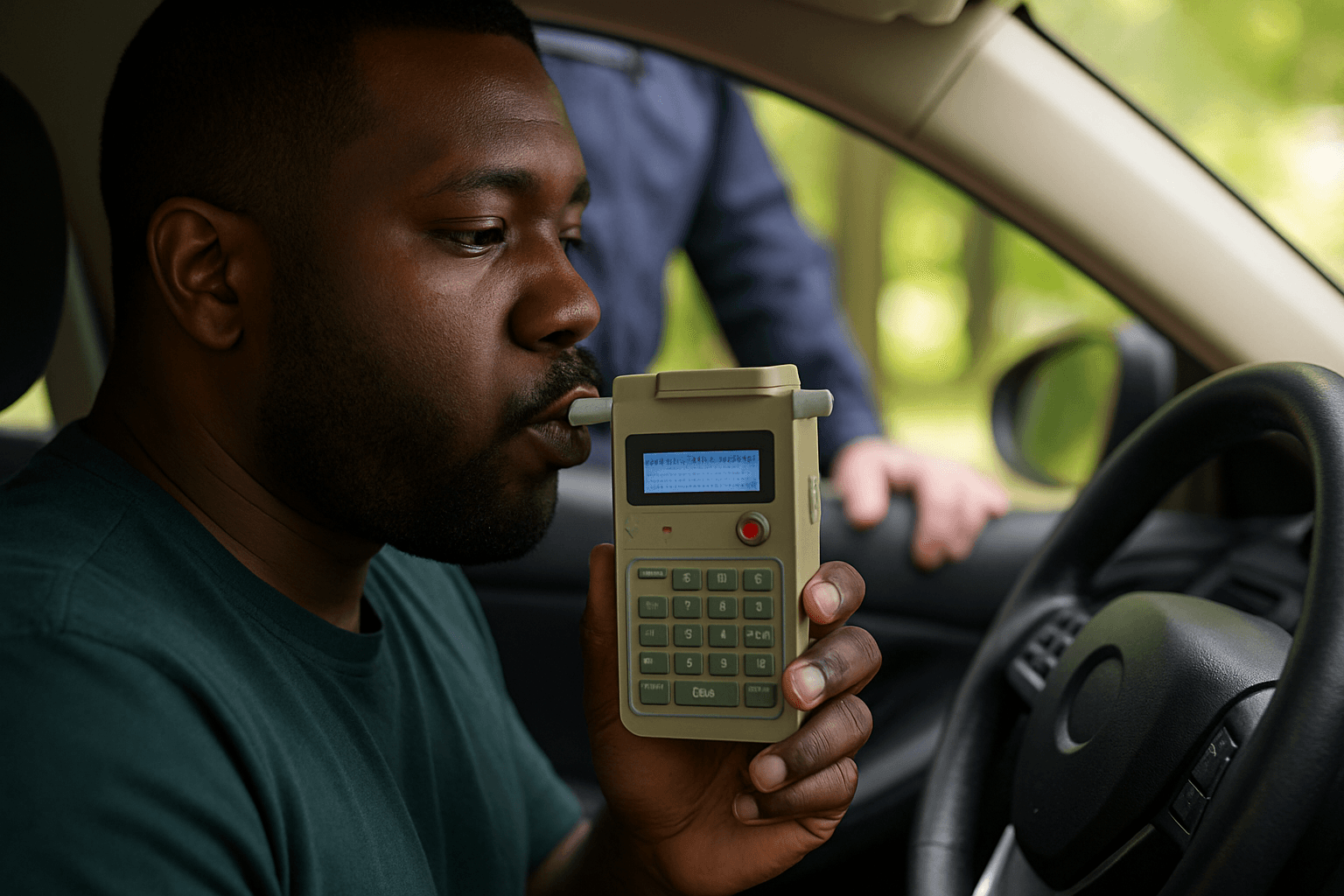
Illinois offers a Monitoring Device Driving Permit under 625 ILCS 5/6-206.1 that allows you to drive during the statutory summary suspension if you install a Breath Alcohol Ignition Interlock Device (BAIID) on every vehicle you operate. You must apply for the MDDP before the suspension begins — typically 46 days after arrest for a failed breath test, or immediately upon arrest for a refusal.
The MDDP costs $8 and requires proof of insurance, proof of BAIID installation from an Illinois Secretary of State-approved provider, and a completed application submitted to the Secretary of State. Installation costs range from $100 to $150, with monthly monitoring fees of $70 to $90. The device requires you to provide a breath sample before the engine starts and periodically while driving.
If you do not apply for the MDDP before the suspension begins, you cannot drive legally until the suspension period ends — 6 months for a first-offense failed breath test, 12 months for a refusal. Most DUI defendants apply within 72 hours of arrest to ensure the device is installed and the permit is issued before the 46-day suspension start date.
Find out exactly how long SR-22 is required in your state
Days 2-5: Notify Your Current Auto Insurance Carrier and Confirm They Will File SR-22
Illinois requires SR-22 filing for all DUI convictions, and most carriers require you to notify them of the arrest within a specific timeframe outlined in your policy — typically 10 to 30 days. Call your carrier directly, confirm whether they will file SR-22 for you, and ask whether they will renew your policy at the next term.
Most mainstream carriers — State Farm, Geico, Allstate, Progressive — will file SR-22 for existing customers but typically non-renew at the policy term, which is usually six months away. Non-renewal means you will need to move to the non-standard market: Bristol West, Dairyland, GAINSCO, The General, Safe Auto, Acceptance. Non-standard SR-22 policies in Illinois range from $180 to $320 per month for first-offense DUI with minimum liability limits.
If your current carrier refuses to file SR-22 or cancels your policy immediately, you must secure a non-standard policy before the suspension begins. Driving without insurance during the suspension — even with a valid MDDP — adds a separate uninsured motorist violation and extends your SR-22 filing requirement.
Days 3-7: Gather Documentation for Your Criminal Defense Attorney and Administrative Hearing
Collect every document related to the arrest: the police report, the Notice of Summary Suspension form, the breath test results or refusal documentation, dash cam or body cam footage request information, and witness contact information. Your attorney will use these for both the rescission hearing and the criminal DUI case, but the rescission hearing has the earlier deadline and stricter procedural requirements.
The rescission petition requires you to state specific legal grounds for challenging the suspension: improper stop, lack of probable cause, failure to provide statutory warnings, or equipment malfunction during breath testing. Generic objections are insufficient — the petition must cite the specific violation of 625 ILCS 5/11-501.1 procedures.
Most DUI defense attorneys handle both the rescission hearing and the criminal case, but some jurisdictions see higher success rates when the rescission petition is filed within the first two weeks. The earlier you file, the sooner the hearing is scheduled, and the shorter the period you rely on the MDDP instead of your full license.
Day 7: Confirm Your SR-22 Filing Period Start Date and Court Compliance Timeline
Illinois calculates the SR-22 filing period from the date of reinstatement after suspension, not the conviction date. For a first-offense DUI with a 6-month statutory summary suspension, your 3-year SR-22 filing period begins the day the Secretary of State reinstates your license — which is 6 months after the suspension start date, assuming you complete all reinstatement requirements.
Reinstatement requires: completion of the statutory summary suspension period, proof of completion of a DUI Risk Education course, payment of the $250 reinstatement fee, and proof of SR-22 insurance on file with the Secretary of State. If you miss any requirement, reinstatement is delayed and your SR-22 filing period does not begin.
Most drivers miscalculate the end date by counting from the arrest or conviction. A DUI arrested on March 1 with a suspension beginning April 16 and reinstatement on October 16 must maintain SR-22 until October 16 three years later — not March 1. Letting the SR-22 lapse even one day resets the filing clock to zero in Illinois.