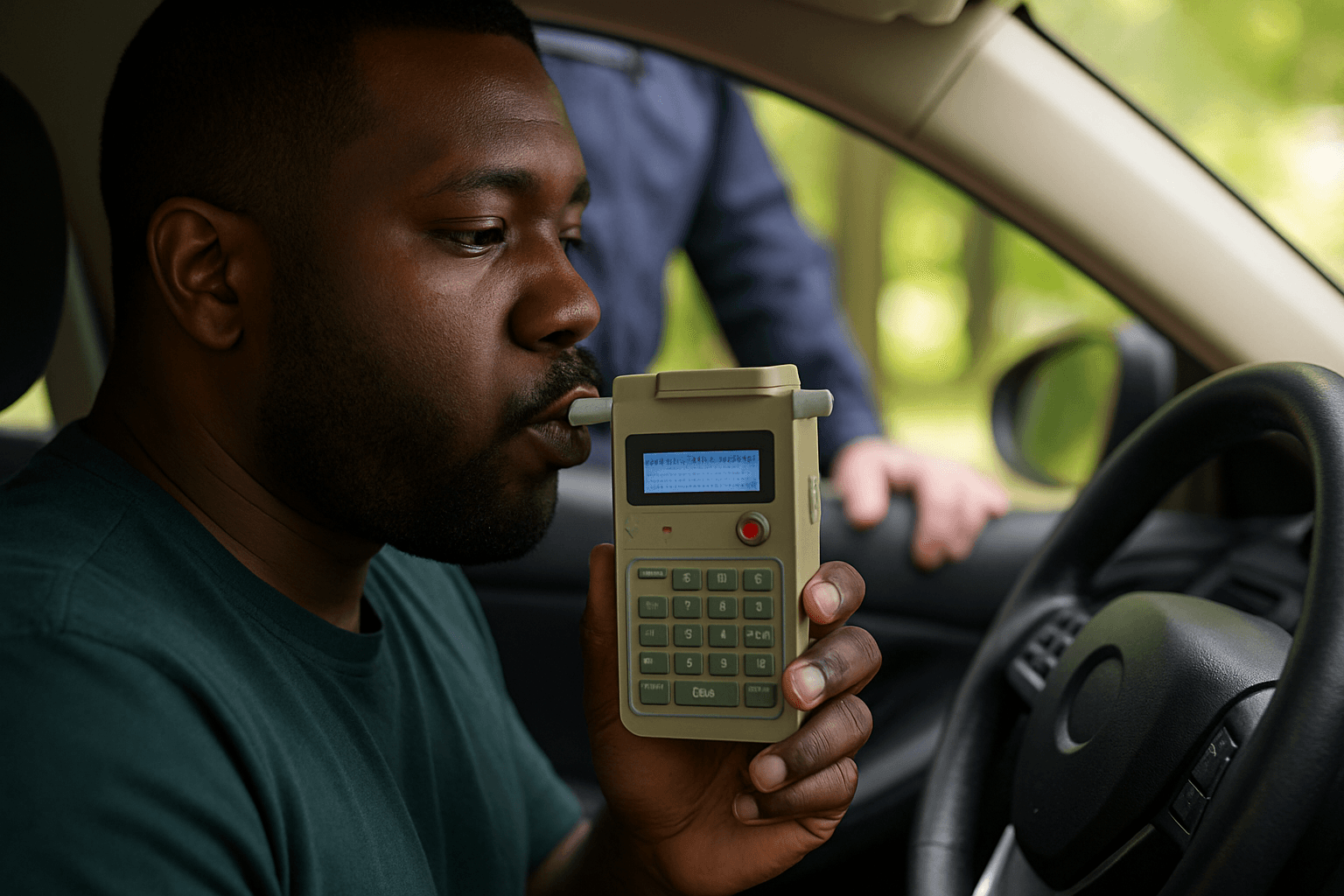
You were arrested for DUI in Georgia. The next seven days determine whether you keep your license, how long you're suspended, and what your reinstatement path looks like.
Request Your Administrative Hearing Within 10 Business Days
You have 10 business days from your arrest date to request an Administrative License Suspension (ALS) hearing with Georgia's Department of Driver Services. Miss this deadline and your license suspends automatically on the 46th day for 12 months minimum.
The hearing request does two things: it delays your suspension until the hearing concludes, and it preserves your right to challenge the arrest evidence. If you win the ALS hearing, the administrative suspension disappears entirely — you still face the criminal DUI case, but the separate civil license action is dismissed. If you lose or don't request a hearing, the suspension begins 46 days after arrest and runs for 12 months for a first offense, 18 months for a second within 5 years.
Most DUI attorneys file the hearing request as part of their initial retainer work. If you're handling this yourself, submit Form DDS-1205 by certified mail or in person at any DDS Customer Service Center. The filing fee is $150 as of current Georgia DDS requirements. The hearing typically happens 30–60 days after your request, which buys you driving time while the case develops.
Apply for a Limited Driving Permit the Same Week
Georgia offers two permit types after a DUI arrest: an Ignition Interlock Device (IID) permit and a 12-hour-per-day work permit. You can apply for either immediately — you don't have to wait for the suspension to start.
The IID permit is available for first-offense DUI arrests and allows unrestricted driving as long as an approved ignition interlock device is installed in your vehicle. The application requires proof of IID installation, DUI Risk Reduction Program enrollment, SR-22 filing, and a $25 permit fee. If approved, this permit functions as your license during the suspension period and counts toward your total suspension time — meaning a 12-month suspension with an IID permit active becomes a 12-month restricted driving period, not 12 months suspended plus permit time after.
The 12-hour work permit allows driving for work, school, medical appointments, and DUI program attendance for up to 12 hours per day. It requires the same SR-22 and program enrollment, but no IID installation. Most drivers choose the IID route because it allows normal driving, but the device costs $75–$125/month to lease and calibrate. Both permits require SR-22 insurance filed with the state before DDS will issue the permit.
Find out exactly how long SR-22 is required in your state
Enroll in the DUI Risk Reduction Program Within 7 Days
Georgia requires completion of a 20-hour DUI Risk Reduction Program (formerly called DUI School) before you can reinstate your license or obtain a permit. Enrollment must happen before DDS will approve any limited permit application, and the program has a mandatory completion timeline.
The course costs $355–$420 depending on provider and covers alcohol/drug education, risk assessment, and referral for treatment if needed. You can find state-approved providers through the Georgia DDS provider directory. Most programs offer evening and weekend sessions to accommodate work schedules, and the full 20 hours can be completed over 2–3 weeks.
Enroll within your first week after arrest. The program completion certificate is required for every reinstatement path — ALS hearing, IID permit, work permit, and final license reinstatement after suspension. Delaying enrollment delays every downstream step. If the assessment recommends additional treatment (common for high BAC arrests or repeat offenses), that adds weeks or months to your reinstatement timeline.
Secure SR-22 Insurance Before the Suspension Starts
Georgia DDS will not issue a limited permit or reinstate your license without an SR-22 certificate on file. SR-22 is not a separate insurance policy — it's a liability certification your insurer files electronically with the state proving you carry at least Georgia's minimum liability limits: $25,000 per person, $50,000 per accident, $25,000 property damage.
Most major carriers (State Farm, Geico, Allstate, Progressive) will file SR-22 for existing customers but typically non-renew your policy at the end of your current term. Expect your rate to increase 70–130% after a DUI conviction. If your carrier cancels immediately or you need a new policy, you'll move into the non-standard market: The General, Acceptance, Dairyland, and GAINSCO write Georgia SR-22 policies for DUI drivers. Monthly premiums for minimum-liability SR-22 coverage after a DUI typically run $110–$190/mo in Georgia, depending on age, county, and violation history.
The SR-22 filing itself costs $25–$50 depending on carrier. Your insurer transmits the certificate directly to DDS — you don't handle paperwork. Georgia requires continuous SR-22 filing for 3 years from your conviction date or reinstatement date, whichever the court specifies. If your policy lapses even one day during that period, your license suspends again and the 3-year clock resets to zero.
Understand the Three Overlapping Timelines
Georgia DUI cases run on three separate timelines that overlap if you act within the first 10 days: the administrative suspension (civil), the criminal court case, and the permit eligibility window. Most drivers don't realize these run concurrently, not sequentially.
The administrative suspension timeline starts 46 days after arrest if you don't request a hearing. If you do request a hearing and lose, the suspension begins the day after the hearing decision. This is a DDS action — it has nothing to do with your court case. The criminal case timeline starts at arraignment, typically 4–8 weeks after arrest, and runs through plea negotiation or trial. Conviction triggers a separate license suspension that runs concurrently with the ALS suspension if they overlap, or consecutively if the ALS suspension already ended.
Here's the critical structure: if you request your ALS hearing within 10 days, enroll in DUI school within the first week, and apply for an IID permit before the 46-day mark, all three timelines compress into a single suspension period. Win the ALS hearing and the administrative piece disappears. Lose it and your IID permit time counts toward the total suspension. But delay any step and the timelines separate — you serve the administrative suspension first, then wait for the criminal case, then serve that suspension after. What could have been 45 days with an IID permit becomes 12+ months of stacked suspensions.
Retain a Georgia DUI Attorney Before Your First Court Date
Georgia's DUI statute allows multiple defense challenges: improper stop justification, breathalyzer calibration records, blood draw procedures under implied consent law, and officer certification for field sobriety tests. A DUI attorney files the ALS hearing request, subpoenas arrest video and maintenance logs, negotiates with prosecutors, and structures plea deals that minimize license suspension and SR-22 duration.
First-offense DUI in Georgia carries a base suspension of 12 months, but negotiated plea deals often reduce this to 120 days with credit for Risk Reduction Program completion and 12 months of probation. Some cases resolve as reckless driving, which avoids the SR-22 requirement entirely. None of this happens without legal representation.
Attorney fees for first-offense DUI in Georgia typically run $2,500–$5,000 depending on county and case complexity. Aggravated DUI (BAC over 0.15, minor in vehicle, accident with injury) or second-offense cases start at $5,000–$8,000. Retain counsel within your first week so they can file the ALS hearing request on time and begin evidence review before the arraignment. Public defenders are available for criminal court but do not handle the administrative DDS hearing — you need private counsel or you represent yourself at the ALS hearing.
Document Every Deadline and Filing Confirmation
Georgia's DUI reinstatement process involves six separate agencies: the arresting law enforcement agency, the court, the prosecutor's office, DDS, your insurance carrier, and the Risk Reduction Program provider. None of them communicate with each other. You are the central coordinator.
Create a physical or digital folder with: your arrest citation and booking number, ALS hearing request confirmation and certified mail receipt, Risk Reduction Program enrollment receipt and completion certificate, SR-22 filing confirmation from your insurer, limited permit application submission, and every court date notice. When you call DDS to check permit status, they will ask for your citation number, SR-22 policy number, and Risk Reduction Program provider name — have all three ready.
Missing a single deadline resets your reinstatement timeline by months. The ALS hearing request has a 10-business-day hard cutoff — day 11 is too late. The IID permit application requires current SR-22 on file before DDS will process it — submit the application before your SR-22 is filed and it's rejected, restarting the review period. Track every submission, save every confirmation email, and follow up 3 business days after every filing to confirm receipt.